Short answer: Before buying a sample, confirm that a private label Pilates reformer manufacturer can document what will be customized, how the sample will be approved, which specifications will control bulk production, and what happens when a batch does not match the approval. Price matters, but the safer decision comes from checking engineering limits, quality records, packaging, lead time, spare parts and after-sales responsibility before you pay.
Current PE Pilates ordering terms
- The minimum order quantity for a bulk order starts at 5 units.
- Before placing a bulk order, a buyer may purchase 1 sample unit for inspection and approval.
- Dropshipping is not currently offered.
- Existing OEM/ODM, branding, customization, production and after-sales support remain available.
This checklist is written for brand owners, ecommerce sellers, distributors and studio groups evaluating a manufacturing partner. It helps separate a visually attractive sample from a repeatable product that can be ordered, inspected and supported at scale.

What Should You Ask Before Ordering a Pilates Reformer Sample?
| Question | Evidence to request | Risk it helps control |
|---|---|---|
| 1. Are you the manufacturer? | Factory identity, production scope and responsible contact | Unclear accountability |
| 2. What can be customized? | Written option list and engineering limits | Late design changes |
| 3. What is the MOQ? | Model-, color- and packaging-level MOQ | Unexpected minimums |
| 4. Can I inspect one sample? | Sample scope, price and approval record | Bulk production without validation |
| 5. Which specification controls production? | Signed specification sheet and approved photos | Batch inconsistency |
| 6. How is quality checked? | Inspection checklist and test records | Unverified quality claims |
| 7. How are logo and colors approved? | Artwork proof, color reference and placement drawing | Brand mismatch |
| 8. What does the quotation include? | Itemized product, tooling, packaging and freight terms | Hidden cost |
| 9. How is packaging validated? | Packing method, carton details and handling plan | Transit damage |
| 10. What is the real timeline? | Sample, approval, production and dispatch milestones | Launch delay |
| 11. What after-sales support is available? | Warranty scope, claim process and spare-parts plan | Unsupported customers |
| 12. Can the same result be repeated? | Golden sample, revision control and batch checks | Drift between orders |
The 12-Question Private Label Manufacturer Checklist
1. Are You Working With the Manufacturer or an Intermediary?
Start by identifying who owns production, engineering decisions and quality responsibility. A useful answer explains which processes are handled in-house, which components are sourced and who signs off the final unit. The purpose is not to reject every supplier that uses specialized vendors. It is to make responsibility visible.
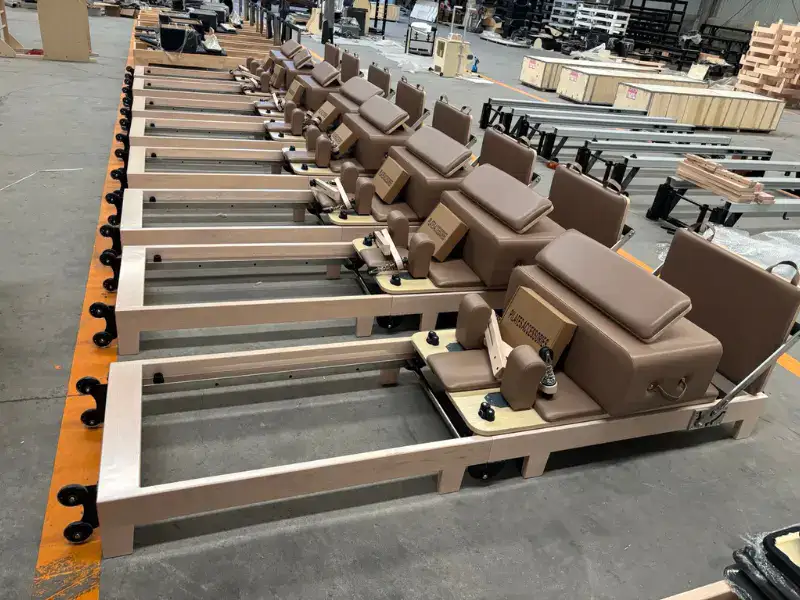
Ask for the legal company name on the quotation, the factory location, the production contact and recent evidence of the relevant product being made. Factory photos should show recognizable processes or equipment, not only finished machines in a showroom. You can also review the PE Pilates equipment manufacturer overview when comparing factory capabilities.
2. What Can Be Customized Without Creating Unnecessary Risk?
Separate cosmetic options from structural changes. Logo placement, upholstery color and selected finishes are usually easier to control than changes to dimensions, spring resistance, the carriage system or load-bearing components. Ask the manufacturer to label each request as standard, previously produced or newly engineered.
A good customization discussion includes the part affected, the approval method, any added tooling or development fee, the effect on MOQ and the effect on lead time. The custom Pilates reformer OEM/ODM guide explains these choices in more detail.
3. What Is the MOQ for the Exact Configuration You Want?
MOQ should be tied to the order configuration, not presented as a vague factory-wide number. Ask whether the minimum applies per model, frame finish, upholstery color, logo version or packaging design. Mixing too many variants into a small opening order can make production control and future spare-parts support harder.
At PE Pilates, the current bulk-order MOQ starts at 5 units. The final configuration should still be confirmed in the quotation because different products or development work can require different commercial arrangements.
4. Can You Buy One Sample Before the Bulk Order?
Yes. PE Pilates supports the purchase of one sample unit before a bulk order. The sample lets a buyer inspect appearance, assembly, carriage travel, adjustment points, accessories, branding and packaging before committing to production volume.
Define the sample’s purpose before it is built. A useful sample review records each approved feature and each requested correction. Do not rely on a video call or a message saying “approved.” Create one consolidated approval list with dated photos and specification references.
Important: PE Pilates does not currently provide dropshipping. The sample is for evaluation before a wholesale or private-label order; it is not a one-by-one fulfillment program for individual consumers.
5. What Document Becomes the Production Standard?
Ask the manufacturer to define the controlled reference for bulk production. Depending on the project, this may include a specification sheet, approved sample, color reference, logo artwork, packaging drawing, accessory list and signed change record.
One approved sample should become the “golden sample” or physical reference. If changes are accepted after sample approval, the revision should be documented before production begins. This protects both sides from relying on different message threads or outdated files.
6. How Will the Reformer Be Inspected and Tested?
Replace general statements such as “strict QC” with specific checkpoints. For a reformer, the inspection plan may cover frame condition, carriage movement, wheel and rail alignment, spring installation, rope and pulley routing, footbar locking, upholstery, hardware, accessories, logo placement and final packing.
Ask when inspections occur and what record can be shared. The Pilates reformer quality inspection checklist provides a practical framework for bulk-order review.
7. How Will the Logo, Color and Brand Details Be Approved?
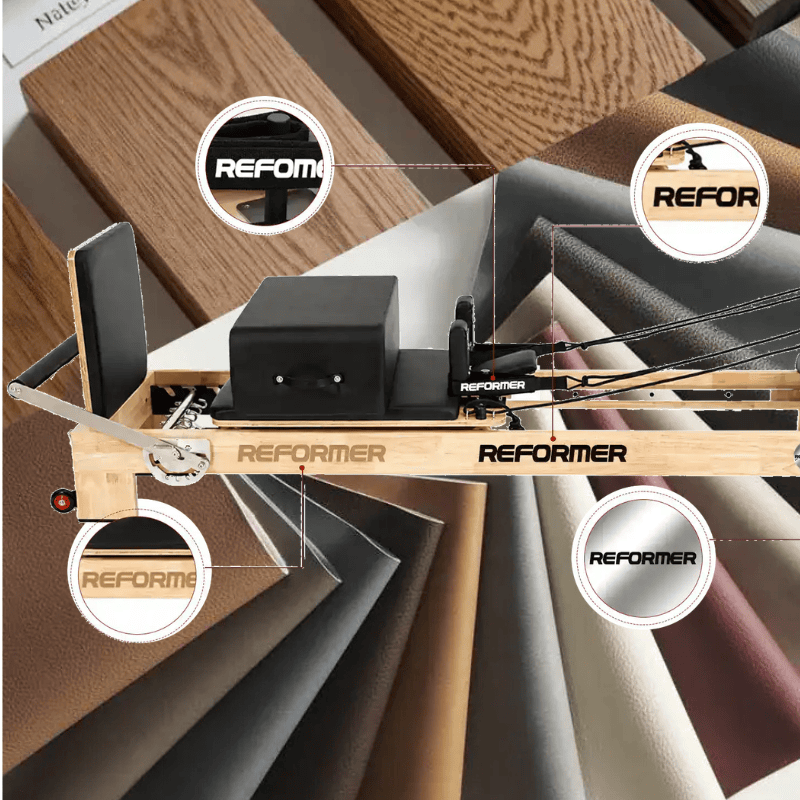
Brand files should be production-ready. Confirm accepted artwork formats, logo dimensions, placement, print or engraving method, color references and the proof approval process. A screen color is not always a reliable upholstery or paint reference, so agree on how color will be evaluated.
Also decide whether the brand needs serial labels, cartons, manuals, warning labels or accessory bags. These items influence both customer experience and production preparation, and they should be approved together instead of added at the end.
8. What Is Included in the Quotation?
An itemized quotation is easier to compare than one total price. Ask the supplier to separate the product, customization, tooling or setup, packaging, sample cost, freight basis and any destination-related services. Confirm the currency, validity period, payment stages and the Incoterm used.
Do not compare an ex-factory price directly with a delivered price. For international orders, the FOB, CIF and DDP guide for Pilates equipment buyers explains how responsibilities change.
9. How Will Packaging Be Designed and Checked?
Packaging should protect the approved finish and make receiving easier. Ask how moving parts are secured, how accessories and hardware are identified, and how cartons or crates are labeled. If your brand uses a custom manual or packaging artwork, confirm the final file deadline and proof process.
For a first order, agree on the evidence you need before dispatch. Photos of the finished unit, accessories, labels and closed package can help the buyer confirm completeness, although they do not replace a full inspection plan.
10. What Are the Sample and Production Milestones?
Ask for separate milestones rather than one broad lead-time promise: requirement confirmation, design proof, sample completion, buyer review, correction approval, material preparation, bulk production, final inspection and dispatch readiness.
The production clock should start from a clearly defined event, usually after specifications, artwork and commercial terms are confirmed. If the buyer delays an approval, the schedule should be updated rather than quietly compressed.
11. What Warranty, Claims and Spare-Parts Support Will Your Customers Receive?
A private-label brand remains the customer’s first point of contact, so the manufacturer relationship needs a practical support process. Confirm the warranty scope by component, what evidence is required for a claim, who approves a replacement and where spare parts are dispatched from.
For recurring sales, ask which parts should be stocked locally. Springs, ropes, pulleys, carriage wheels, straps and selected adjustment parts may affect service speed. Our spare-parts and after-sales checklist for distributors can be used to plan this stock.
12. How Will the Manufacturer Keep Repeat Orders Consistent?
The first sample is only useful if its approved details can be repeated. Ask how the factory controls drawings, bill-of-material changes, color references, supplier changes and production revisions. Confirm how deviations are reported before shipment.
If you expect several orders or multiple markets, agree on product codes and revision names from the beginning. This gives both the brand and the factory a common reference when discussing replacements, packaging or future improvements. Read more about keeping Pilates reformer batches consistent.
A Practical Sample Approval Workflow
- Write the requirement brief. List the model, use case, target market, logo, colors, accessories, packaging and expected first order.
- Confirm what is standard and what is new. Separate proven options from development work.
- Approve the commercial scope. Record sample cost, MOQ, payment terms, timeline and shipping basis.
- Build and inspect one sample. Review function, finish, branding, accessories and packaging.
- Create a correction list. Keep all decisions in one dated document.
- Freeze the production reference. Confirm drawings, photos, colors and packaging before bulk production.
- Set the batch inspection plan. Define the checkpoints and evidence required before dispatch.
How to Compare Manufacturers Without Choosing on Unit Price Alone
| Decision area | Weak comparison | Better comparison |
|---|---|---|
| Price | Unit price only | Matched specification and shipping basis |
| Customization | Number of options | Documented limits and approval method |
| Quality | “High quality” claim | Defined checkpoints and records |
| Lead time | One estimated number | Sample, approval, production and dispatch milestones |
| After-sales | General warranty promise | Component scope, claim process and spare-parts plan |
| Repeatability | Good first sample | Controlled golden sample and revision history |
A lower quotation can become expensive if it creates rework, customer claims, launch delays or inconsistent repeat orders. The goal of the checklist is not to choose the supplier with the longest answer. It is to choose the partner whose answers can be translated into specifications, approvals and accountable actions.
Frequently Asked Questions
What is PE Pilates’ MOQ for a private label reformer order?
The current minimum order quantity starts at 5 units. Confirm the model mix, colors, branding and packaging requirements in the quotation because the final scope can affect commercial terms.
Can I order one sample before placing a bulk order?
Yes. Buyers may purchase one sample unit for inspection and approval before a bulk order.
Does PE Pilates offer dropshipping?
No. PE Pilates does not currently offer dropshipping or individual consumer order fulfillment.
What should be approved on the sample?
Approve the model configuration, frame and finish, upholstery, carriage movement, adjustment points, springs and accessories, logo details, labels, manuals and packaging. Record any corrections in one dated approval document.
Should a sample be treated as the production standard?
Yes, when both sides formally identify it as the approved reference and connect it to the current specification, artwork and packaging files. Later changes should receive a new revision.
Which page should I use to discuss a private label project?
Review the PE Pilates custom and private label manufacturing service, then share your target market, model, quantity, branding requirements and launch schedule.
Prepare Your Private Label Reformer Sample
Send us your target model, market, branding files, expected quantity and launch timing. We can confirm the available customization path, sample scope and bulk-order requirements before production.