

Direct answer: A custom Pilates reformer project should be approved through a controlled sequence: confirm the frame and upholstery, submit production-ready logo files, review the visual proof, approve a sample or first article, then verify every production unit before shipment. Logo, special-color upholstery, wood tone and frame color may each have different minimum-order rules, so buyers should request a written project quotation rather than rely on a universal MOQ. For P.E.Pilates projects, logo, sample and plate-making fees are not charged, while material-related minimums are evaluated against the requested configuration. The most important procurement safeguard is one approved specification shared by sales, production and QC.
Evidence and privacy note: The German WD-MASTER-004 case facts and anonymized production images in this guide were reviewed against the supplied project materials on August 15, 2026. The customer name, order quantity and full brand marks are not publicly disclosed. The QC sheet shown later is clearly labeled as a general process example rather than evidence from this specific order.
What Can Be Customized on a Commercial Pilates Reformer?
| Customization item | What the buyer should confirm | Production control point | MOQ or fee rule |
|---|---|---|---|
| Logo | Vector file, dimensions, color and placement | Artwork proof and first-article position check | Evaluated by product; no logo or plate-making fee |
| Upholstery color | Physical swatch or approved reference under natural light | Lot consistency and signed color reference | Special colors evaluated by the selected material |
| Wood or frame color | Species, stain or coating reference and finish level | First-article finish and batch consistency | Minimum quantity evaluated per request |
| Equipment numbering | Number format and location-to-unit mapping | Match the unit, carton and delivery list | Confirmed in the project specification |
From a manufacturing point of view, customization is not a decoration step added at the end. It changes the information that purchasing, production, quality control and packing teams must follow. A useful approval pack therefore combines visual references with measurable instructions: Pantone or physical color reference, logo dimensions, exact placement, surface treatment and a numbering list where applicable.
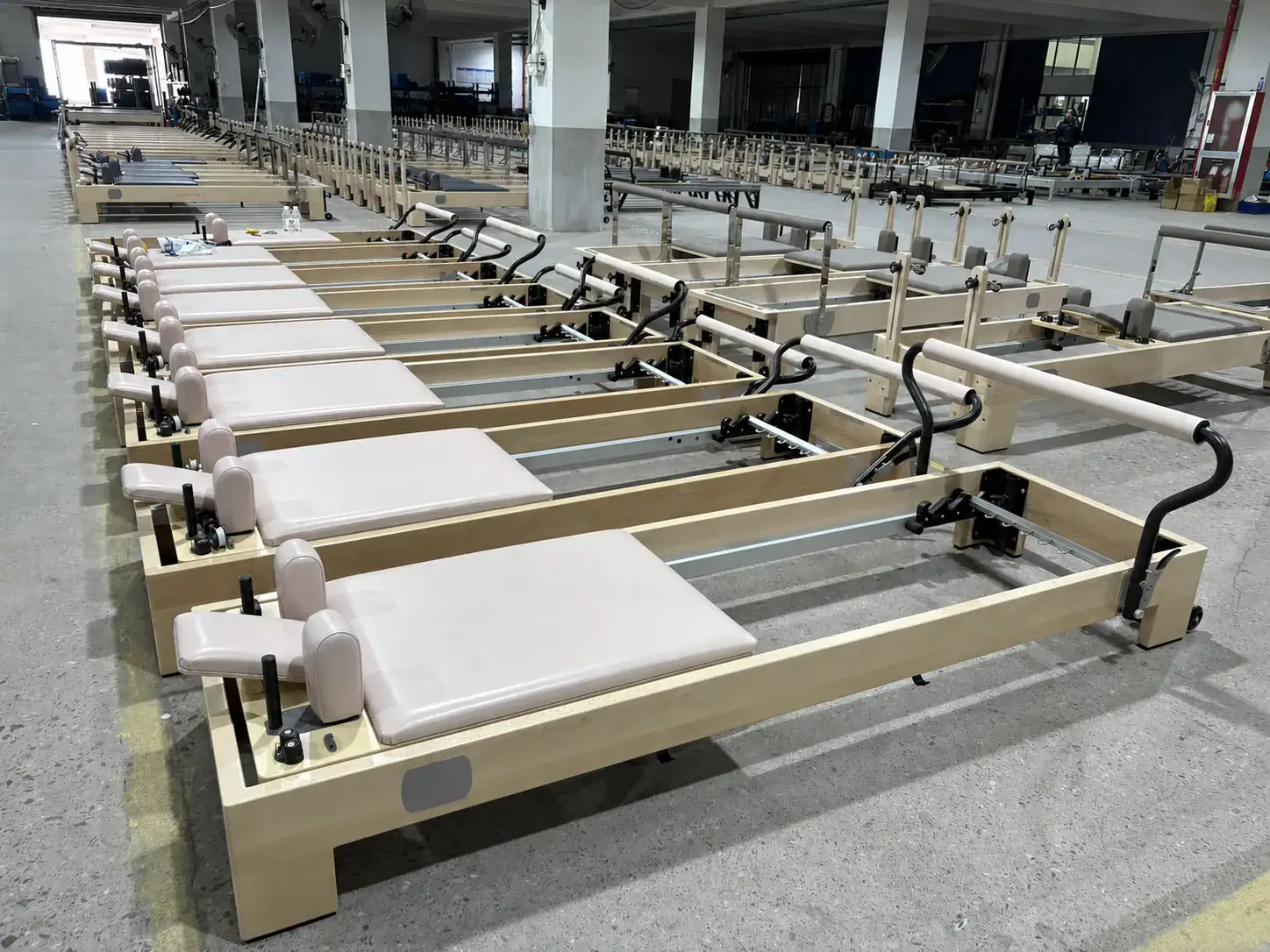
Real Case: Pink Maple Reformers for a German Multi-Location Studio
A German customer selected the WD-MASTER-004 maple reformer for use across multiple studio locations. The order quantity and customer identity are not publicly disclosed. The approved concept paired a natural maple frame with light-pink upholstery, then extended the customer’s branding to the frame, handles and foot straps. Each reformer also received an individual equipment number so the buyer could associate a unit with its studio, maintenance history and future parts requests.
The combination was selected for both design and operations. Maple gives a warm, natural visual base, while the light-pink upholstery supports a softer studio atmosphere. Repeating the brand on frequently seen touchpoints improves visual consistency. The unit-level numbering is less visible to members, but more valuable over the equipment lifecycle: the customer can identify the correct machine when reporting an issue, ordering a replacement part or updating a maintenance record.
Before production, the upholstery reference, logo size, color, position and application method were documented together with the numbering format and store mapping. Because light colors can look different under factory lighting, daylight and phone screens, final confirmation should rely on a physical swatch plus daylight photos or video. We do not claim that this order required a color or artwork correction because that detail was not confirmed in the available order record.
The OEM/ODM Approval Workflow
- Requirement confirmation: define model, material, color, logo positions, accessories, quantity and destination.
- Color and logo files: submit the physical or Pantone color reference and production-ready artwork.
- Visual proof: review the placement, scale, orientation and contrast before material is committed.
- Sample or first-article approval: check the real material, finish, logo and functional configuration.
- Mass production: release one controlled specification to purchasing, production and QC.
- Pre-shipment photo verification: compare finished units, markings and packing labels with the approved specification.
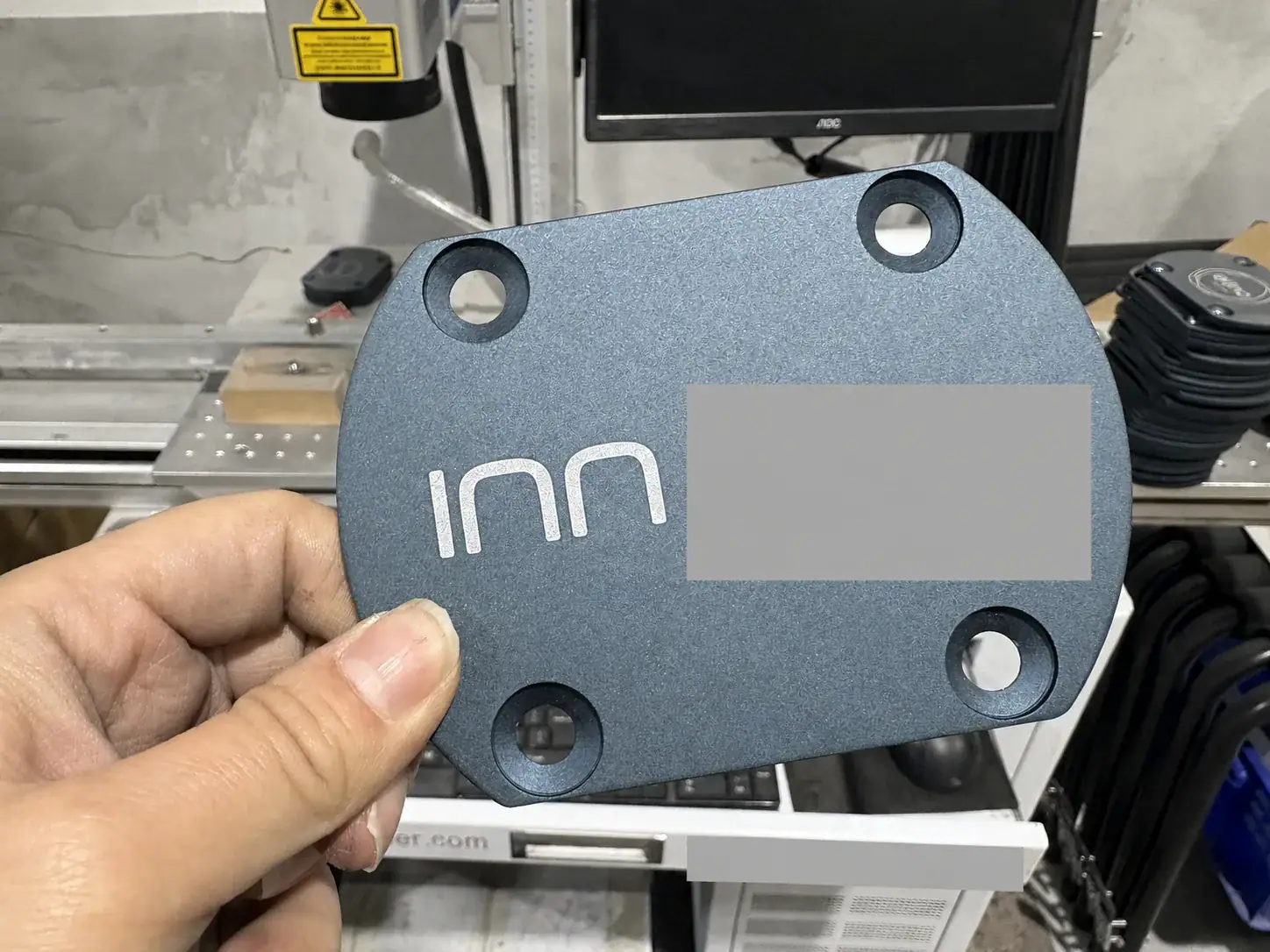
Logo File and Artwork Requirements
- Supply an editable AI, EPS, PDF or SVG vector file.
- State the required dimensions and exact application position.
- Provide a Pantone reference when a specific brand color must be matched.
- Confirm whether the mark is printed, embroidered, engraved or applied as a plate.
- Approve the artwork proof before the sample or first article is released.
- Identify which marks may appear in production photos and which must remain private.
A screenshot or low-resolution PNG can be useful for visual reference, but it is usually not sufficient for production. Vector artwork allows the supplier to scale the mark without creating rough edges. For small plates, straps and handles, the buyer should also ask whether thin lines or small text remain legible at the final size.
MOQ, Fees and Lead Time: What Should Be Quoted Separately?
There is no single responsible MOQ answer for every customized reformer. A logo added to an existing model is different from sourcing a non-standard upholstery batch or developing a new frame finish. P.E.Pilates does not charge a sample fee, plate-making fee or logo fee for this workflow, but the applicable minimum quantity for logo, special upholstery, wood or frame color is evaluated against the selected product and material request.
| Ask the supplier to quote | Why it affects planning |
|---|---|
| Base model and complete accessory list | Prevents differences between the approved visual and the delivered configuration |
| MOQ for every non-standard material | Upholstery and finish suppliers may apply their own batch minimums |
| Artwork and first-article approval date | Production lead time should start after approvals are complete |
| Production and packing lead time | Separates manufacturing time from freight transit |
| Incoterm, destination and local charges | Allows the buyer to compare total landed cost rather than equipment price alone |
Before ordering, request a dated schedule with explicit approval gates. Lead time should be confirmed in the quotation for the actual quantity and customization scope; it should not be inferred from a standard-model listing. This is especially important when a launch date depends on coordinated interior work, staff training and equipment installation.
Quality Control for a Customized Reformer Order
Customized units should be inspected against the approved sample and order confirmation, not only against the standard model BOM. For the German project, the pre-shipment review covered the maple frame surface, light-pink upholstery consistency, every approved logo location, each equipment number, the store-to-unit list, overall appearance and basic function.
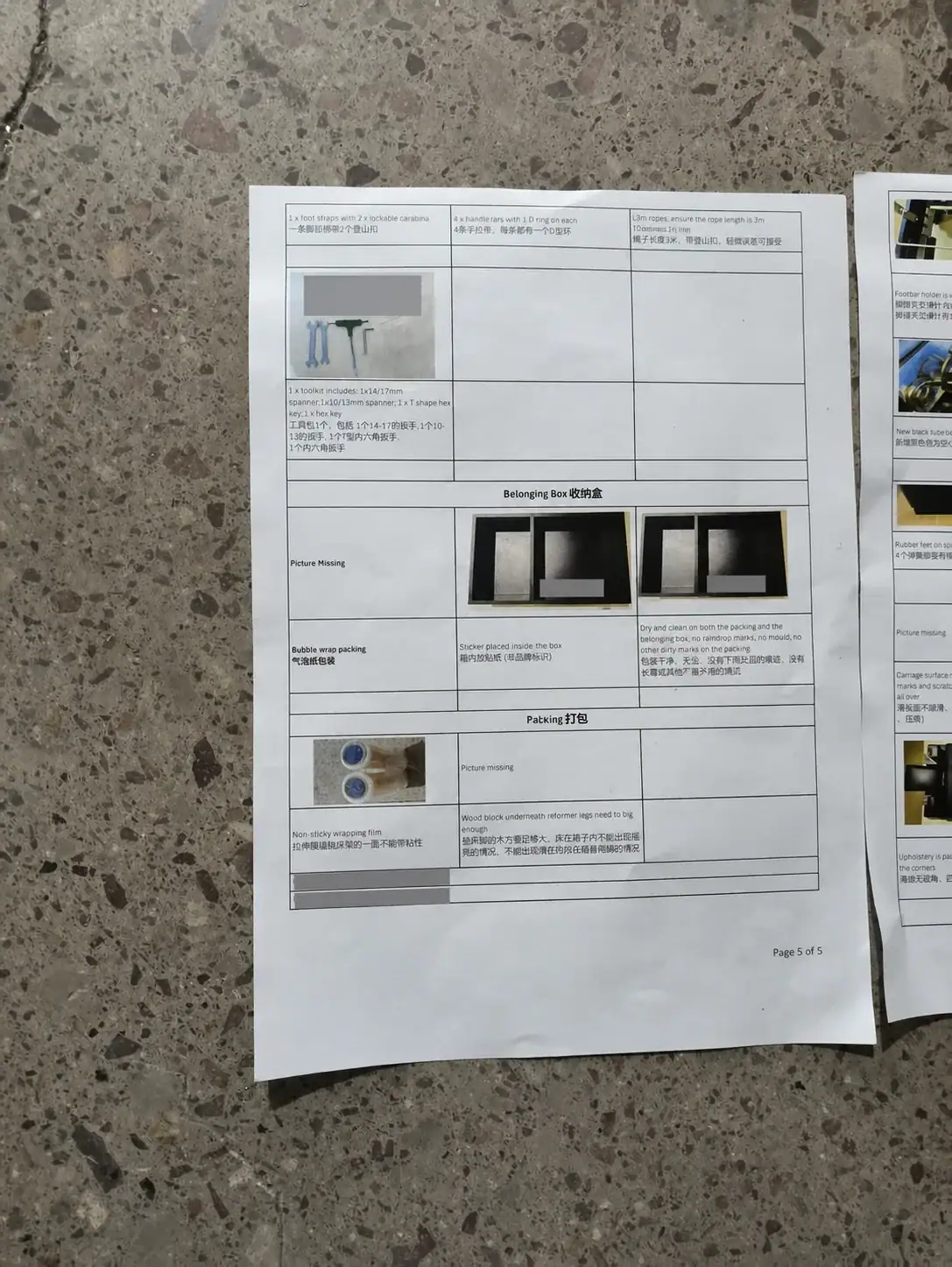
One practical procurement observation is that the most common customization errors are information-transfer errors rather than obvious manufacturing defects. A logo may be correct but placed according to an older artwork; the upholstery may match the photograph but not the signed swatch; or a unit number may be correct on the frame but wrong on the carton. The control method is simple: use one revision-controlled specification and verify the same identifiers at assembly, final inspection and packing.
Guidance for Studio Owners
- Approve colors in the type of lighting used in the studio whenever possible.
- Choose logo positions that remain visible without interfering with cleaning or high-contact areas.
- Give every unit a stable identifier and keep a matching maintenance record.
- Order spare high-wear accessories in the approved color when continuity matters.
- Confirm access, installation and room layout before finalizing the delivery plan.
If the equipment count and room dimensions are still being planned, use the Pilates studio equipment guide before locking the customized order. This article focuses on product customization; the studio guide focuses on selecting and planning the equipment mix.
Guidance for Distributors and Multi-Site Buyers
For distributor orders, approval must cover repeatability as well as appearance. Ask how the supplier records the upholstery lot, frame finish, logo artwork revision and unit number. Keep a master specification that can be reused for future batches, but require the supplier to reconfirm material availability and color continuity each time. The Pilates reformer wholesale guide covers broader MOQ, quotation and shipping decisions, while this OEM/ODM guide concentrates on controlling a custom specification.
Customization Buying Checklist
| Question | Evidence to request |
|---|---|
| Which requirements differ from the standard model? | Marked specification or configuration table |
| How will color be approved? | Physical swatch, Pantone reference and daylight photo/video |
| Which logo file is the production master? | Named vector file and approved artwork proof |
| How is a first article released? | Approval record with date and revision |
| How are units traced? | Unit numbering list matched to cartons and stores |
| What is checked before packing? | Signed QC record and configuration photos |
| What may be published? | Written privacy and image-use instruction |
Buyers comparing suppliers should document the same specification, approval and QC questions shown in the checklist above. For company and manufacturing context, review P.E.Pilates manufacturer information. For examples of available branding and configuration work, see the P.E.Pilates OEM/ODM cases and the maple wood Pilates reformer.
Plan Your Custom Reformer Project
Send the intended model, quantity, destination, upholstery reference, logo files and required delivery window. We can then separate the standard configuration from the custom requirements and confirm the applicable MOQ, approval steps and project schedule.
Frequently Asked Questions
What is the MOQ for a custom Pilates reformer?
It depends on the model and requested material. Logo, special upholstery colors, wood treatments and frame colors should each be confirmed in writing for the specific project.
Do you charge a logo or plate-making fee?
For the workflow described here, P.E.Pilates does not charge a sample fee, plate-making fee or logo fee. The quotation still needs to confirm the selected model and customization scope.
Which logo formats are accepted?
AI, EPS, PDF and SVG vector files are preferred. Include the final size, location and Pantone color, then approve the artwork proof before production.
How should a light upholstery color be approved?
Use a physical color sample together with daylight photos or video. Screen color alone is not a reliable production reference.
Can each reformer have an individual number?
Yes. Confirm the number format, application location and a list that maps each unit to its studio or delivery destination.
When does the production lead time begin?
The quotation should define the start point. For customized orders, planning normally depends on completing the specification, artwork and sample or first-article approvals.
How is privacy handled in customization case photos?
Customer names, contact details and sensitive document fields should be removed. Logo visibility should follow the customer’s permission, and evidence captions should state when an image is anonymized or used only as a general process example.