
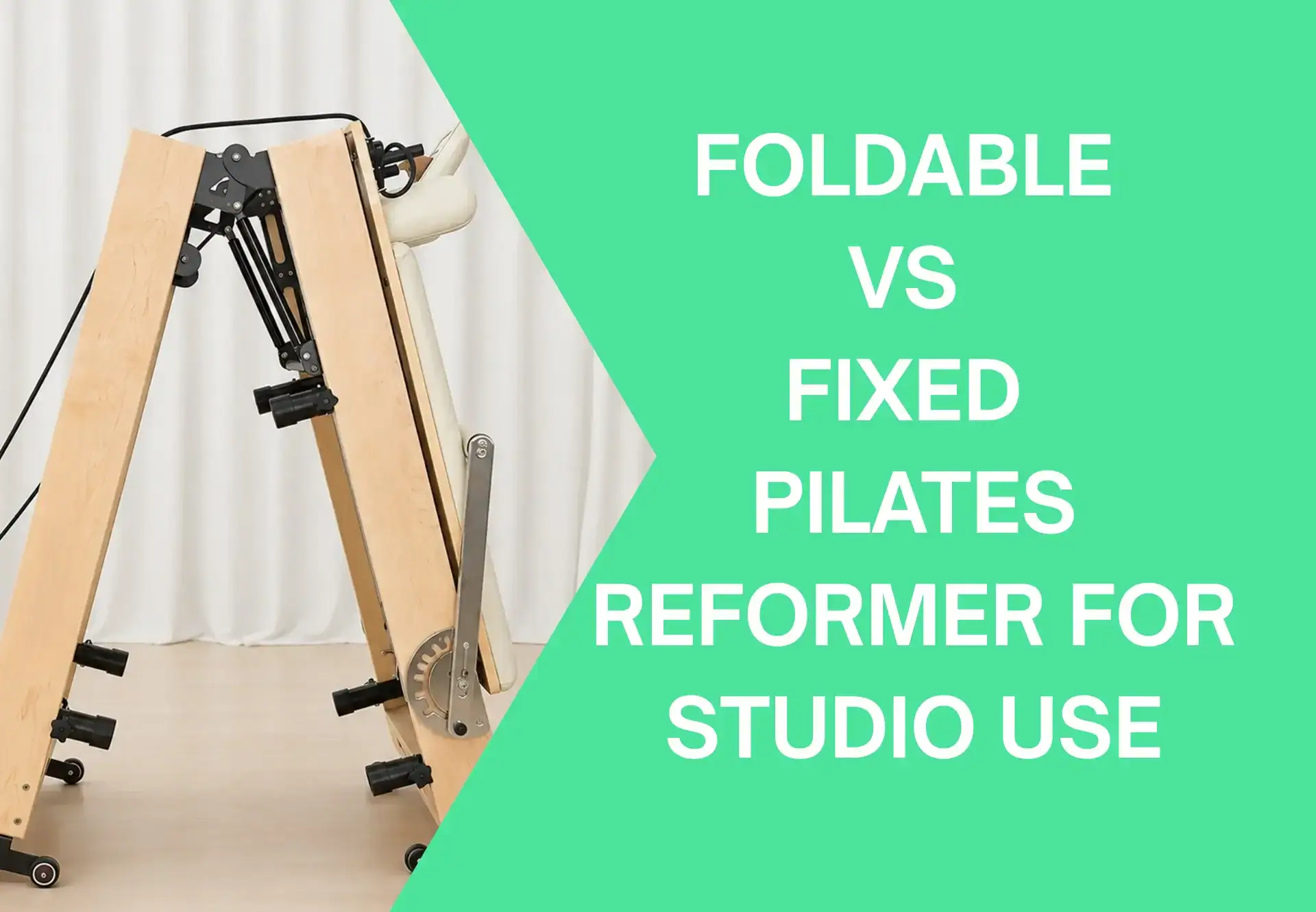
Choose a foldable Pilates reformer when the room must regularly return to another use; choose a fixed reformer when it will remain set up in a dedicated training area. The hinge alone does not decide long-term stability. Buyers need to compare the exact frame, locking system, carriage travel, installation, inspection routine and commercial-use terms. A foldable model that is properly opened and locked may suit a space-conscious studio. A fixed model avoids the repeated setup and storage workflow when clearing the floor provides no operating benefit.
The practical question is not simply “Which frame is stronger?” It is “What must the studio team do before and after every class, and does that work create useful floor space?” This foldable vs fixed Pilates reformer comparison uses the FD-ALS-416 and WD-MS-003 to show how two real configurations change space planning, staff workflow, maintenance and purchasing decisions.
Foldable vs Fixed Pilates Reformer: Quick Studio Decision
| Studio condition | Usually favors foldable | Usually favors fixed |
|---|---|---|
| Room use | The floor changes between reformer, mat, yoga, barre or other sessions | The room is dedicated to reformer training |
| Storage routine | Staff have a defined folding, moving and secure-storage process | The equipment remains in assigned stations |
| Class changeover | There is enough time to inspect, move and reset every unit | Fast turnover and consistent station readiness matter |
| Access route | Storage route, doors and turning space suit the folded dimensions | No routine movement route is needed |
| Maintenance focus | Add folding joints, locks and transport wheels to routine checks | Focus on carriage, rails, springs, ropes, footbar and fixed connections |
| Best purchasing logic | Flexibility earns revenue or enables another scheduled use | Permanent placement supports the timetable without unnecessary handling |
Before selecting either format, map the actual class timetable and floor plan. Our guide to Pilates reformer spacing and class capacity explains why product dimensions are only the starting point; instructors and clients still need working clearance and safe circulation.
The Two Models in This Comparison
FD-ALS-416 foldable aluminum reformer
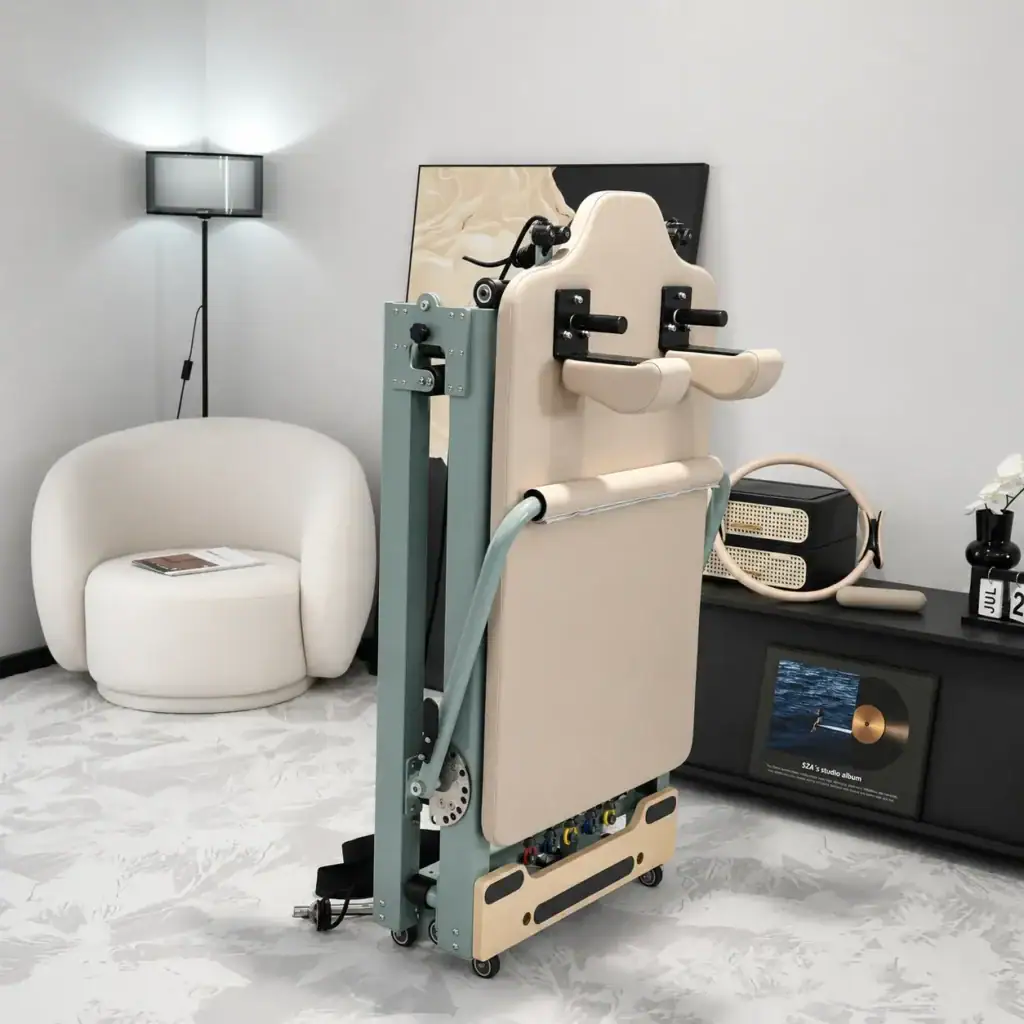
The FD-ALS-416 uses a 6063 aluminum-alloy frame and folds at the center for upright storage. Its supplied specification lists an open size of 2200 × 600 × 176 mm, a folded size of 1280 × 775 × 450 mm and a net weight of 42 kg. The confirmed spring set contains five springs. See the FD-ALS-416 product page for the current public configuration and inquiry options.
WD-MS-003 fixed maple reformer
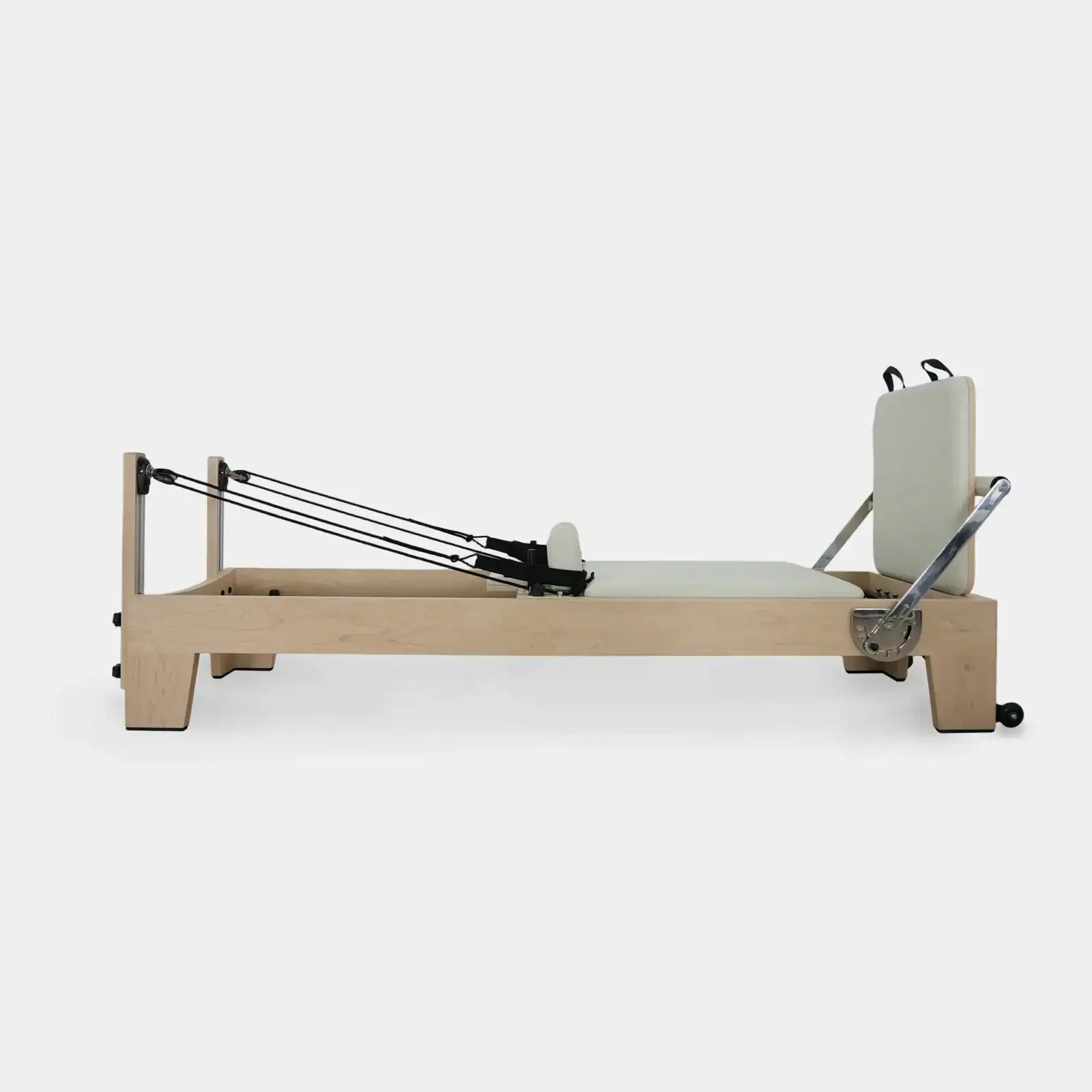
The WD-MS-003 has a 3.5 cm North American maple frame with aluminum-alloy rails. The latest supplied specification lists 2285 × 685 × 355 mm and a net weight of 92 kg. Its standard set includes six springs. The WD-MS-003 maple reformer page shows the product, but this comparison uses the newer specification sheet where page data differ.
| Verified item | FD-ALS-416 | WD-MS-003 |
|---|---|---|
| Frame | 6063 aluminum alloy, 2 mm listed thickness | North American maple, 3.5 cm listed frame thickness |
| Open product size | 2200 × 600 × 176 mm | 2285 × 685 × 355 mm |
| Folded size | 1280 × 775 × 450 mm | Not applicable |
| Net weight | 42 kg | 92 kg |
| Spring set | 5 springs | 6 springs |
| Packaging | Carton with expandable polystyrene | Wooden case plus carton |
| Packing size | 1200 × 700 × 360 mm | 2350 × 780 × 540 mm |
| Storage format | Folded upright | Permanent horizontal station |
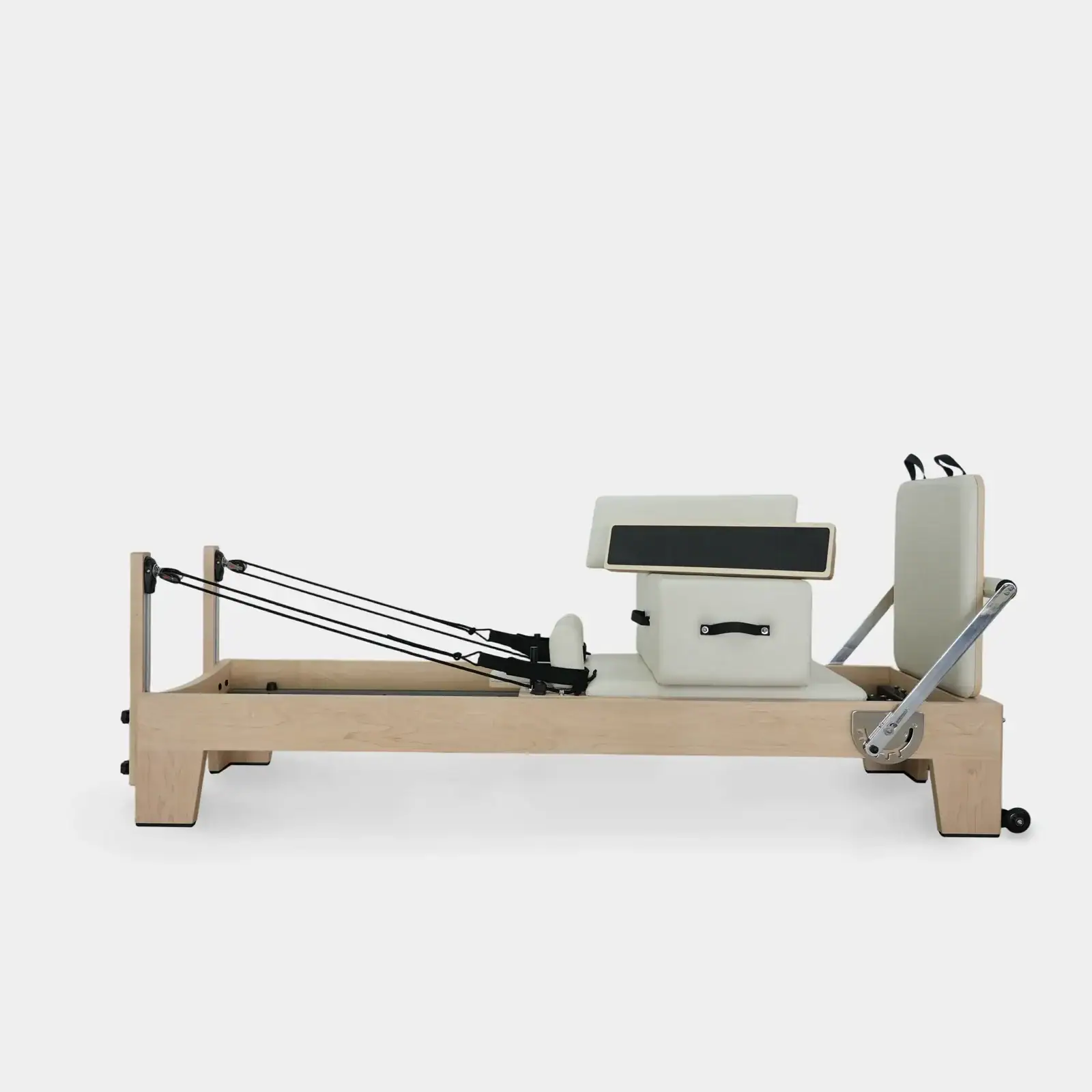
Comparison boundary: these figures describe two specific products, not every folding and fixed reformer. Frame construction, height, weight, accessories and commercial-use suitability vary by model.
Space Saving Only Matters When the Floor Is Reused
A foldable reformer does not reduce the training area while a client is using it. The open machine still requires carriage travel, instructor access and circulation around the station. Its space advantage begins after the unit is folded and moved to an approved storage position.
Start with the weekly timetable. If the same room hosts mat classes, workshops or another service after reformer sessions, clearing the floor can create genuine value. If reformers remain open all week, the folding mechanism adds a capability the team may rarely use.
Measure the whole storage journey
- Record the open product size and the separate exercise clearance.
- Check the folded dimensions against the intended storage bay.
- Measure doors, corridors, corners, thresholds and lift access.
- Confirm whether accessories come off before folding and where they will be stored.
- Use the model’s approved locking and storage instructions.
- Decide who folds, moves, inspects and resets each unit.
- Allow changeover time between class formats.
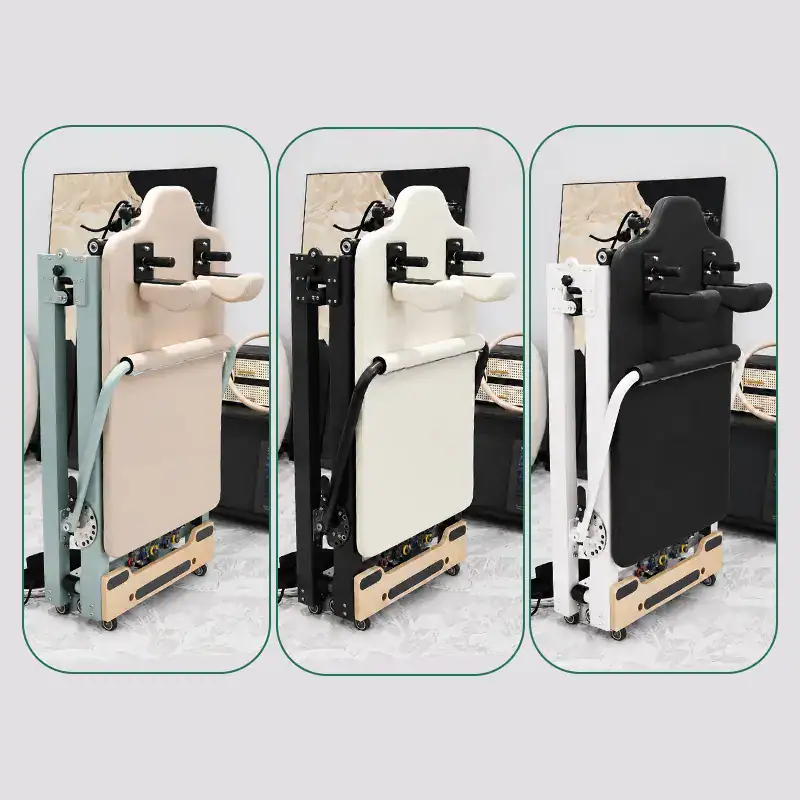
The FD-ALS-416 image shows an upright folded position and visible transport wheels, but a photograph alone does not establish a universal one-person procedure or unattended-storage method. Those points must follow the instructions supplied with the ordered configuration. For comparison, the official Align-Pilates F2 folding reformer guide documents a model-specific folding and moving sequence; it should not be applied automatically to a different reformer.
Long-Term Stability Is a Model-Level Question
“Fixed is stable; foldable is unstable” is too crude for a commercial purchase. A meaningful assessment starts with the fully opened machine on a level floor. Inspect how the frame contacts the floor, whether the folding lock fully engages, how the carriage tracks, and whether the footbar and adjustable parts engage consistently. Compare several units under the same setup instead of relying on one showroom sample.
A fixed frame removes the folding joint and the daily open-close routine. That can simplify operations in a dedicated studio, but it does not remove maintenance. Carriage wheels, rails, springs, ropes, pulleys, footbar positions, fasteners and upholstery still need model-appropriate inspection.
For a foldable model, add the hinge, lock, folding hardware and transport wheels to the checklist. Look for looseness, visible damage, incomplete engagement or a change in operation compared with the approved sample. The applicable method and acceptance criteria must come from the manufacturer for that model; this article does not substitute arbitrary cycle counts or load figures.
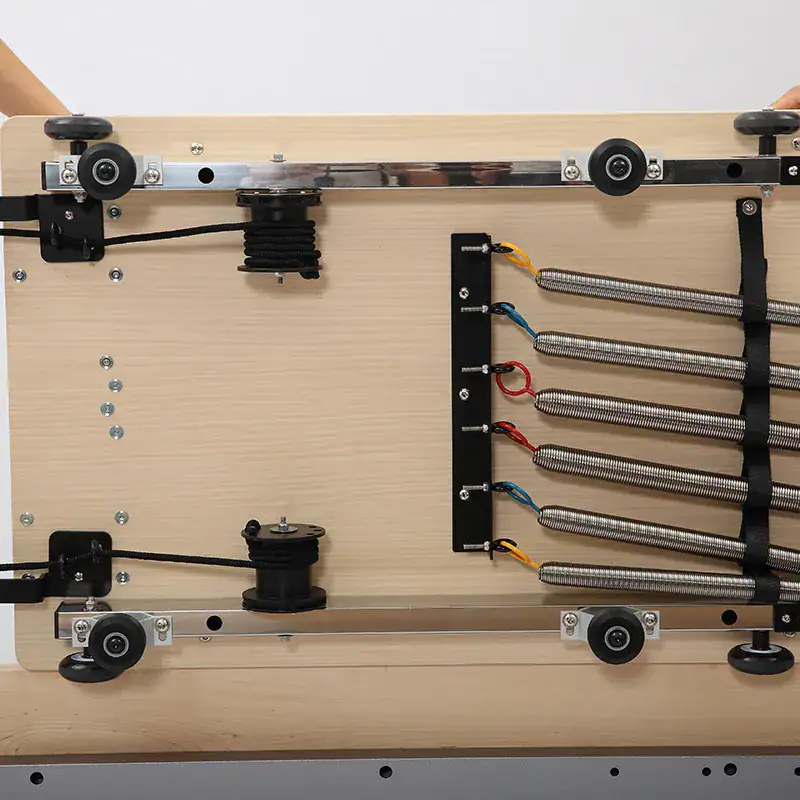
Use a documented Pilates reformer quality inspection checklist before shipment, then establish an on-site inspection log after installation.
Daily Workflow Can Matter More Than the Purchase Price
For one machine, folding may be a brief task. For a class fleet, it becomes a repeated operating process. Multiply the setup and storage time by the number of stations, changeovers per day and working days per year. Do not guess a universal time: run a supervised trial with the exact model and record the real process.
| Workflow item | Foldable fleet | Fixed fleet |
|---|---|---|
| Before class | Move, unfold, lock, position, inspect and attach stored accessories as applicable | Visual pre-use check and station reset |
| After class | Clean, remove specified accessories, fold, move and secure for storage | Clean and leave in the assigned station |
| Staff training | Includes folding, safe handling, locks, wheels and storage route | Focuses on normal adjustments, inspection and cleaning |
| Changeover risk | A rushed storage routine may create missed checks or misplaced accessories | Permanent stations consume the room but reduce equipment movement |
| Value created | Room becomes available for another scheduled purpose | Reformer stations stay ready for repeated classes |
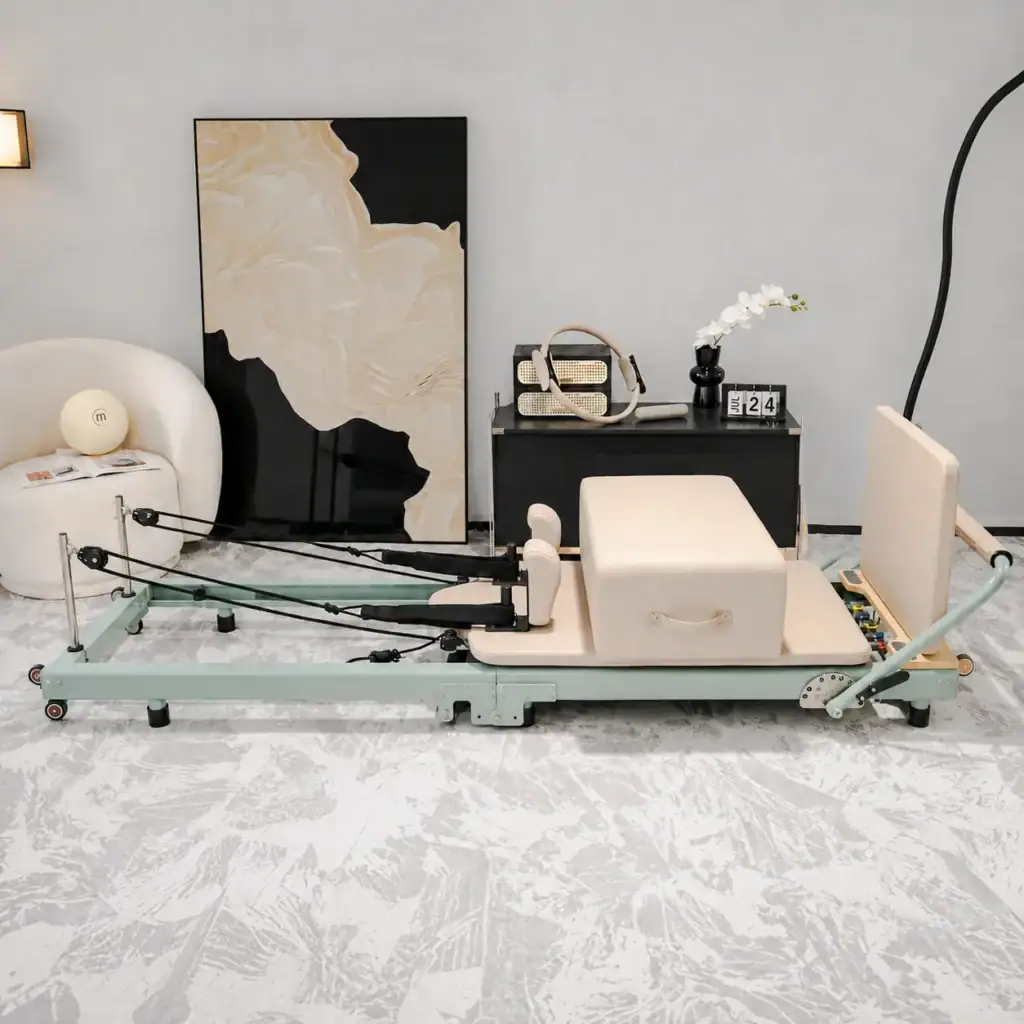
The sitting box is optional in the supplied FD-ALS-416 specification, while the jumpboard is listed as standard. Confirm the final accessory list rather than assuming the photographed setup matches every quotation. This is one of the distinctions covered in our broader commercial Pilates reformer buying guide.
Anonymous London Studio: Why Fixed Won
A London professional group-class studio planned a dedicated reformer classroom of approximately 150 m². Classes were designed for 10–12 participants. The buyer initially considered foldable reformers because they appeared to offer more layout flexibility.
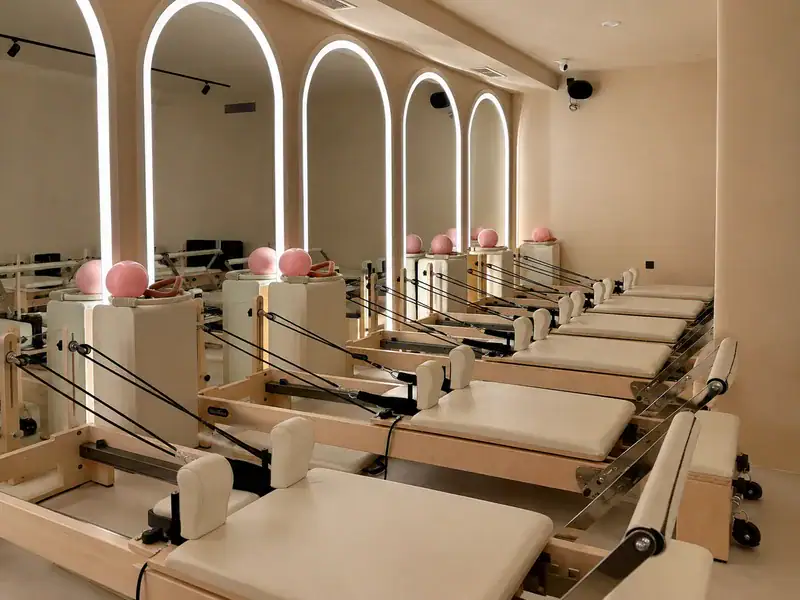
The timetable changed the decision. The room did not need to be cleared each day, and the equipment would remain in uniform training rows. The final configuration used 12 fixed commercial reformers. Permanent placement removed the need for daily folding, relocation and accessory storage, while keeping each station ready for the next class.
This is not evidence that fixed reformers are always better. It demonstrates a more useful purchasing rule: do not pay operational attention to a space-saving function unless the business will actually use the recovered floor area. Customer and order identifiers are withheld for confidentiality.
Springs, Accessories and Maintenance Are Not Identical
The supplied FD-ALS-416 configuration has five color-coded springs. The WD-MS-003 specification lists six. Spring colors are not a universal resistance standard across manufacturers or models, so buyers need the exact spring schedule, replacement references and approved maintenance guidance for each SKU.
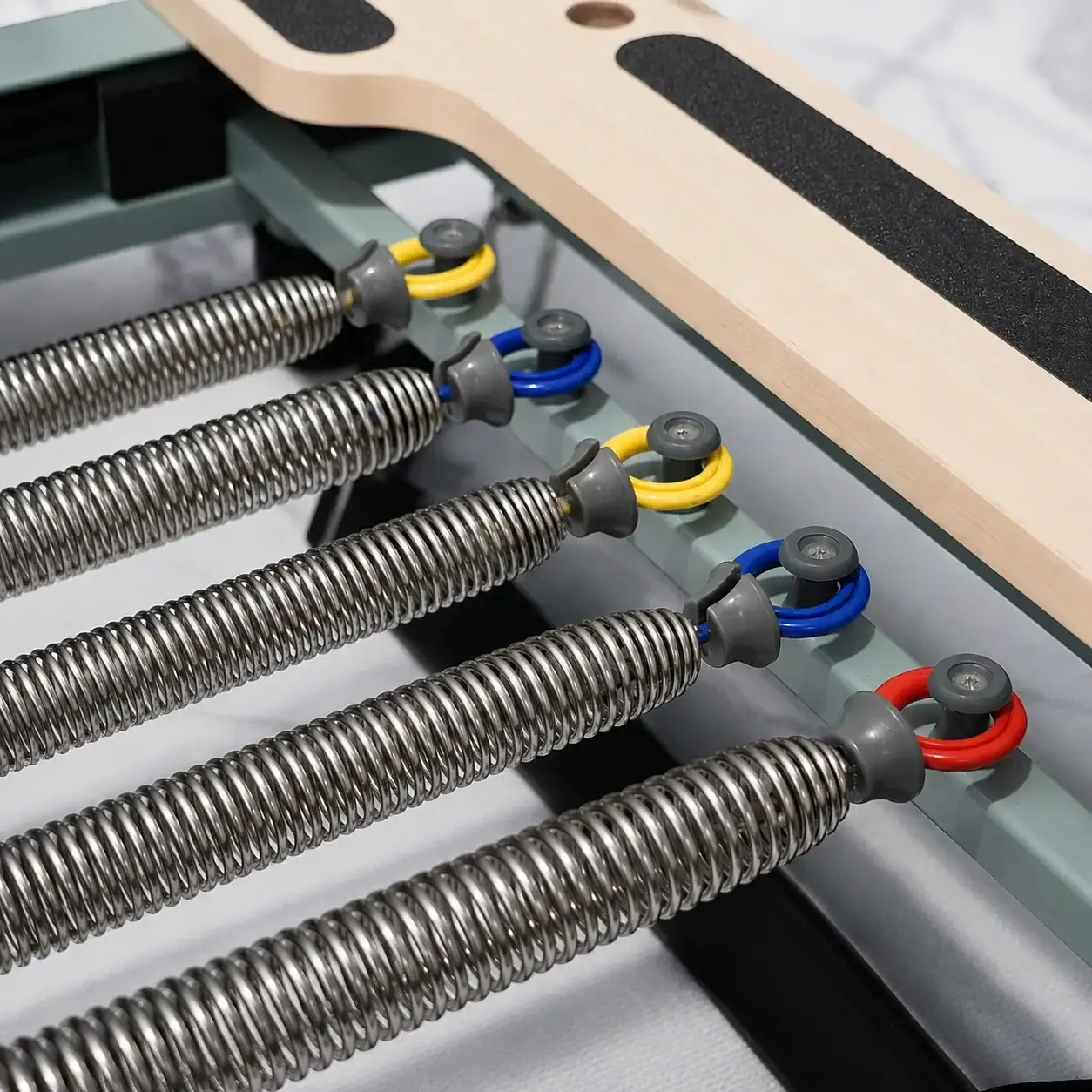
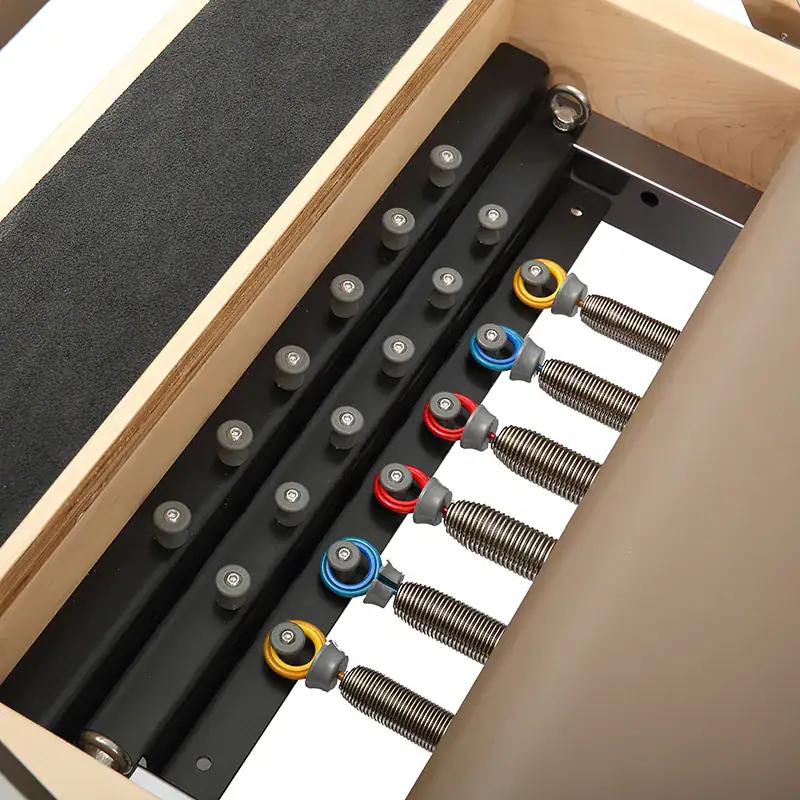
For both designs, inspect springs, ropes, pulleys, carriage travel, wheels, upholstery and adjustment points. For the foldable reformer, also record the condition and operation of folding components. Maintenance frequency depends on the exact manual, usage level and environment.
Calculate the Decision Without Inventing a Stability Score
Compare the total studio workflow, not a generic label. A simple planning formula is:
Annual handling time = minutes to prepare and store one unit × number of units × changeovers per day × operating days.
Use a timed trial with the exact model to fill in the first value. Then compare that labor and scheduling cost with the revenue or program value created by an empty room. Add delivered equipment cost, installation, storage fixtures if applicable, cleaning, replacement parts, maintenance labor and downtime. The commercial vs home reformer guide provides additional questions for daily studio use.
- Choose foldable when the recovered floor supports a real second use and the team can follow a safe, repeatable changeover process.
- Choose fixed when the room is dedicated, stations stay in place and repeated class readiness matters more than storage flexibility.
- Consider a mixed fleet when most stations are permanent but a small number must move for overflow, private sessions or events.
Questions to Send the Supplier Before Ordering
- Is the quoted configuration approved for the intended studio usage?
- What are the exact open, folded and packed dimensions?
- Which parts must be removed or secured before folding?
- What is the approved folding, moving and upright-storage procedure?
- Does the storage position require a particular floor, wall clearance or restraint?
- Which folding joints, locks and wheels are included in routine inspection?
- What spring set, accessories and replacement parts are supplied?
- Which items are standard and which are optional?
- What does the warranty cover for commercial use, folding hardware and wear parts?
- Can the supplier provide completed pre-shipment inspection records for the ordered model?
If you are comparing multiple suppliers, use the same questions and landed-cost terms for every quotation. The Pilates reformer wholesale guide covers MOQ, customization, packing and shipping variables that sit outside the frame-format decision.
Compare the Models Against Your Real Timetable
Send the room dimensions, storage route, class timetable, planned station count and destination. Our team can compare the FD-ALS-416 and WD-MS-003 using the current specifications and identify which configuration, accessories and inspection records are available for your order.
Frequently Asked Questions
Is a foldable Pilates reformer suitable for a studio?
It can be when the exact model is approved for the intended use and the studio has a suitable folding, movement, inspection and storage process. Do not assume every home folding reformer is suitable for a commercial timetable.
Is a fixed Pilates reformer always more stable?
No universal answer applies across all models. Stability depends on frame design, connections, locking, installation, floor conditions, maintenance and the intended test method. Compare the exact products rather than the category label alone.
How much space does a folding reformer save?
Use the model’s verified open and folded dimensions. The FD-ALS-416 is listed at 2200 × 600 × 176 mm open and 1280 × 775 × 450 mm folded. The usable benefit depends on whether the cleared floor is assigned to another purpose.
Can staff fold and move the reformer after every class?
Follow the model-specific instructions and assess the complete route. Confirm required staffing, accessories, locks, wheels, thresholds and storage conditions before building daily movement into the timetable.
Which option is better for a dedicated reformer room?
A fixed model is often the simpler operational choice when the equipment stays in place and the room has no competing use. The London case in this article selected 12 fixed stations for that reason.
Do foldable and fixed reformers use the same springs?
Not necessarily. The confirmed FD-ALS-416 configuration has five springs, while the supplied WD-MS-003 specification lists six. Colors and resistance definitions are model-specific.
What needs extra inspection on a foldable reformer?
In addition to the normal carriage, rail, spring, rope, pulley, footbar and upholstery checks, inspect the folding joint, lock, related hardware and transport wheels according to the approved instructions.
Author, Technical Review and Sources
Written by Mengying Wang with input from the P.E.Pilates manufacturing and quality-control team.
Technical review: P.E.Pilates Quality Control Team.
Product dimensions, materials, weights, spring quantities, packaging and warranty context were checked against the supplied FD-ALS-416 and WD-MS-003 specification sheets. The London studio information was provided as an anonymous project brief. The two official manufacturer manuals linked in the relevant sections were reviewed for general safety and maintenance context in September 2026. Always follow the approved manual and inspection criteria for the exact model supplied. Learn more about the P.E.Pilates manufacturing background.