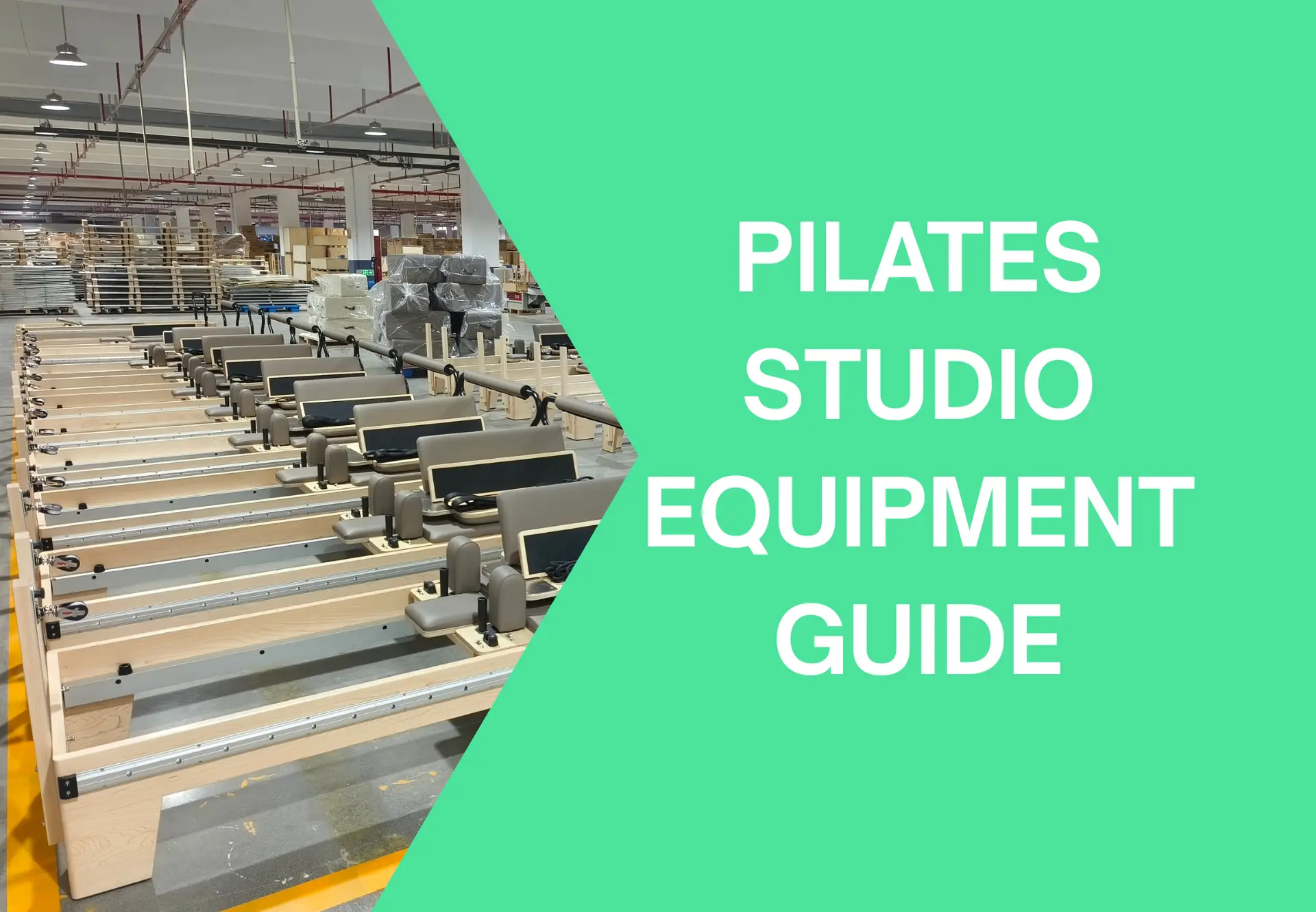
Choosing the right Pilates studio equipment is one of the most important decisions when opening or upgrading a professional Pilates space. The equipment you select affects class capacity, training style, customer experience, studio layout, daily operations, and long-term maintenance costs.
For a new Pilates studio, the goal is not to buy every machine at once. The smarter approach is to build a balanced equipment mix that supports your core classes first, then add specialized equipment as your class schedule, instructor team, and customer base grow.
This guide explains what Pilates studio equipment you need first, what can be added later, how to plan your studio setup, and what to check before choosing a Pilates equipment supplier.
Explore our full range of commercial Pilates equipment when planning your equipment mix.
Quick Summary: What Equipment Does a Pilates Studio Need?
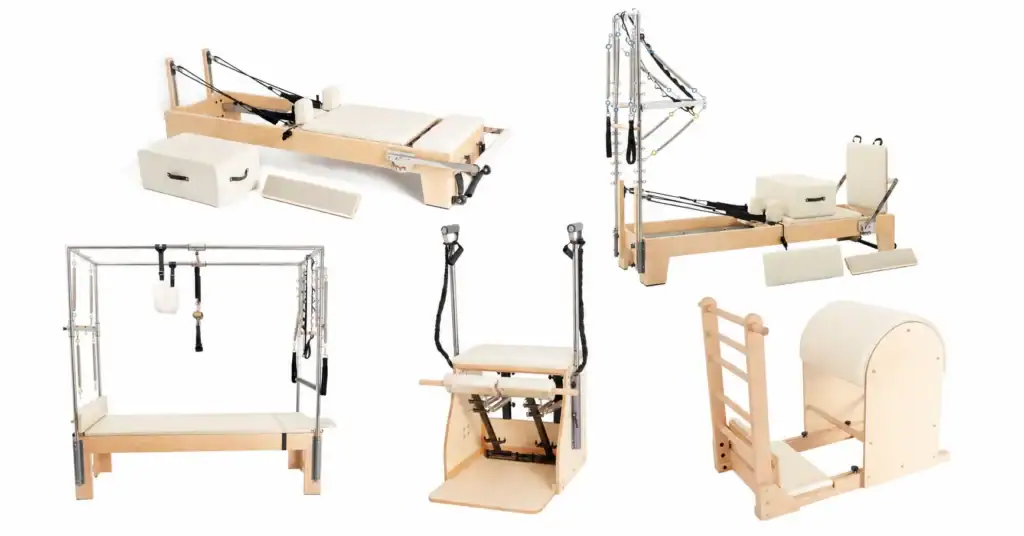
A professional Pilates studio usually starts with reformers as the core equipment. Depending on the business model, the studio may also add reformers with towers, Cadillac or trapeze tables, Pilates chairs, ladder barrels, spine correctors, and small accessories.
For most new studios, the first purchase should focus on:
- Pilates reformers for group or private sessions
- Reformers with towers for more versatile programming
- Pilates chairs for strength, balance, and compact training
- Ladder barrels and spine correctors for mobility and stretching
- A clear studio layout plan based on available floor space
- A supplier that can support bulk orders, delivery, warranty, and replacement parts
If your studio is still in the planning stage, the best starting point is to choose equipment based on your class format, room size, target clients, and launch budget.
Who Is This Guide For?
This guide is mainly written for:
- New Pilates studio owners preparing to open their first location
- Existing studios planning to add more reformers or upgrade old equipment
- Gyms, wellness centers, and physiotherapy spaces adding Pilates training zones
- Resellers and distributors comparing professional Pilates equipment suppliers
- Studio chains looking for scalable equipment packages
This guide is not mainly written for individual home buyers who only need one reformer for personal use. Home users usually care more about foldability, storage, and single-unit delivery, while studio buyers need to consider class capacity, durability, service support, and long-term operating efficiency.
1. Start With Your Studio Business Model
Before buying Pilates studio equipment, you need to define how your studio will make money. Different business models require different equipment combinations.
Reformer Group Classes
If your main revenue comes from group reformer classes, reformers should be the core of your equipment plan. Group classes usually require consistent machine height, smooth carriage movement, quiet performance, durable springs, and enough spacing between each reformer.
For this model, your first priority should be:
- 5 to 10 reformers for a small or medium studio
- Matching models for a consistent class experience
- Easy-to-clean upholstery
- Stable frames suitable for repeated daily use
- Enough space for instructors to walk around each machine
Private or Semi-Private Sessions
If your studio focuses on private lessons, rehabilitation-style sessions, or premium coaching, you may need more versatile equipment.
A private training studio may need:
- Reformers with towers
- Cadillac or trapeze table
- Pilates chair
- Ladder barrel
- Spine corrector
- More space per client
This setup allows instructors to offer more personalized programming and support clients with different training goals.
Hybrid Studio Model
Many modern Pilates studios combine group reformer classes with private training. This is often the most balanced model for growth.
A hybrid studio can start with reformers as the main equipment and gradually add tower units, chairs, and barrels. This helps the studio launch with a clear class offering while keeping room for future expansion.
2. Essential Pilates Studio Equipment
The following equipment types are commonly used in professional Pilates studios.
Pilates Reformers
The Pilates reformer is the foundation of most modern Pilates studios. It supports a wide range of exercises for strength, flexibility, balance, mobility, and core control.
For studio use, a reformer should be stable, smooth, quiet, and durable. Studio owners should pay attention to frame material, spring resistance, carriage glide, footbar adjustment, rope system, shoulder rest comfort, and after-sales support.
For studio owners who are comparing equipment options, professional Pilates reformers are usually the first category to evaluate because they directly affect class capacity, teaching consistency, and long-term studio operations.
A professional reformer is suitable for:
- Group reformer classes
- Private training
- Beginner to advanced Pilates programs
- Strength and mobility training
- Studio package setups
For a new studio, reformers are usually the first equipment category to purchase.
Reformer With Tower
A reformer with tower gives instructors more exercise options than a standard reformer. The tower structure allows for spring-based exercises in different directions, making it useful for private sessions, semi-private classes, and studios that want more training variety.
A reformer with tower is suitable for:
- Private training
- Small group classes
- Mobility and flexibility programs
- Studios offering more premium training options
- Instructors who want expanded programming without using a full Cadillac
For many studios, a reformer with tower is a smart upgrade because it combines reformer training and tower-based exercises in one unit.
Cadillac or Trapeze Table
A Cadillac and trapeze equipment is often used in premium studios, rehabilitation-focused spaces, and instructor training environments. It supports a wide range of controlled movement, assisted stretching, strength work, and advanced Pilates exercises.
A Cadillac or trapeze table is suitable for:
- One-on-one training
- Rehabilitation-style sessions
- Advanced Pilates education
- Premium studio services
- Studios that want a complete classical Pilates setup
For a new group-class-focused studio, a Cadillac may not be the first priority. But for private training studios, it can be an important piece of equipment.
Pilates Chair
The Pilates chair is compact but powerful. It is often used for strength, balance, coordination, and advanced control work. Because it takes less floor space than a reformer, it is a useful addition for studios with limited room.
A Pilates chair is suitable for:
- Private sessions
- Balance and strength training
- Small group programming
- Advanced Pilates exercises
- Compact studio spaces
For a new studio, Pilates chairs can usually be added after reformers, unless the studio specializes in chair-based training or instructor education.
Ladder Barrel
The ladder barrel is commonly used for flexibility, spinal mobility, stretching, extension work, and side-body training. It is especially useful in private sessions and complete Pilates equipment rooms.
A ladder barrel is suitable for:
- Mobility training
- Flexibility work
- Private instruction
- Classical Pilates programming
- Premium studio equipment setups
It is usually not the first purchase for a reformer-only studio, but it becomes valuable as the studio expands its services.
Spine Corrector
A spine corrector is smaller than a ladder barrel and is often used for posture work, spinal mobility, stretching, and core activation. It is easier to store and can be used as supporting equipment in both private and group sessions.
A spine corrector is suitable for:
- Posture training
- Mobility exercises
- Core activation
- Instructor-led private sessions
- Studios that want compact supporting equipment
3. What Equipment Should a New Pilates Studio Buy First?
A new studio does not need to buy every type of Pilates equipment immediately. The first purchase should match the studio’s launch model.
Basic Starter Setup
This setup is suitable for small studios that want to start with reformer-based classes.
| Equipment Type | Suggested Role | Priority |
|---|---|---|
| Pilates reformers | Core class equipment | Must-have |
| Reformer with tower | More versatile training | Recommended |
| Pilates chair | Strength and balance training | Optional at launch |
| Ladder barrel | Stretching and mobility | Add later |
| Cadillac / trapeze table | Premium private sessions | Add later |
| Spine corrector | Supporting mobility tool | Optional |
This setup allows a new studio to launch with a clear service offering and avoid over-investing in equipment that may not be used immediately.
Private Training Studio Setup
This setup is suitable for studios focused on one-on-one sessions, rehabilitation-style training, and premium instruction.
| Equipment Type | Suggested Role | Priority |
| Reformer with tower | Versatile private training | Must-have |
| Cadillac / trapeze table | Advanced and assisted exercises | Recommended |
| Pilates chair | Strength, balance, and control | Recommended |
| Ladder barrel | Mobility and flexibility | Recommended |
| Spine corrector | Posture and mobility support | Recommended |
| Standard reformer | Additional training capacity | Optional |
Private training studios usually need fewer units but more variety.
Group Reformer Studio Setup
This setup is suitable for studios built around group classes.
| Equipment Type | Suggested Role | Priority |
| Pilates reformers | Main class equipment | Must-have |
| Matching reformer models | Consistent class experience | Must-have |
| Reformer with tower | Premium or advanced classes | Optional |
| Pilates chair | Additional programming | Add later |
| Barrel / spine corrector | Stretching and support | Add later |
| Cadillac | Private training upsell | Add later |
For this model, consistency is important. Using the same reformer model across the room helps instructors manage group sessions more smoothly.
4. How Many Reformers Does a Pilates Studio Need?
The number of reformers depends on room size, class model, instructor capacity, and business goals.
A small boutique studio may start with 5 reformers. A medium studio may choose 8 to 10 reformers. Larger studios or multi-room locations may need 12 to 15 or more units.
When planning quantity, studio owners should consider:
- How many clients will attend each class
- How many classes will run per day
- Whether the studio offers private sessions
- How much space is needed between machines
- Whether instructors need walk-around space
- Whether future expansion is planned
A common mistake is to buy equipment based only on room capacity. A better approach is to plan based on class experience, instructor movement, and customer comfort.
5. Studio Layout Considerations
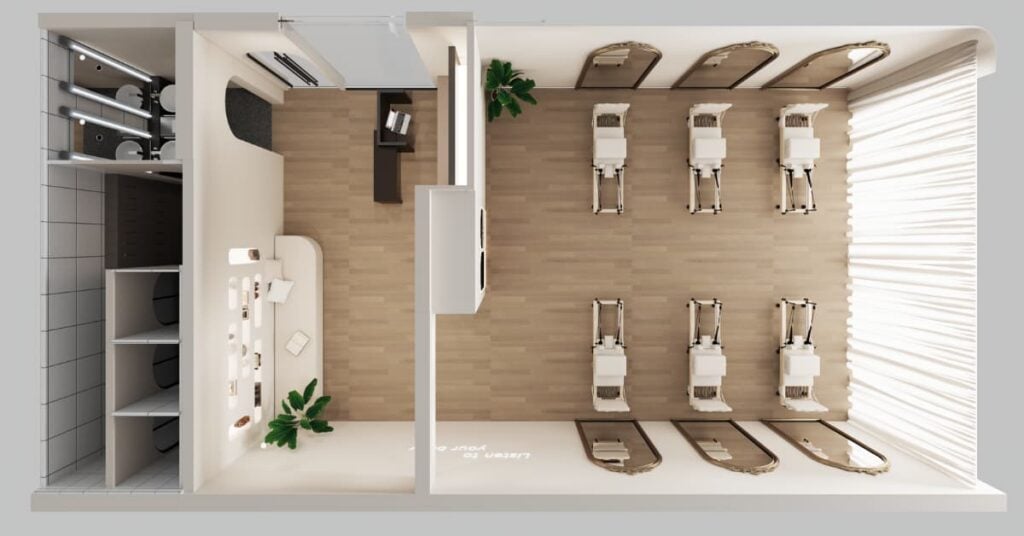
Good equipment planning is not only about what to buy. It is also about where each machine will be placed.
Before confirming a Pilates studio equipment package, measure the training room carefully and create a basic layout plan.
Key Layout Factors
Studio owners should check:
- Total usable floor area
- Door width and delivery access
- Ceiling height
- Distance between each reformer
- Instructor walking paths
- Mirror placement
- Storage space
- Reception and waiting area
- Electrical outlets if needed
- Client flow before and after class
For reformer classes, machines should not be placed too close together. Clients need enough space to move safely, and instructors need enough room to adjust springs, straps, and body positioning.
6. Wooden vs Aluminum Pilates Equipment
Both wooden and aluminum Pilates equipment can be used in professional studios. The right choice depends on brand style, room design, maintenance preferences, and target customers.
Wooden Pilates Equipment
Wooden reformers are popular in premium studios because they create a warm, natural, and professional look. They are often chosen by boutique studios, wellness spaces, and classical Pilates environments.
Wooden equipment is suitable for:
- Premium boutique studios
- Warm interior design
- Classical Pilates positioning
- Private and semi-private sessions
- Studios that want a natural, high-end visual identity
Aluminum Pilates Equipment
Aluminum reformers are often chosen for a modern, clean, and durable studio look. They can be suitable for high-use environments and studios that prefer a more contemporary equipment style.
Aluminum equipment is suitable for:
- Modern commercial studios
- High-frequency class schedules
- Contemporary interior design
- Studios that want a sleek and professional look
- Spaces where durability and easy maintenance are priorities
Comparison Table
| Factor | Wooden Equipment | Aluminum Equipment |
| Visual style | Warm, classic, premium | Modern, clean, contemporary |
| Common use | Boutique studios, private rooms | Group studios, modern spaces |
| Brand feeling | Natural and elegant | Sleek and professional |
| Maintenance focus | Wood finish care | Frame and surface cleaning |
| Best for | Premium studio atmosphere | High-use modern studio setup |
There is no single best choice for every studio. The better choice is the one that fits your target customers, class model, interior style, and long-term operating plan.
7. Folding vs Solid Reformers for Studio Use
Folding reformers and solid-frame reformers serve different needs.
Folding Reformers
Folding reformers are useful when space flexibility is important. They can be suitable for multi-use rooms, small studios, or locations that need easier storage.
They are suitable for:
- Compact studios
- Multi-purpose rooms
- Flexible training spaces
- Studios that need storage options
Solid Reformers
Solid reformers are usually preferred for dedicated commercial studio rooms. They provide a fixed setup and a more permanent professional studio experience.
They are suitable for:
- Full-time Pilates studios
- Group reformer rooms
- Premium boutique studios
- High-frequency class schedules
For most dedicated Pilates studios, solid reformers or professional full-size reformers are usually the better long-term choice. Folding reformers can be useful when flexibility and storage are key priorities.
8. What to Check Before Choosing a Pilates Equipment Supplier
Buying Pilates studio equipment is not only about the machine itself. For B2B buyers, supplier support can directly affect launch timing, customer experience, and long-term operating costs.
Before choosing a supplier, check the following points.
Product Range
A professional supplier should offer more than one reformer model. Studio owners may need reformers, towers, chairs, barrels, Cadillac equipment, and accessories.
A wider product range makes it easier to build a complete studio package from one supplier.
Bulk Order Support
Studio buyers often need multiple units at the same time. The supplier should be able to support package planning, quantity recommendations, and order coordination.
For resellers and distributors, bulk order support is even more important because product consistency and long-term supply stability matter.
Material and Manufacturing Quality
Ask about frame material, upholstery, springs, wheels, rails, rope system, and quality control process. These details affect safety, durability, comfort, and long-term maintenance.
P.E.Pilates manufactures professional Pilates equipment for studios, gyms, distributors, and resellers. The product range includes Pilates reformers, reformers with tower, Cadillac reformers, Pilates chairs, ladder barrels, and other studio equipment.
Delivery and Warehouse Support
For studios in the United States, United Kingdom, and Europe, local warehouse support can help reduce waiting time and simplify delivery planning. Availability depends on product model, stock status, and destination, so buyers should confirm details before placing an order.
Warranty and Replacement Parts
Professional studio buyers should always ask about warranty coverage, replacement parts, and after-sales response. Studio equipment is used repeatedly, so long-term support is more important than a one-time low purchase price.
P.E.Pilates offers warranty support for professional Pilates equipment. Specific warranty coverage, parts policy, and service details should be confirmed based on product model and order terms.
Studio Package Recommendation
A good supplier should not only sell machines. It should help buyers choose the right equipment mix based on floor space, class model, target clients, and launch plan.
For new studios, this kind of recommendation can reduce wasted budget and help the studio open with a more practical setup.
9. Common Mistakes When Buying Pilates Studio Equipment
Mistake 1: Buying Only Based on Price
Low upfront price does not always mean lower total cost. If the equipment has poor durability, limited support, unstable delivery, or hard-to-source replacement parts, the long-term cost may be higher.
Mistake 2: Buying Too Many Equipment Types at Once
New studios often do not need every machine immediately. Buying too many equipment types can increase budget pressure and reduce room efficiency.
Start with the equipment that supports your main classes first, then expand gradually.
Mistake 3: Ignoring Studio Layout
A reformer may fit on paper, but that does not mean the class experience will be comfortable. Always consider instructor movement, client safety, and delivery access.
Mistake 4: Not Checking After-Sales Support
For a professional studio, after-sales support is part of the product value. Ask about warranty, spare parts, service process, and response time before making a bulk purchase.
Mistake 5: Mixing Too Many Models in One Group Class Room
Using many different reformer models in one class can make teaching harder. For group reformer classes, consistent equipment helps instructors manage class flow more efficiently.
10. Recommended Pilates Studio Equipment Setup by Stage
Stage 1: Before Opening
At this stage, focus on equipment that allows you to launch your core services.
Recommended focus:
- Reformers
- Reformer with tower if private sessions are included
- Basic accessories
- Clear layout plan
- Delivery and installation planning
Stage 2: First 3–6 Months After Opening
After opening, observe which classes are most popular and what clients request most often.
Possible additions:
- Pilates chairs
- Spine correctors
- More reformers
- Additional tower units
- Storage and accessory organization
Stage 3: Studio Expansion
When your studio has stable class demand, you can expand your equipment mix to increase service variety.
Possible additions:
- Cadillac / trapeze table
- Ladder barrel
- More private training equipment
- Additional group class equipment
- Equipment for a second room or new location
This staged approach helps studios control budget while still building a professional equipment system.
11. Pilates Studio Equipment Checklist
Use this checklist before confirming your first equipment order.
Business Planning
- Have you confirmed your studio model?
- Will you focus on group classes, private training, or both?
- How many clients do you want in each class?
- How many instructors will use the space?
- Will you need future expansion?
Equipment Planning
- How many reformers do you need at launch?
- Do you need reformers with towers?
- Do you need Cadillac or trapeze equipment?
- Do you need chairs, barrels, or spine correctors?
- Do all machines fit your class format?
Layout Planning
- Have you measured the room?
- Is there enough space between reformers?
- Can instructors walk around each machine?
- Is delivery access clear?
- Is there space for storage and accessories?
Supplier Planning
- Does the supplier support bulk orders?
- Can the supplier recommend a studio package?
- Are warranty terms clear?
- Are replacement parts available?
- Is local warehouse support available for your region?
- Can the supplier support studios, gyms, resellers, or distributors?
12. Why Work With P.E.Pilates for Studio Equipment?
P.E.Pilates supports professional Pilates studios, gyms, distributors, and resellers with a wide range of Pilates equipment for commercial use.
Our equipment range includes:
- Pilates reformers
- Reformers with tower
- Cadillac reformers
- Trapeze tables
- Pilates chairs
- Ladder barrels
- Spine correctors
- Studio equipment packages
For B2B buyers, P.E.Pilates can support equipment planning, package recommendations, bulk purchase discussions, and after-sales communication. For buyers in selected markets, local warehouse support may be available depending on product model and inventory status.
If you are opening a new studio or upgrading your current equipment, our team can help you choose a practical equipment mix based on your room size, class model, and business plan.
Final Recommendation
The best Pilates studio equipment plan is not always the biggest one. It is the one that matches your class model, room size, instructor capacity, budget, and growth plan.
For most new studios, reformers should be the core equipment. As the studio grows, reformers with towers, chairs, barrels, spine correctors, and Cadillac equipment can help expand your service offering and increase training variety.
If you are planning a new Pilates studio, upgrading your current machines, or comparing professional equipment suppliers, P.E.Pilates can help you build a practical studio equipment package.
FAQ: Pilates Studio Equipment
What equipment do I need to open a Pilates studio?
Most new Pilates studios start with reformers as the core equipment. Depending on the studio model, you may also need reformers with towers, Pilates chairs, ladder barrels, spine correctors, and Cadillac or trapeze equipment. A group-class studio usually needs more reformers, while a private training studio may need fewer units but more equipment variety.
How many reformers should a new Pilates studio buy?
The number depends on your room size, class capacity, instructor plan, and launch budget. A small studio may start with around 5 reformers, while a medium studio may plan for 8 to 10 units. Larger studios may need 12 to 15 or more. The best number should be based on both floor space and business model.
Should I buy wooden or aluminum reformers for my studio?
Wooden reformers are often chosen for boutique studios that want a warm, premium, and natural look. Aluminum reformers are often chosen for modern studios that prefer a clean, contemporary, and durable equipment style. Both can be suitable for professional use if the quality, stability, and supplier support meet studio standards.
Do I need a Cadillac or trapeze table when opening a studio?
Not always. If your studio focuses mainly on group reformer classes, a Cadillac or trapeze table can be added later. If your studio focuses on private training, rehabilitation-style sessions, or premium Pilates instruction, a Cadillac or trapeze table may be useful from the beginning.
What is the best Pilates equipment setup for a new studio?
For many new studios, the best starting setup includes reformers as the core equipment, with one or more reformers with tower if private sessions are planned. Chairs, barrels, spine correctors, and Cadillac equipment can be added based on your service model and budget.
What should I check before buying Pilates studio equipment in bulk?
Check product quality, frame material, spring system, upholstery, carriage movement, warranty, delivery support, replacement parts, and supplier experience with studio or reseller orders. For B2B buyers, after-sales support and long-term supply stability are just as important as product price.
Can P.E.Pilates help recommend an equipment package for my studio?
Yes. P.E.Pilates can help studios, gyms, resellers, and distributors discuss equipment package options based on room size, class model, target clients, and order quantity. You can request a studio equipment package recommendation through our studio solution page.