
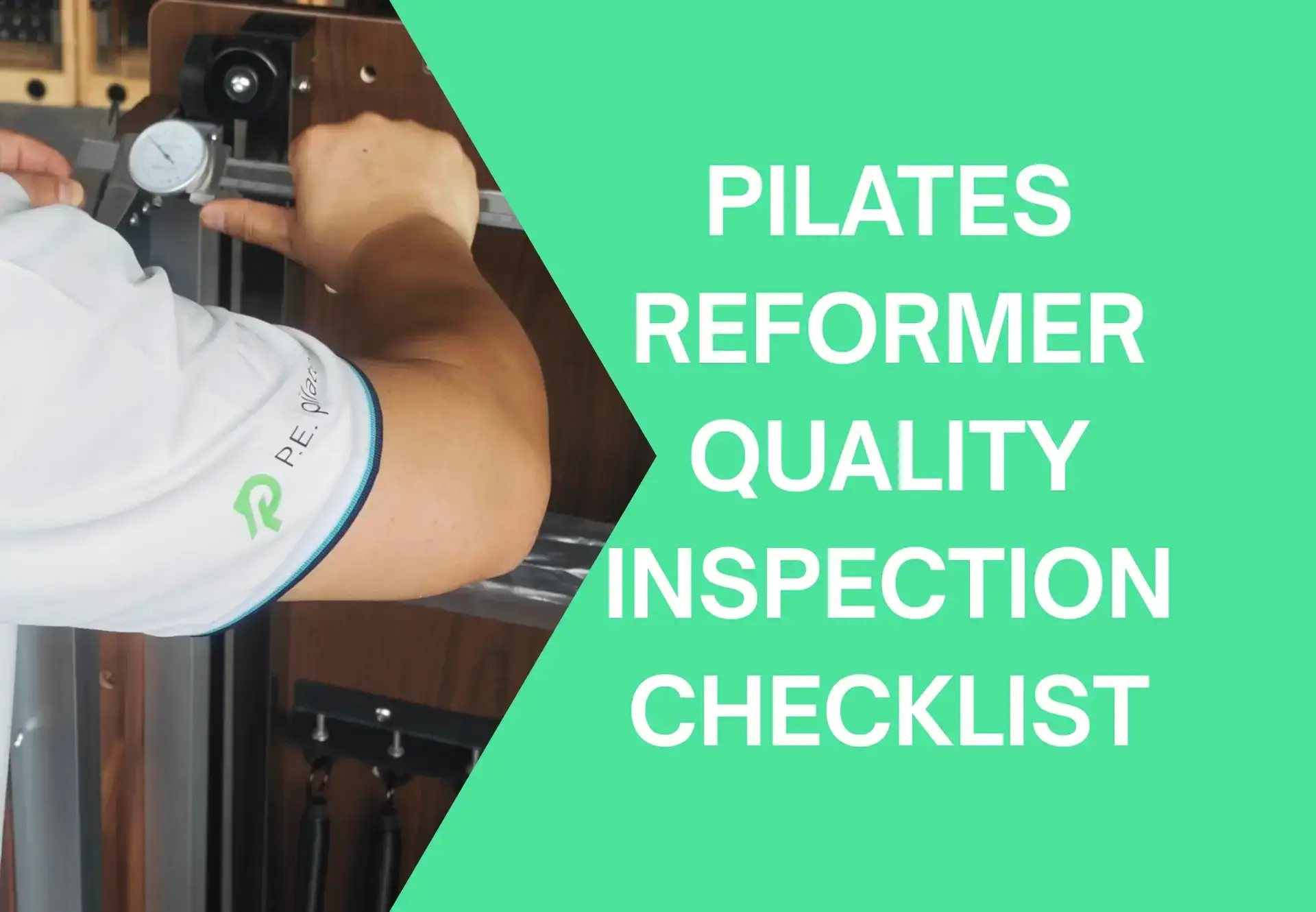
A Pilates reformer quality inspection does not end with a finished-product photo. For a bulk order, factory QC compares the approved order specification with the frame, carriage, rail, springs, ropes, footbar, upholstery, accessories, labels and export packaging. Inspectors record the applicable result for each finished reformer, photograph critical checkpoints and hold any nonconforming product for correction and re-inspection. Before production begins, the buyer and supplier need one approved configuration. Before dispatch, the buyer needs a QC record that can be matched to that configuration.
Two reformers can look identical in a catalog and still behave differently in a studio. The differences usually appear when the carriage travels under load, an instructor changes the footbar repeatedly, the ropes run through the pulleys, or ten units from the same order are compared side by side. That is why a bulk-order inspection must check both function and consistency.
Written by Mengying Wang with input from the P.E.Pilates manufacturing and quality-control team.
Technical review: P.E.Pilates Quality Control Team.
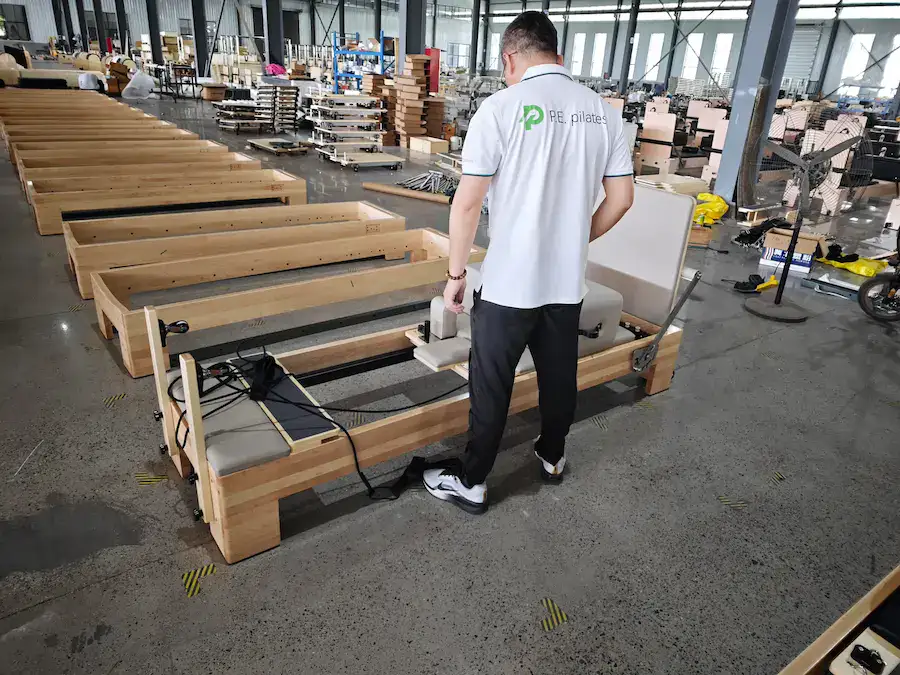
Pilates Reformer Quality Inspection Checklist at a Glance
Use this Pilates reformer inspection checklist after the model and commercial requirements have been selected. Our Commercial Pilates Reformer Buying Guide covers the earlier product-selection decision; the checklist below begins once a buyer is preparing to approve production and shipment.
| Stage | What is checked | Evidence the buyer can request |
|---|---|---|
| Order review | Model, quantity, material, color, logo, accessories and packaging specification | Approved specification, configuration list and retained-sample record |
| Incoming material check | Frame material, surface finish, upholstery, springs, ropes, hardware and purchased parts | Material records and incoming-inspection photos where applicable |
| In-process inspection | Assembly alignment, fasteners, rail installation, carriage fit and custom details | Production photographs and exception records |
| Final functional check | Carriage and rail movement, spring engagement, footbar locks, ropes, straps, pulleys and stability | Completed checklist, identified photographs and functional video |
| Order consistency | Upholstery, finish, accessories, labels and configuration across the batch | Batch-comparison photographs and unit records |
| Packing release | Accessories, manuals, protection, carton or crate marks, quantity and documents | Packing photos, packing list and shipping marks |
Buyer’s Check: request one completed inspection record with its matching product photographs. A blank form describes a process; an identified record shows how the process was applied to an order.
1. Freeze the order specification before inspection
Factory inspection starts with the approved order, not with a wrench. The purchase order, approved sample, bill of materials and production traveler need to describe the same Pilates reformer. Record the frame type, upholstery color, spring set, rope system, footbar, tower option, logo position, accessories and packaging. A custom detail agreed only in a chat message can disappear between sales approval and assembly.
For buyers still comparing suppliers, our guide on how to verify a Pilates reformer manufacturer explains what to review before approving the sample. For customized orders, compare the production specification with the relevant OEM and ODM reformer cases and the signed configuration for the actual order.
- Give every approved configuration a revision or date.
- Mark custom items separately from the standard model specification.
- Keep an approved sample or clear approval photographs for comparison.
- Define who may accept a deviation and how that approval is recorded.
Inspection procedures vary by reformer design. Aluminum, solid-wood, folding, tower and other configurations can use different hardware, adjustment mechanisms and assembly structures. Compare the checklist with the approved specification for the exact Pilates reformer model being ordered.

2. Inspect the frame, rails and finished surfaces
Start with the Pilates reformer stationary. Set it on a level inspection surface and look for rocking, loose joints, visible distortion or damage around the frame, legs and standing platform. With a wooden frame, the inspector follows the joints, edges, coating and color from one end to the other. Aluminum models direct attention to profiles, connections, end caps and the finish around drilled or fastened points. Clean, aligned rails provide the reference for the movement check that follows.
Appearance and function require separate acceptance rules. The order standard defines where a minor surface mark may be accepted and which condition requires rework. Without that distinction, two inspectors can reach different decisions on the same commercial reformer.
3. Run the carriage through its full travel
On the inspection line, carriage problems are often easier to feel than to see. A technician runs the carriage along the full usable rail length, first slowly and then at a normal operating pace. Changes in resistance, scraping, contact points or movement that feels different from the previous reformer trigger a closer look at the wheels, bearings, rail alignment and carriage fit.
For a commercial Pilates reformer inspection, consistency between units matters almost as much as the condition of one reformer. Compare the batch with the same spring combination, rope setting and operator. A review video is easier to evaluate when it shows the complete product, retains the original sound and identifies the reformer being tested.
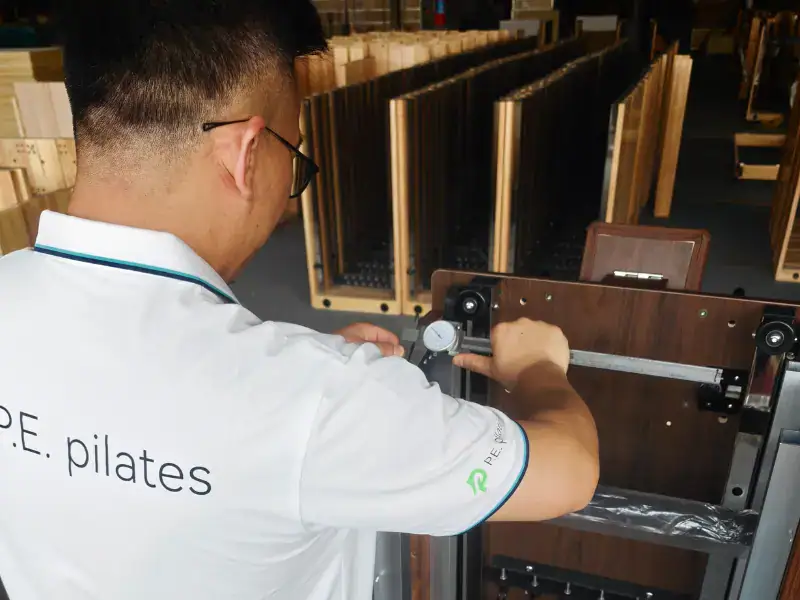
When a sound meter is used during a carriage noise check, the record also needs the test environment, measurement position, operating condition and the model-specific acceptance method. The supplied factory photograph confirms that a sound meter was used during a carriage test, but the display alone is not enough to publish a noise specification. No decibel claim is made in this guide.
4. Check springs, ropes, straps and pulleys as a system
Match the spring quantity and color to the approved configuration. Inspect hooks and coils for deformation, corrosion, gaps or surface damage, then engage each spring at its intended attachment point. Spring colors are not a universal resistance standard; compare the supplier’s defined set rather than treating one brand’s color as another brand’s value.
Trace each rope through its intended path and look for fraying, twisting or contact with a sharp edge. Rotate the pulleys, check the cleats, loops, straps and handles, and set both sides to the same effective length. Manufacturer maintenance guidance treats springs, ropes and attachment hardware as wear items that remain part of the studio’s inspection routine after installation.
5. Cycle every adjustment and locking point
Footbar problems usually appear during repeated adjustment rather than a static visual check. The inspector moves the footbar through the positions supplied on that model and confirms that the locking points engage consistently on both sides. The exact method depends on the footbar design. The same working check applies to the headrest, shoulder rests, rope risers and stoppers.
Where a tower is fitted, the inspection expands to the uprights, crossbar, push-through bar, spring attachment points and securing hardware. A lock that engages once can still bind or loosen during repeated changes, so the QC operator cycles adjustable parts rather than signing them off from appearance alone.
Never substitute an arbitrary load number for the model’s approved test method. The test condition, fixture, duration and acceptance criteria need to be defined by the manufacturer for the exact model. If these are unavailable, record the claim as pending technical confirmation rather than turning it into a marketing specification.
6. Finish with upholstery, accessories and packing
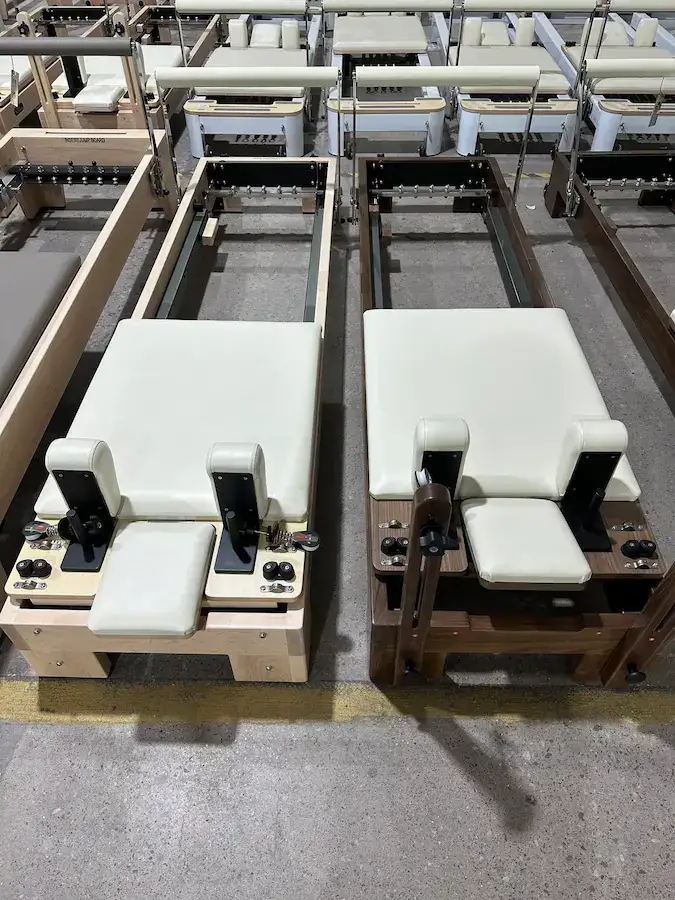
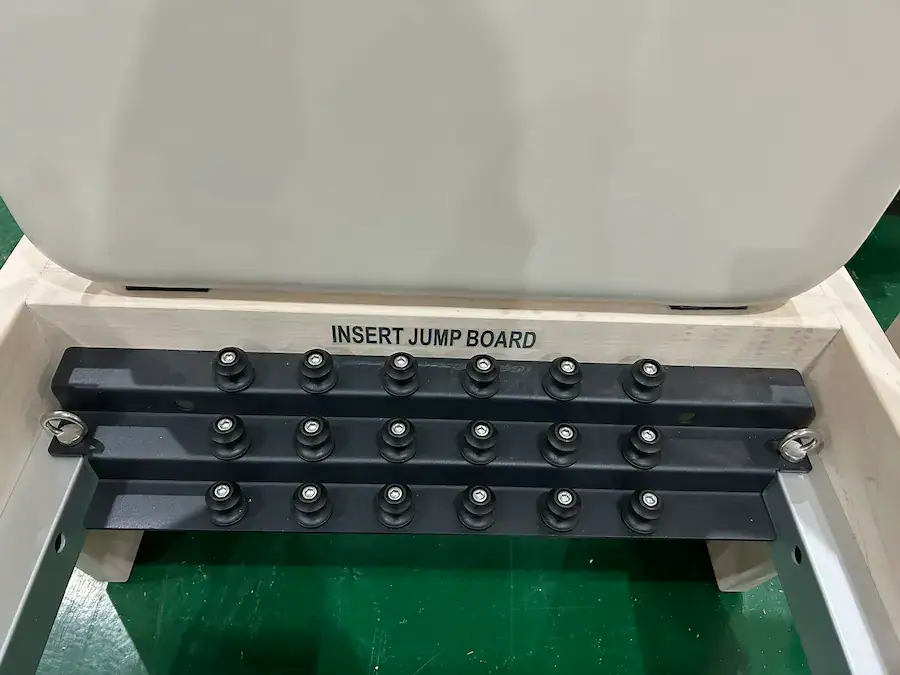
Compare upholstery color and grain with the approved sample. Follow the seams and corners, then examine high-contact areas for cuts, stains, wrinkles or exposed fasteners. Match the box, jump board, straps, handles and ordered accessories to the packing list.
Some discrepancies only become visible at packing: a loose accessory, unmatched component, missing label or protection material placed in the wrong position. For a bulk order, the final comparison with the packing list is especially valuable. Protect rails, corners, protruding hardware and finished surfaces, secure the accessory cartons, manual and spare parts, and photograph the Pilates reformer before wrapping and after shipping marks are applied.
P.E.Pilates outgoing QC for bulk orders
Pilates reformer factory QC needs to cover the individual product and the consistency of the complete order. P.E.Pilates records 100% outgoing quality control for applicable final checkpoints covering the frame, upholstery, carriage, springs, footbar, tower posts where supplied, and wheels, with photographs taken during the process.
Here, 100% OQC means every finished reformer goes through the applicable final inspection steps before shipment. The exact checks depend on the model, configuration and order requirements. Laboratory, destructive or material-verification tests are not repeated on every finished reformer. Buyers can ask which checkpoints apply to every product, which use batch records or sampling, and how a failed item is held, corrected and re-inspected. Our Pilates reformer wholesale guide places this QC review within the wider ordering, packing and shipping process.
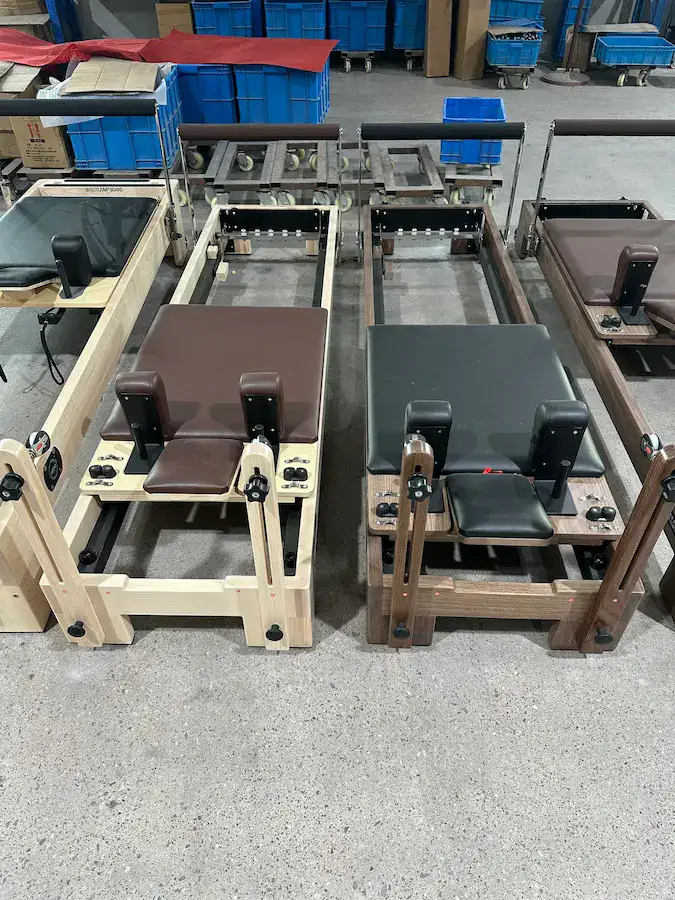
What final inspection caught on a customized order
A customer approved an aluminum reformer sample for a commercial studio order. The bulk products had to match the retained sample in upholstery color, spring configuration, logo position and packing information. During final QC, the exterior details matched, but the installed spring set followed the standard model combination rather than the custom combination approved for that order. Customer and order identifiers have been withheld for confidentiality.
Shipment release stopped. The affected reformers were isolated, the approved springs were installed, and the relevant checkpoints were inspected again against the retained sample. The process correction went beyond adding another visual check: an order-specific bill of materials, separate spring configuration fields and a required pre-packing photograph closed the information gap between sales approval and assembly.
Final inspection stopped the wrong configuration from shipping. Order-specific configuration control addressed the point where the mismatch entered production.
QC documents to request before releasing a bulk order
- Approved model and customization specification.
- Completed inspection checklist with the order or unit reference.
- Photographs of critical configuration points and finished surfaces.
- Continuous video of carriage travel and adjustment functions.
- Accessory and spare-parts packing list.
- Photos of internal protection, closed package and shipping marks.
- Nonconformity and re-inspection records when a defect was found.
- Confirmation that the inspected configuration matches the invoice and packing list.
For an initial order or a new custom model, use an approved sample and consider an independent pre-shipment inspection. Agree the scope before production; a third-party inspector cannot reconstruct missing specifications on the inspection day.
For studio owners and distributors
Studio owners
Request a sample or detailed functional video before committing to a room full of commercial Pilates reformers. After delivery, create a maintenance log for the exact model and set inspection intervals around actual studio usage, manufacturer instructions and local requirements.
Distributors and private-label buyers
Build appearance limits, configuration control, sampling, traceability, spare parts and corrective-action evidence into the purchase specification. Compare repeat orders with the approved sample and prior shipment, not only with the supplier’s current standard model.
Before approving a bulk reformer order
Keep the approved specification, configuration list, color and material confirmation, accessories list, packaging requirements and inspection records together. For distributors and studio buyers, a documented pre-shipment quality inspection provides a clear comparison between the finished order and the configuration approved before production.
If you are evaluating a bulk Pilates reformer order, contact our team before placing the order to ask which inspection records, product specifications and QC documents are available for the model you are considering.
Frequently asked questions
What is inspected on a Pilates reformer before shipment?
Check the approved configuration, frame and finish, carriage travel, wheels, springs, ropes, pulleys, footbar and locks, upholstery, accessories, labels and packing. Record the result and re-inspect corrected defects.
Does every reformer in a bulk order receive an inspection?
Critical function and configuration points are suitable for unit-level outgoing checks. Material or destructive tests may use batch verification. Ask the factory to distinguish 100% checks from sampled checks.
How can a buyer verify carriage quality remotely?
Request a continuous video showing full carriage travel with original sound, the product identifier and the same setup used across compared Pilates reformers. A sample trial remains stronger evidence for a large first order.
Is a factory photo enough proof of inspection?
No. A reviewable QC pack connects photos or video to an approved specification, a completed checklist, an order or product reference, and a clear pass, correction or rejection decision.
What is the difference between QC and maintenance?
Factory QC determines whether a Pilates reformer meets the agreed requirements before shipment. Maintenance covers continuing inspection, cleaning, adjustment and replacement after installation according to the model manual and usage.
Should buyers use a third-party pre-shipment inspection?
It can be useful for a first order, a large order or a new custom configuration. Agree the specification, sampling plan and acceptance criteria before production so the inspector has a workable standard.
What happens when an inspection finds a defect?
The factory identifies and holds the affected product, records the defect and reviews its cause. After correction, the QC team inspects the relevant checkpoints again before release.
References, authorship and scope
This procurement checklist uses the P.E.Pilates outgoing-QC record supplied by the operations team, a documented production case and photographs of the inspection process.
Written by Mengying Wang with input from the P.E.Pilates manufacturing and quality-control team. Technical review: P.E.Pilates Quality Control Team. Learn more about the P.E.Pilates manufacturing background.