
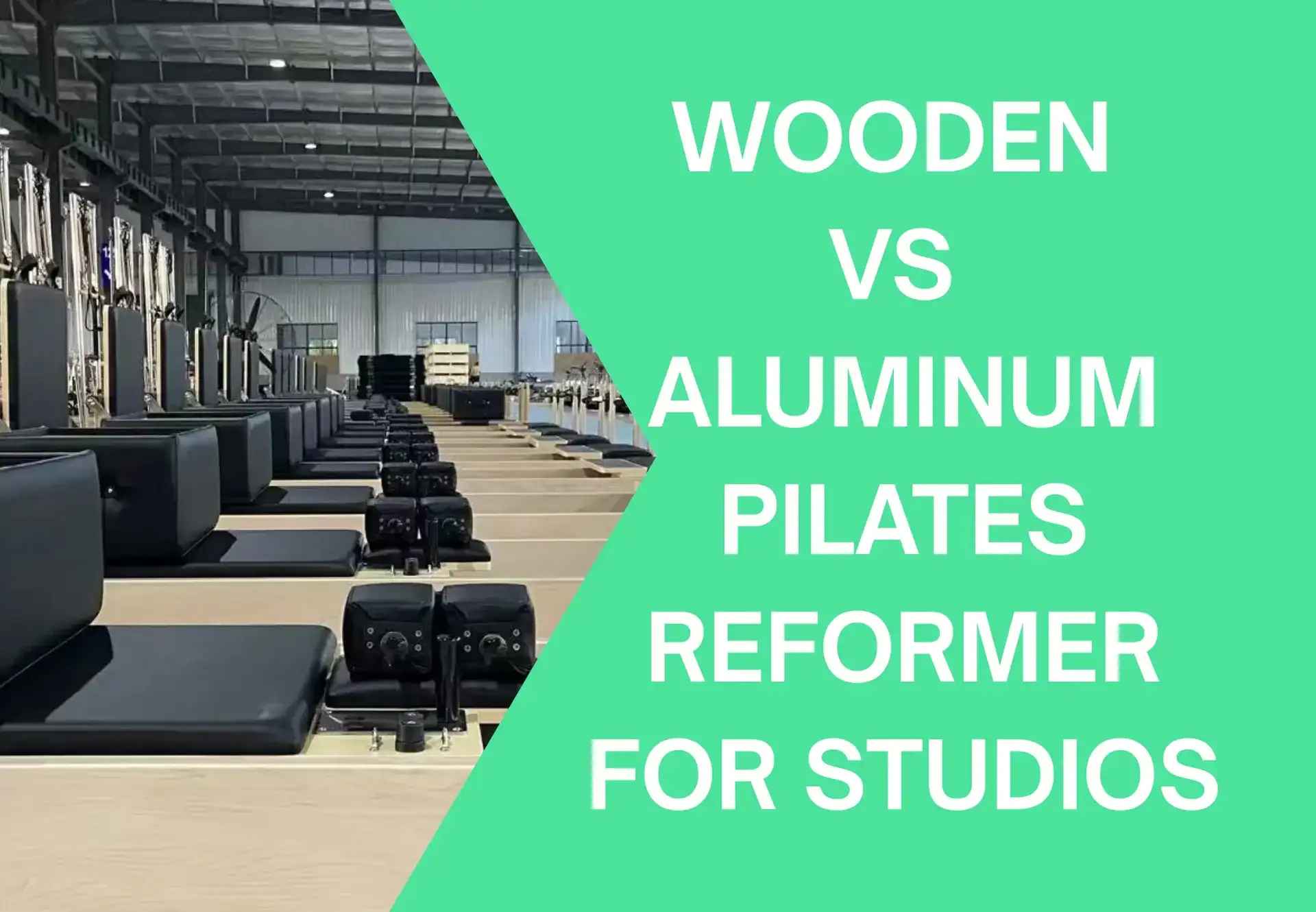
For studios, the wooden vs aluminum Pilates reformer decision is mainly an operating decision. A maple reformer can reinforce a warm, premium room and work well for private sessions or client-facing areas. An aluminum reformer often suits high-frequency class zones where repeatable cleaning and a practical contemporary finish take priority. Neither frame material removes the need to inspect the carriage, rails, springs, ropes, upholstery and adjustment hardware. Compare the exact models, maintenance access, approved configuration and total delivered cost rather than assuming one material is universally better.
Written by Mengying Wang for P.E.Pilates, using supplied model photographs, factory inspection videos and an anonymized German boutique-studio project.
Wooden vs Aluminum Pilates Reformer at a Glance
| Buying question | Wooden reformer | Aluminum reformer |
|---|---|---|
| Studio atmosphere | Natural grain and a warmer visual presence | Clean, contemporary and more technical appearance |
| Typical placement | Boutique rooms, private training and premium client-facing zones | Group rooms, gyms and higher-frequency operating zones |
| Purchase comparison | Wood species, joinery, finish and customization affect cost | Profile design, configuration, finish and hardware affect cost |
| Routine care | Surface cleaning plus attention to coating condition and room environment | Surface cleaning plus attention to connections, finish and exposed hardware |
| Shared maintenance | Upholstery, carriage, wheels, rails, springs, ropes, straps, pulleys, footbar and fasteners | |
| Best decision method | Compare the exact model with the studio workload, room design, cleaning routine and service plan | |
This comparison starts after a buyer has decided that a commercial reformer is required. If you are still defining class capacity, adjustment needs and supplier support, begin with our commercial Pilates reformer buying guide.
Quick Decision Guide: Choose Wood, Aluminum or Both
Choose wood
- The reformer is a visible part of a boutique or private-training interior.
- Natural grain and a warmer room atmosphere support the studio brand.
- Your team can follow the approved care instructions for the supplied finish.
Choose aluminum
- The room handles frequent group-class turnover.
- A contemporary appearance and accessible wipe-down surfaces fit the operating routine.
- The studio wants a consistent material choice across busy or multi-use zones.
Choose both
A mixed layout can make sense when the studio serves two different use cases. Place wooden reformers in premium private rooms and aluminum reformers in high-frequency group areas, then keep separate model specifications, cleaning instructions and spare-parts records. This is a zoning decision, not proof that either material lasts longer.
| Studio area | Material to evaluate first | Reason to confirm |
|---|---|---|
| Private training room | Wood | Interior fit and client-facing finish |
| Premium membership area | Wood | Brand atmosphere and material appearance |
| Group class room | Aluminum | Turnover, cleaning workflow and shared use |
| Mixed-format studio | Both | Different zones may have different operating priorities |
What Actually Changes the Purchase Cost?
Frame material is only one line in a reformer quotation. For a wooden model, the species, solid or engineered construction, joint work, finish, color matching and protective packaging all affect the build. For an aluminum model, the extrusion design, surface treatment, connections, carriage system and selected accessories matter. Upholstery, spring configuration, rope system, logo application, box, jump board and export packing can change either quotation.
There is no defensible universal rule that wood always costs more or aluminum always costs less. Compare like with like: the same quantity, accessories, customization, Incoterm and destination. The Pilates reformer wholesale guide explains why unit price alone does not represent landed cost.
Daily Use: Where Each Material Fits
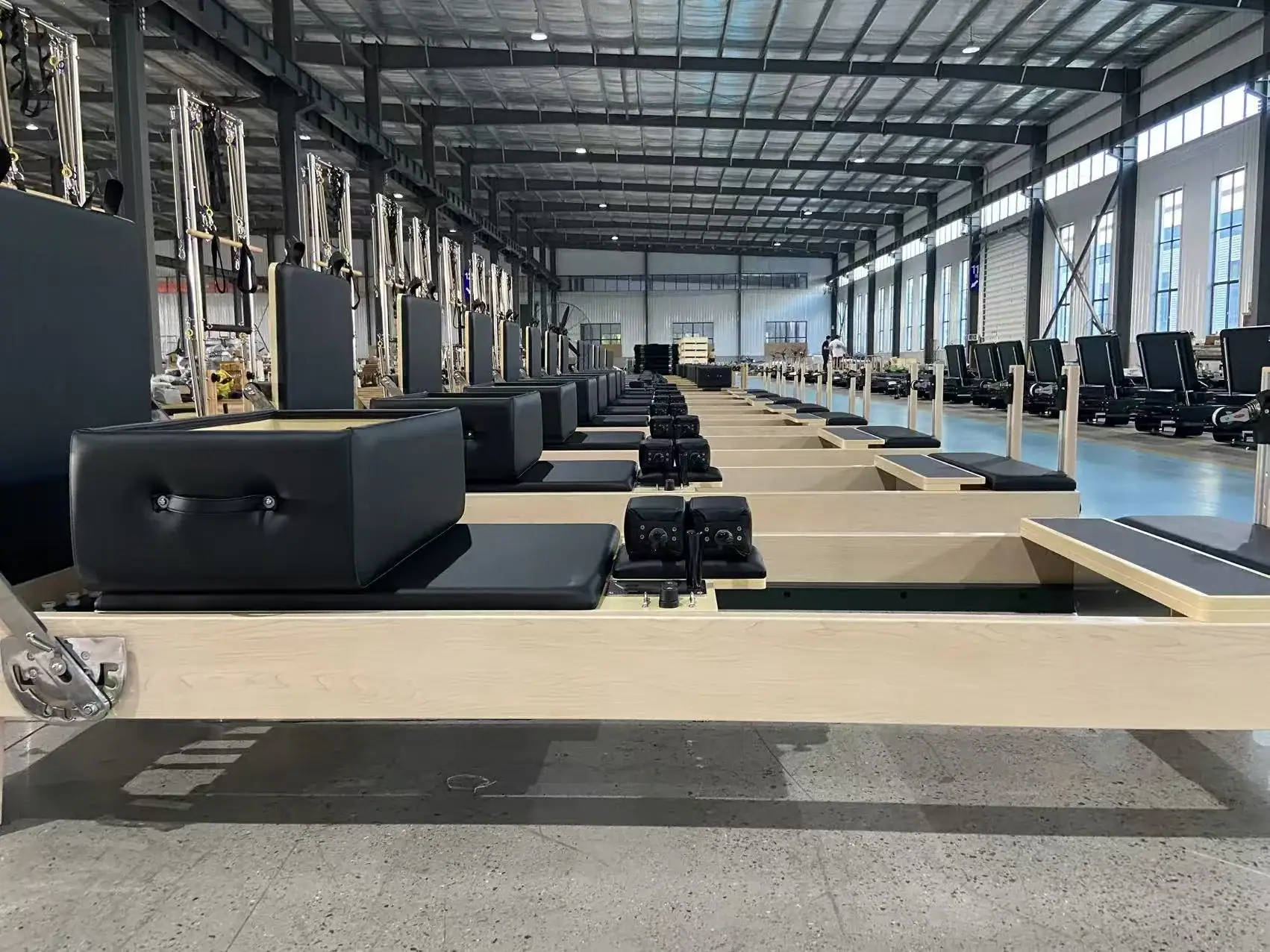
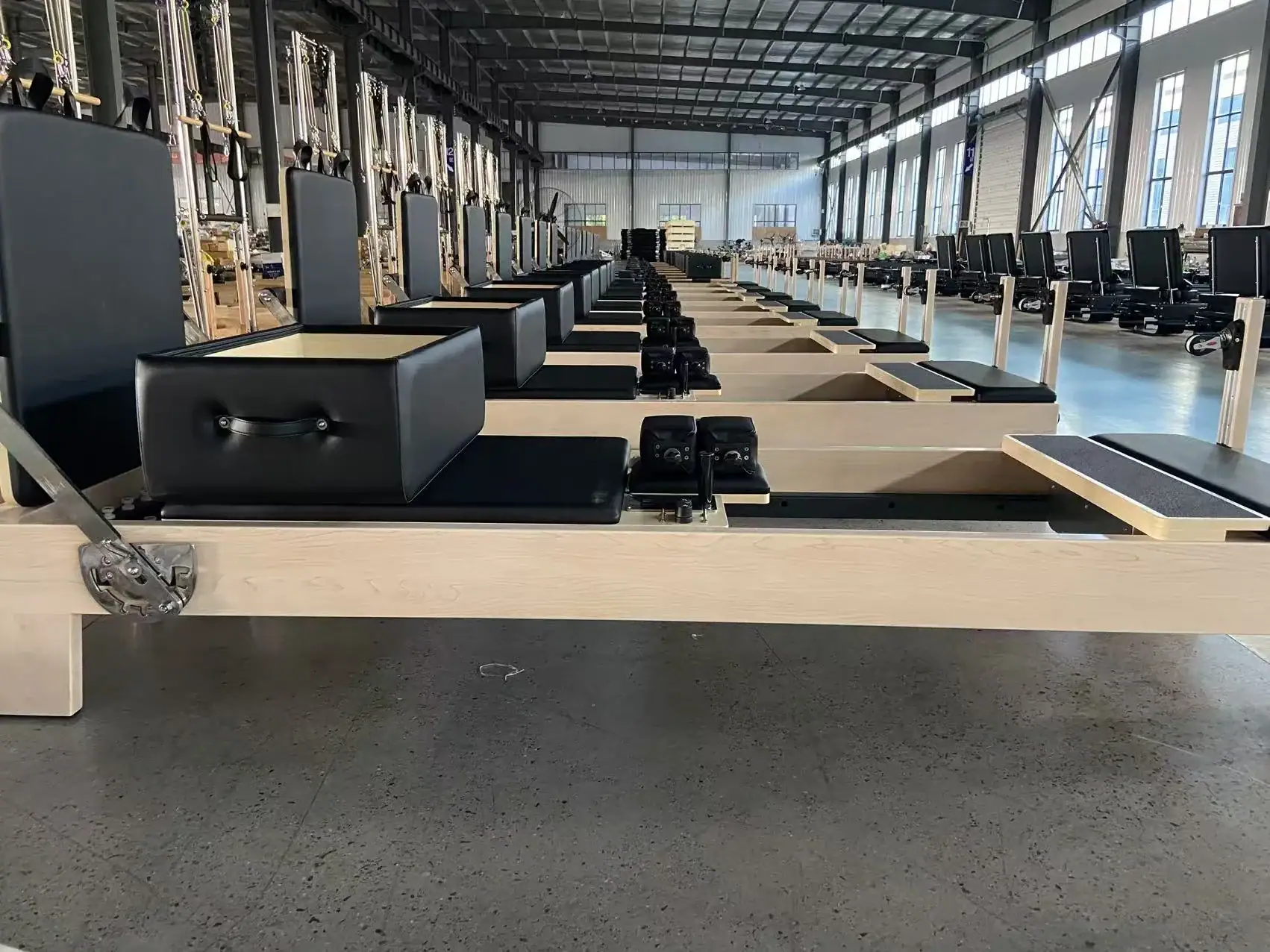
In a boutique room, the reformer is part of the interior as well as a working apparatus. Maple can support a calm, natural visual language, particularly where private clients spend more time with one instructor. When comparing wooden Pilates reformers, approve the actual wood tone, frame construction and finish rather than relying on a generic material label.
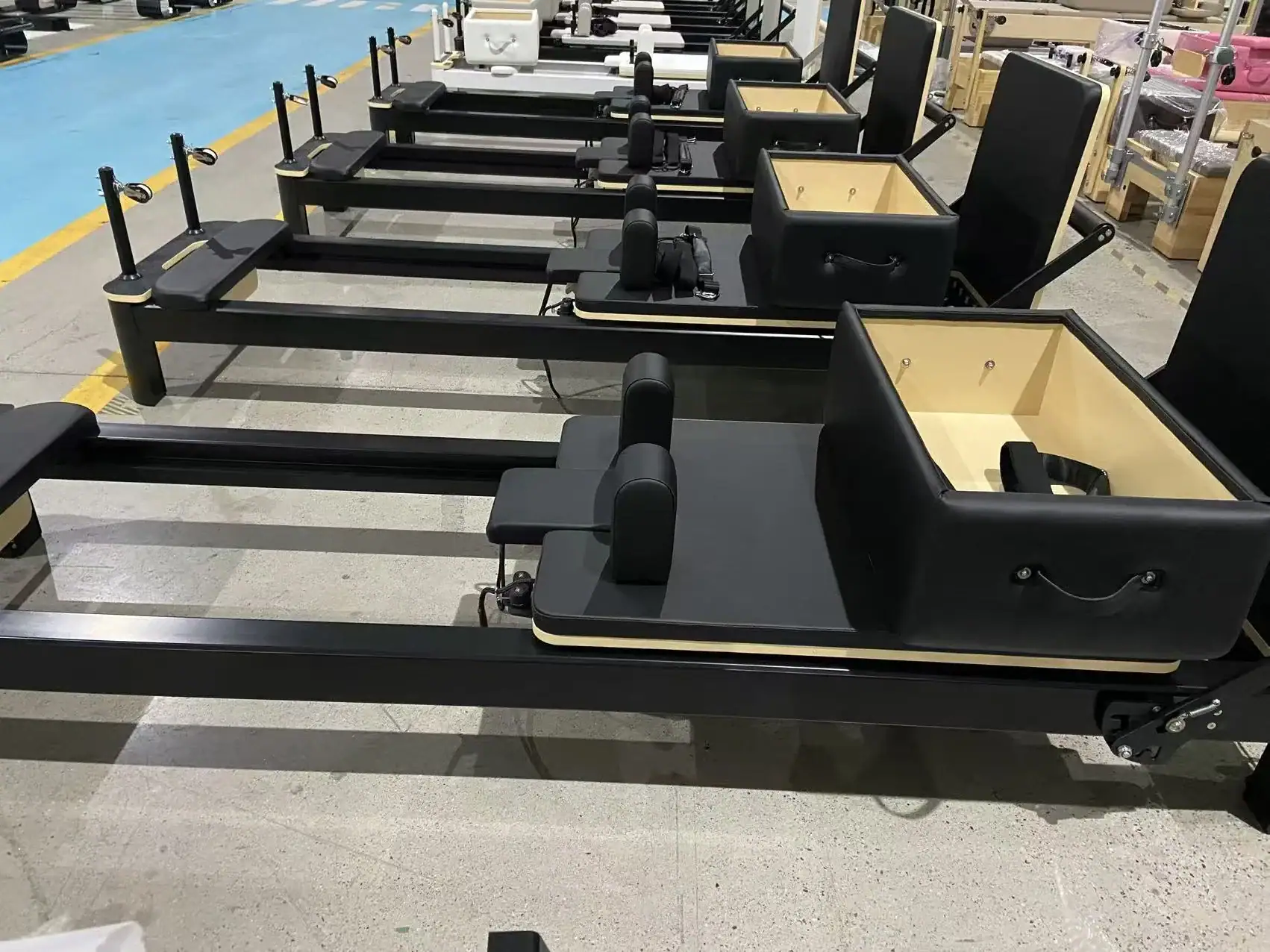
Aluminum is often selected for rooms built around frequent group turnover and a modern commercial look. When reviewing aluminum Pilates reformers, compare the exact profile, finish, connections and carriage system. Accessible surfaces can simplify the daily wipe-down routine, but aluminum does not make a reformer maintenance-free. Rails, wheels, springs, ropes, fasteners and adjustment points still need attention.
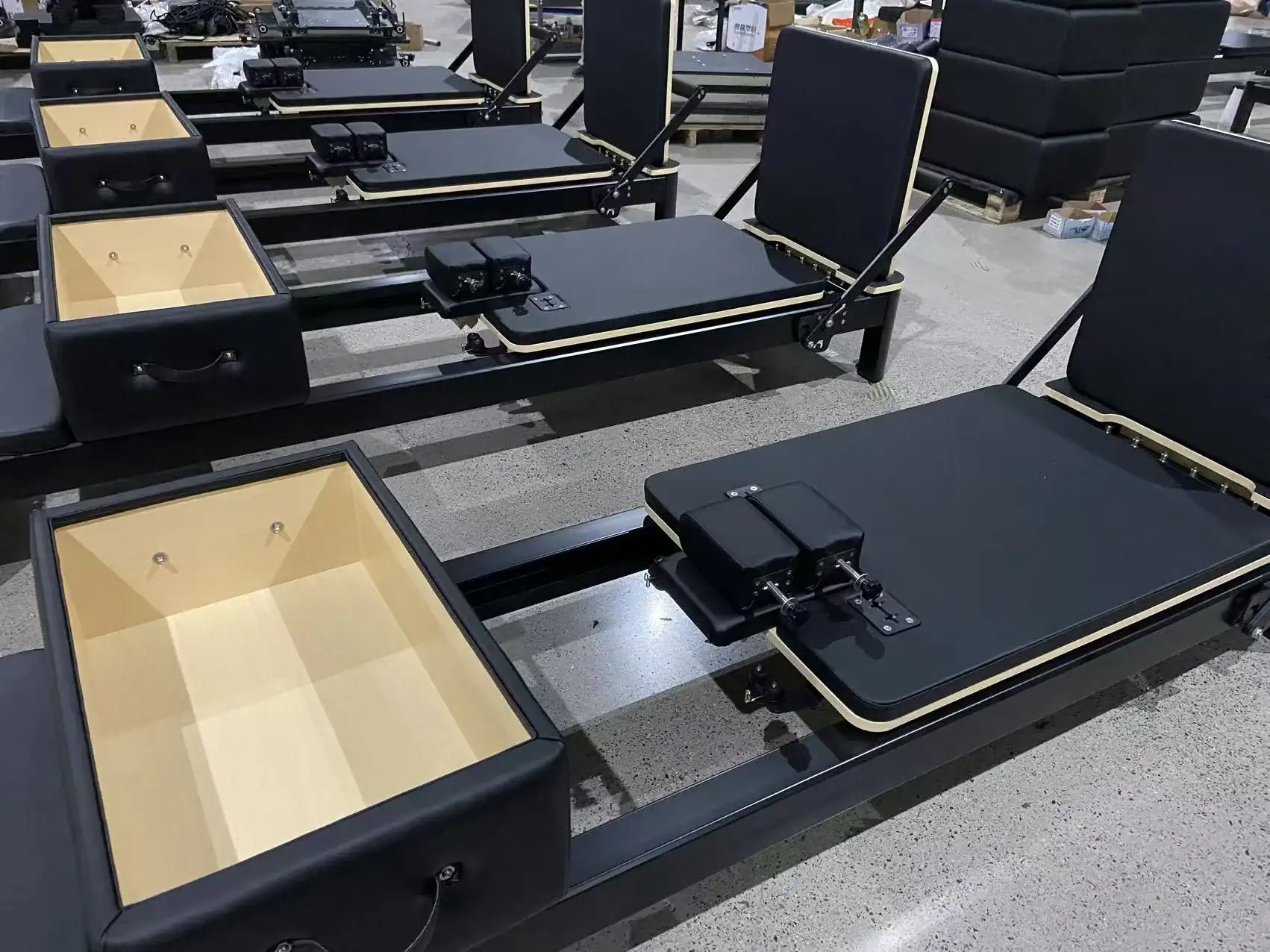
Material descriptions are model-specific. Do not transfer an aluminum grade, wood construction method, load rating or maintenance instruction from one reformer to another without the approved technical specification.
Maintenance: More Shared Work Than Different Work
The frame changes part of the care routine, not the whole routine. On a wooden reformer, staff also watch for coating damage, moisture exposure and changes around joints or edges. On an aluminum reformer, the review shifts toward profiles, connections, surface finish and hardware contact points. Both designs still rely on moving and wear components.
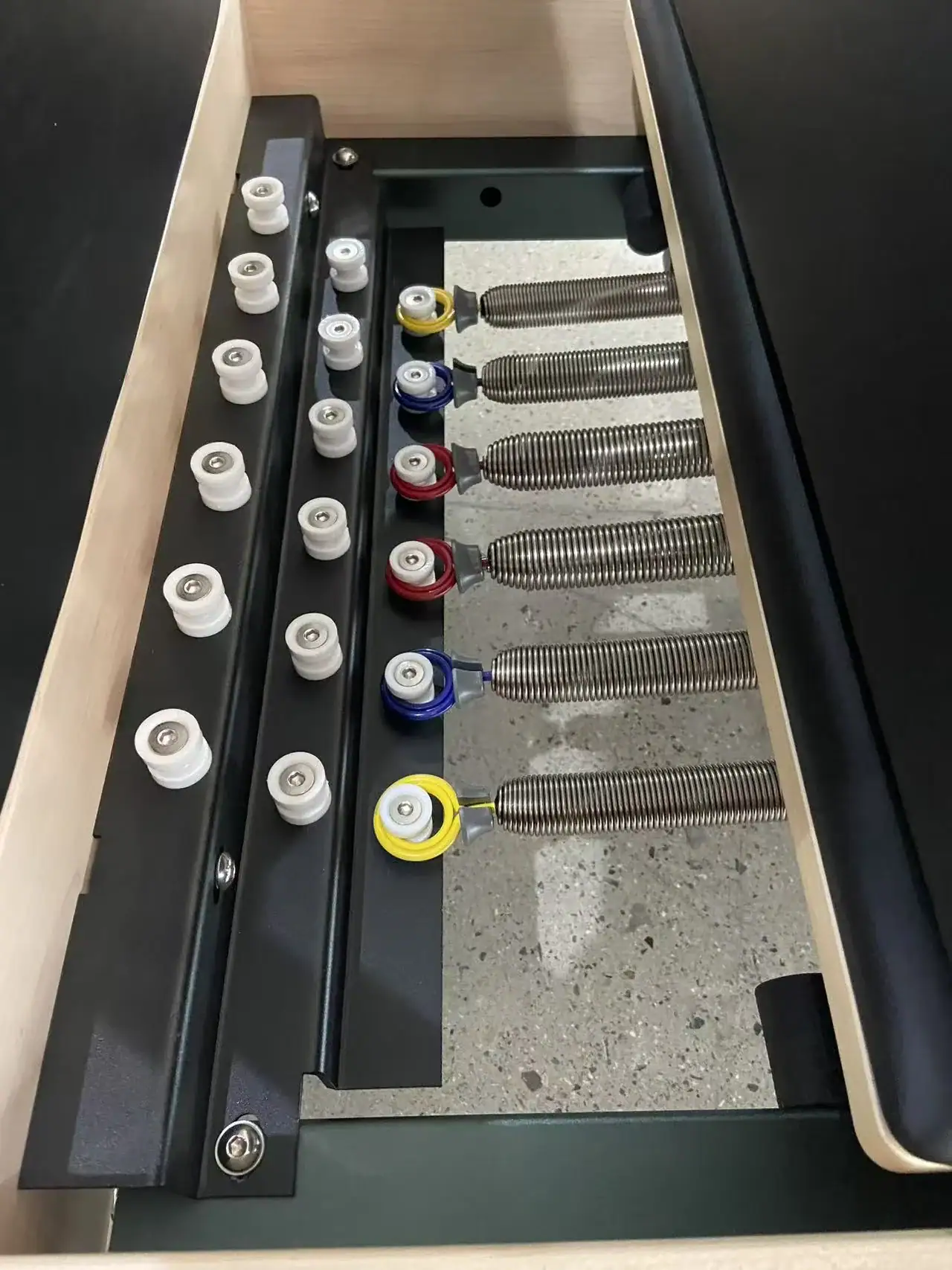
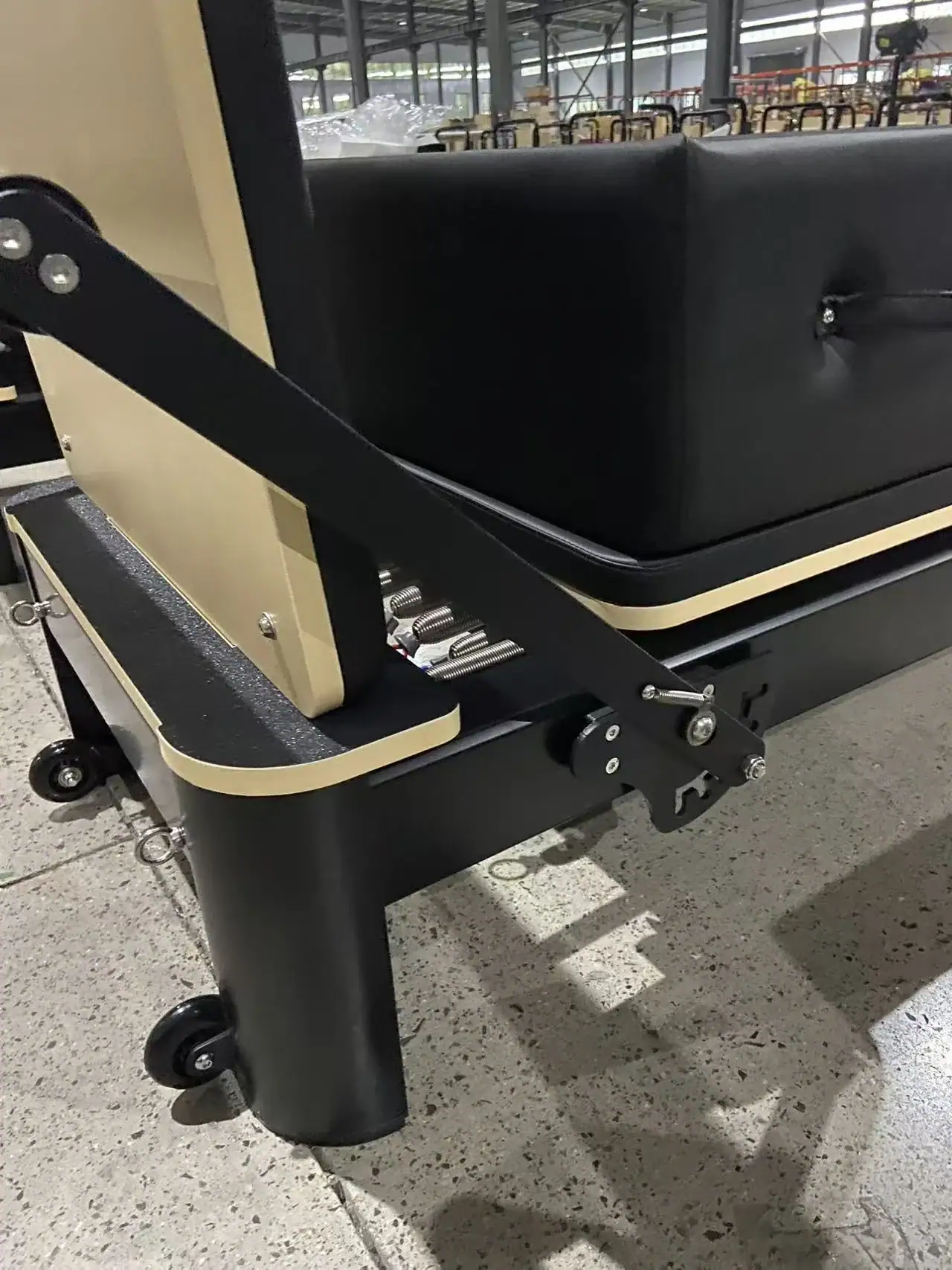
WD-MS-003 spring area: confirm the supplied spring set, attachment condition and access for inspection.
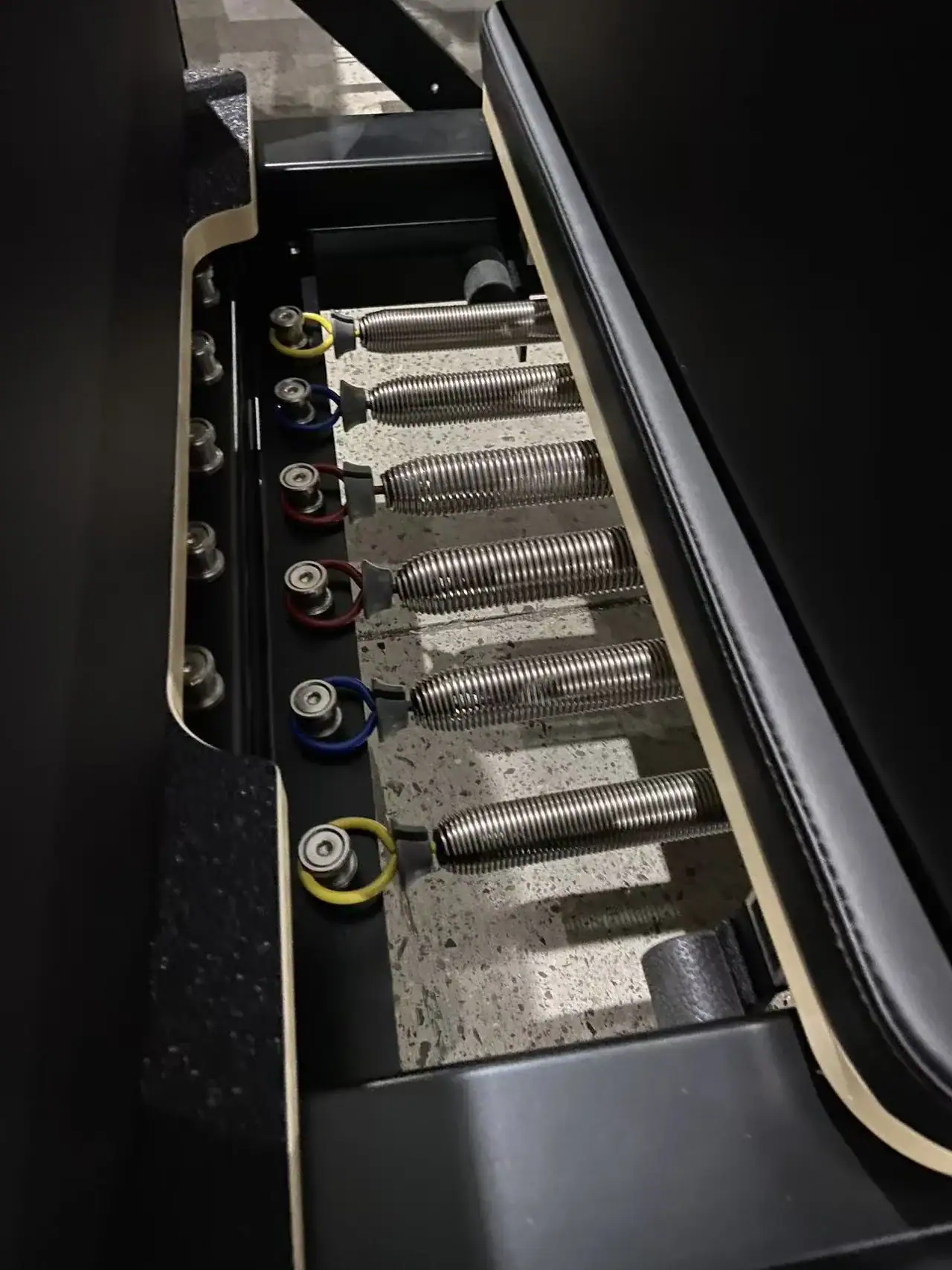
AL4-401 spring area: the frame material differs, but springs and attachments remain routine inspection points.
Manufacturer care resources consistently treat rollers, rails, ropes and springs as service items. Merrithew publishes model-specific cleaning and replacement resources, while Align-Pilates provides a reformer safety and maintenance guide. Those sources support the need for a documented routine; they do not establish the replacement interval for a P.E.Pilates model.
Example commercial reformer maintenance schedule
| Planning interval | Items to include | What the studio records |
|---|---|---|
| After daily use | Clean carriage and upholstery using products approved for the supplied surfaces; remove visible debris from accessible areas | Damage, stains, unusual sound or movement reported by staff |
| Weekly planning check | Review straps, ropes, spring attachments and frequently adjusted parts | Wear, fraying, deformation or configuration differences |
| Monthly planning check | Inspect wheels, rails, footbar locks and accessible fasteners | Movement changes, looseness, contact points and corrective work |
| Periodic full inspection | Review the complete reformer against the exact model manual and usage level | Inspector, product serial number, findings, parts replaced and release decision |
This is a studio planning framework, not a universal replacement schedule. Set the final frequency from the model manual, class volume, operating environment, component condition and applicable local requirements.
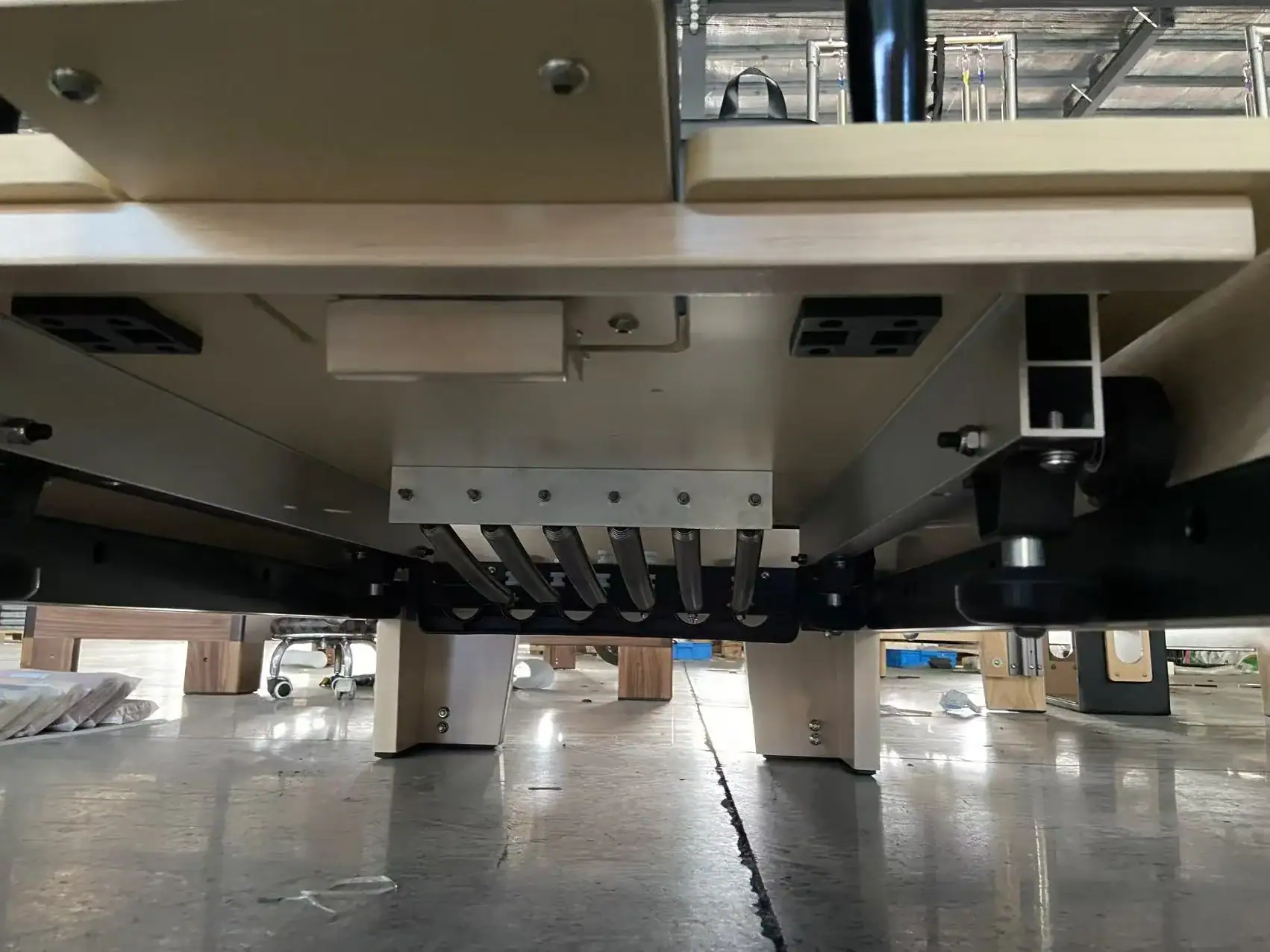
Anonymous Germany Studio Example: One Material Was Not Enough
A boutique Pilates studio in Germany was planning a professional space around two goals: a premium client experience and equipment suitable for daily classes. The buying team compared purchase cost, maintenance work, appearance, usage frequency and room flexibility.
| Selected model | Frame | Planned role |
|---|---|---|
| WD-MS-003 | Maple wood | Premium studio areas and private sessions |
| AL4-401 | Aluminum alloy | Higher-frequency daily class zones |
The custom configuration included a maple frame, light pink upholstery, customer branding on the frame, handles and straps, and an individual serial number for each reformer. Serial identification supported multi-location equipment records and after-sales tracking.
The studio placed wooden reformers in client-facing areas because the natural finish matched the interior direction and the selected model provided the desired stable training setup. Aluminum reformers went into the higher-frequency zones, where the team prioritized a straightforward cleaning workflow and lower concern about seasonal room-humidity changes. This is one project decision, not proof that every studio needs two materials.
Customer and order identifiers have been withheld for confidentiality.
A Five-Year Ownership Scenario Without Invented Cost Figures
Consider a planning scenario with ten reformers, five classes per day and 300 operating days per year. That workload equals 1,500 scheduled class days per reformer position over five years, but it does not predict failures or maintenance cost. Use it to identify labor and documentation needs.
- Wood planning: include surface-care products, finish review, room-environment management and repair procedures for visible damage.
- Aluminum planning: include routine wiping, connection and finish review, and procedures for damage around profiles or hardware.
- Both materials: budget staff time and replacement parts for upholstery, wheels, rails, springs, ropes, straps and adjustment hardware.
- Downtime control: keep serial-numbered maintenance records and agree spare-parts availability before ordering.
A useful five-year comparison therefore needs supplier quotations, delivered cost, local labor rates, model-specific parts prices and the studio’s actual maintenance history. Without those inputs, publishing a five-year total would create false precision.
Five-year total cost of ownership formula
Five-year ownership cost = delivered equipment cost + maintenance labor + approved cleaning supplies + replacement parts + repair costs + downtime cost.
| Cost input | How a studio can calculate it | What to request or record |
|---|---|---|
| Delivered equipment | Quantity × quoted unit price, plus freight, duties and local delivery where applicable | Matched quotations using the same configuration and Incoterm |
| Maintenance labor | Inspection and service hours × local labor rate | Model-specific care instructions and internal maintenance logs |
| Replacement parts | Actual parts used × confirmed replacement price | Parts list, availability and warranty boundaries |
| Downtime | Unavailable reformer days × the studio’s own contribution estimate per reformer | Repair history and class-capacity impact |
Do not fill the formula with a generic online price. Frame material, configuration, customization, order quantity, shipping terms and local operating costs all change the result. The better comparison uses two supplier quotations built to the same approved specification.
For Studio Owners and Distributors
Studio owners
Map the class schedule and room purpose before selecting the finish. Ask who cleans the reformers, where accessories are stored, how maintenance findings are reported and whether one visual style is required throughout the site.
Distributors
Keep a controlled specification for each SKU. Wood and aluminum models may share upholstery colors and branding while using different frame, packing and service records. Confirm repeat-order consistency rather than relying on category-level descriptions.
For custom logo, upholstery and serial-number requirements, review the existing OEM and ODM reformer cases. Before approving shipment, use the Pilates reformer quality inspection checklist to connect the finished machines with the signed order specification.
Pilates Reformer Buying Checklist for Studio Owners
Before placing an order, turn the material comparison into a written specification. Mark an item complete only when it appears in the quotation, drawing, approved sample, manual or another agreed document.
| Area | Confirm before ordering |
|---|---|
| Product specification | Frame material and finish; dimensions; fixed or folding design; spring configuration; footbar; ropes and pulleys; included accessories |
| Commercial use | Expected classes and users; room humidity and cleaning routine; storage and access requirements |
| Customization | Upholstery color and material; logo location and method; handles and straps; packaging; manuals; serial-number requirements |
| Quality control | Applicable inspection steps; available inspection records; approved sample or specification; warranty scope; spare-parts and after-sales process |
| Logistics | Incoterm; packing method; delivery estimate; destination handling; installation or assembly responsibility |
The final question is practical: does this Pilates reformer frame material and model fit the studio’s operating plan for the next five years? The answer depends on the actual specification and service plan, not the frame label alone.
Compare the Exact Models for Your Studio
Send the room plan, expected class frequency, preferred material, upholstery direction, branding requirements and destination. Our team can explain which specifications and inspection records are available for the WD-MS-003, AL4-401 or another model under consideration.
Compare available studio Pilates equipment and request a studio equipment plan.
Frequently Asked Questions
Is a wooden or aluminum Pilates reformer better for a studio?
Neither is universally better. Choose from the exact model, class frequency, room design, cleaning routine, maintenance access, delivered cost and parts support.
Do wooden reformers require more maintenance?
Wood adds surface-finish and environmental checks, but both materials require inspection of the carriage, rails, wheels, springs, ropes, upholstery, footbar and hardware.
Are aluminum reformers easier to clean?
Accessible aluminum surfaces can support a straightforward wipe-down routine. Use cleaning products approved for the supplied finish and upholstery, and do not treat cleaning as a substitute for mechanical inspection.
Which reformer suits high-frequency group classes?
Many studios consider aluminum models for high-frequency zones, but the decision still depends on carriage performance, adjustment workflow, parts support and the exact commercial specification.
Can a studio mix wooden and aluminum reformers?
Yes. The anonymized German project used maple reformers in premium private areas and aluminum reformers in daily group-class zones.
How do studios compare five-year ownership cost?
Combine delivered purchase cost, staff maintenance time, approved cleaning supplies, replacement parts, downtime and repair history. Avoid a generic estimate that lacks model and local-cost inputs.
Can wood and aluminum reformers use the same branding?
Branding can be coordinated across materials, subject to model confirmation. Approve logo position, application method, upholstery color, straps, handles and packaging before production.
Sources and Scope
Model and project context comes from P.E.Pilates production photographs, inspection videos and the supplied anonymous Germany studio brief. The P.E.Pilates manufacturing background provides company context. General maintenance context was reviewed against Merrithew product care resources and the manufacturer-published Align-Pilates safety and maintenance guide. Sources reviewed August 2026. Follow the manual and approved specification for the exact reformer supplied.