
If Pilates equipment arrives damaged, pause unloading or assembly when it is safe to do so, inspect the shipment before signing, record specific damage or shortages on the proof of delivery (POD), and take clear photos and video of the packaging and equipment. Keep every carton, pallet, label, damaged part and document until the case is resolved.
For P.E.Pilates support, send the order number, photos or video, and a clear problem description within 24 hours of receipt. This 24-hour request helps us investigate quickly; it does not replace the carrier, insurer or contract claim deadline, which can vary by route and service.
A damaged Pilates reformer delivery can involve more than a scratched panel. A shifted pallet, bent tower, cracked frame, missing carton or concealed carriage damage may affect safe use and determine whether the practical solution is a replacement part, repair, carrier claim or another remedy. The first inspection therefore matters.
| First 15 minutes | What to do | Why it matters |
|---|---|---|
| Make the area safe | Stop if the load is unstable, leaking, crushed or unsafe to move. Do not stand beneath suspended freight. | People come before evidence or unloading speed. |
| Inspect before signing | Check the pallet, cartons, bands, corners, labels and item count while the shipment is still in the delivery area. | Visible exceptions are easiest to document at handover. |
| Photograph the shipment | Take wide views, all four sides, labels, seals, impact areas and close-ups. Record a continuous unboxing video if practical. | Shows condition, identity and packaging context. |
| Write a specific POD note | Describe observed facts such as “right carton corner crushed; frame visible through tear” or “1 of 6 cartons missing.” | “Damaged” alone may not identify the exception clearly. |
| Preserve everything | Keep the equipment, packaging, pallet, foam, labels and detached parts in their received condition. | A carrier or seller may request inspection. |
| Report promptly | Contact the seller or distributor and follow the shipping documents. P.E.Pilates customers should submit evidence within 24 hours. | Starts triage while records and evidence are fresh. |
1. Inspect the Pilates equipment before signing for delivery
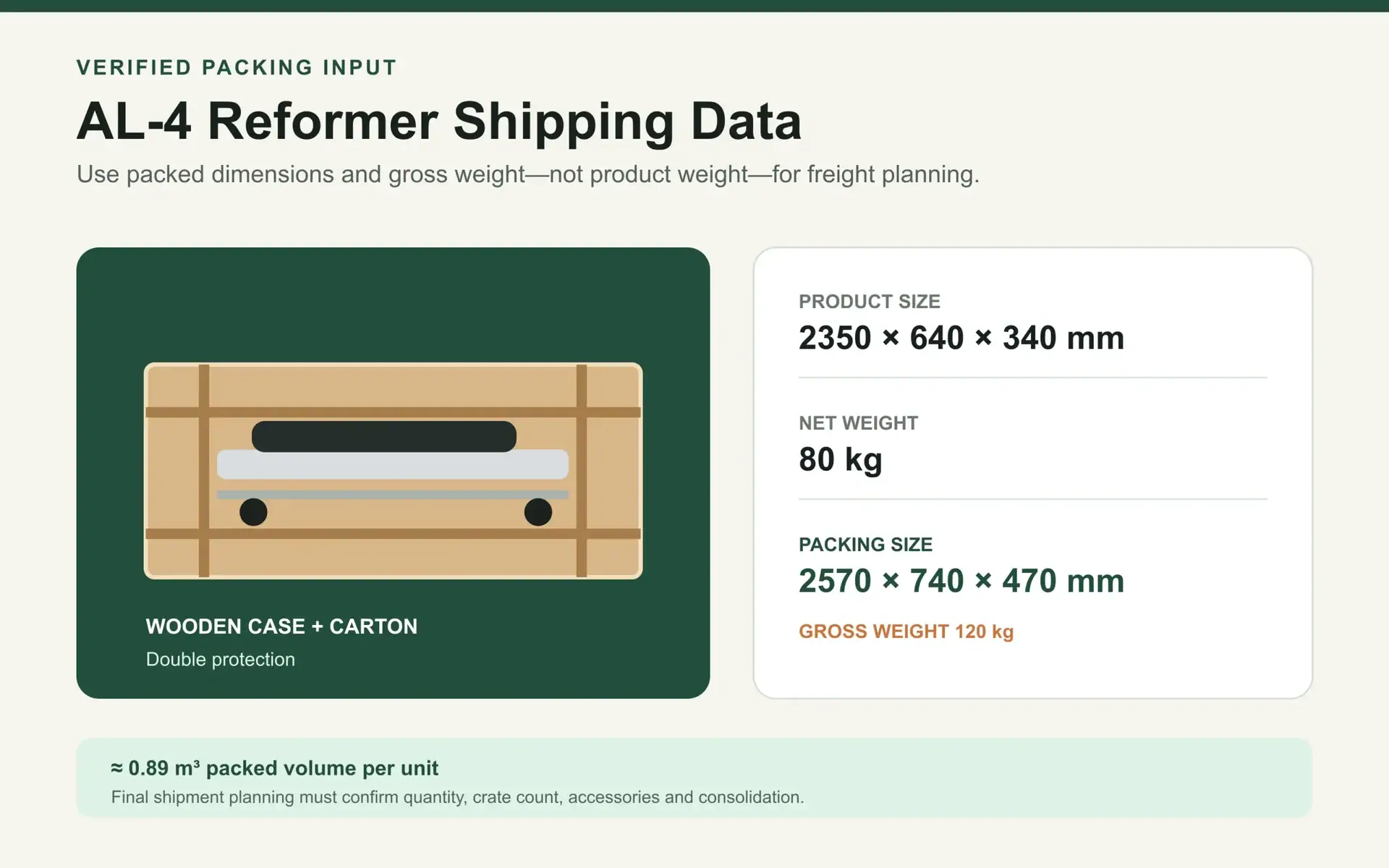
Before the driver leaves, compare the shipment with the packing list or delivery document. Count pallets and cartons. Look for crushed corners, punctures, water marks, broken bands, leaning loads, exposed equipment and signs that a crate has been opened or rewrapped.
If the equipment was delivered on a pallet, photograph the complete pallet before breaking straps or removing wrap. Include the shipping label and tracking, PRO or consignment number in at least one readable image. If the load cannot be inspected safely at the door, document why and follow the carrier’s procedure.
2. Visible damage and concealed damage are not the same
| Type | Typical signs | Immediate action |
|---|---|---|
| Visible damage | Torn carton, crushed corner, broken pallet, bent part, wet packaging, puncture or exposed equipment. | Photograph before unloading where safe, write the specific exception on the POD and notify the seller promptly. |
| Visible shortage | Fewer pallets or cartons than the delivery document lists, or an item label does not match. | Record the missing quantity or mismatch on the POD and photograph the full shipment and labels. |
| Concealed damage | Outer packaging appears acceptable, but damage is found after opening—for example a cracked wood component, bent bracket or damaged carriage assembly. | Stop assembly or use, photograph the packaging layers and damage, retain all materials, and report immediately under the applicable terms. |
Carrier notification and claim windows are not universal. They may depend on the carrier, domestic or international route, service type, insurance, Incoterm, sales contract and governing law. Treat the 24-hour P.E.Pilates reporting request as an operational evidence deadline, not a statement of every carrier’s legal deadline.
3. Build an evidence package that can be reviewed remotely
The best evidence tells a complete story: what arrived, how it was packed, where the impact occurred, which unit is affected and whether the equipment can be used safely. A single close-up often lacks that context.
This evidence approach is consistent with current carrier guidance: FedEx asks claimants to retain original packaging and provide supporting documents, while UPS specifies photos of the item, packing, shipping label and outer package. For European road freight, DHL Freight likewise emphasizes prompt notation, photographs and packaging retention. Always use the terms that apply to your actual shipment.
| Evidence | What to capture | Practical standard |
|---|---|---|
| Order identity | Order number, model, quantity, consignee and delivery date. | Type the details in the message; do not rely only on a photo. |
| Shipment identity | Shipping label, tracking/PRO number, carton or pallet number and serial/model label where present. | Take a straight, readable photo. |
| Wide views | Complete pallet or carton from multiple sides and its position at delivery. | Include surroundings without exposing unnecessary personal data. |
| Damage close-ups | Each crack, dent, tear, bent fitting or missing part. | Use good light and add a ruler for scale when useful. |
| Packaging sequence | Outer carton, foam, wrap, restraints and the component beneath them. | Photograph each layer as it is opened. |
| Video | Continuous walk-around, unboxing, abnormal movement or sound. | Move slowly; show the label and affected area in the same clip. |
| Documents | POD/delivery receipt, packing list, invoice or proof of value, and any driver notation. | Keep originals and send legible copies. |
| Problem description | What is wrong, where it is, when it was found and whether assembly or use has stopped. | Use part names and factual observations, not only “broken.” |
4. What to write on the proof of delivery
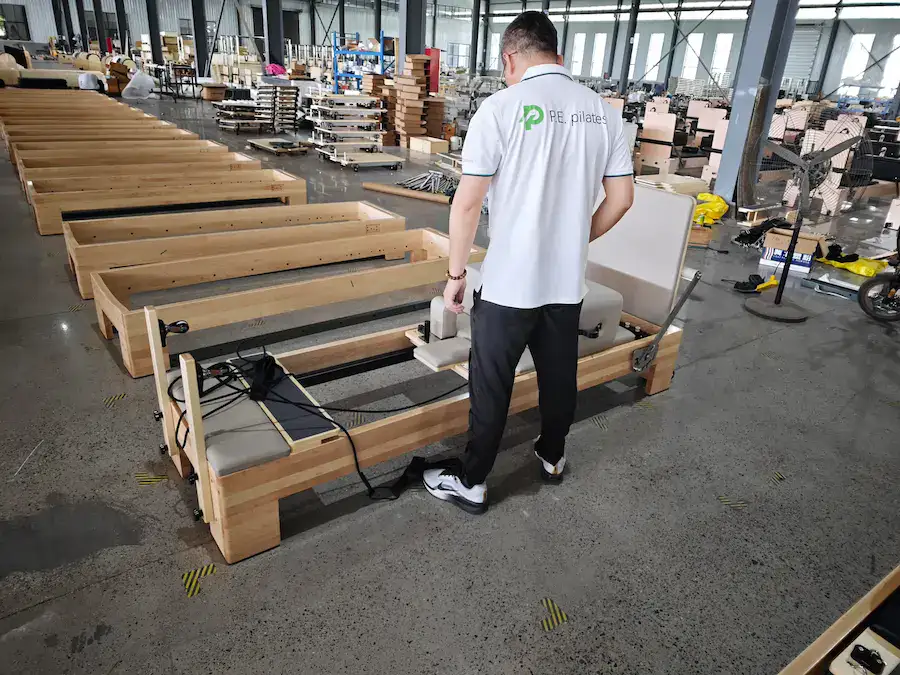
A useful POD note is short, factual and specific. Mention the affected carton or pallet, the observed condition and any shortage. Examples include:
- “Pallet 2 of 3: wrap torn and right front corner crushed; product not fully inspected.”
- “Received 5 cartons; delivery document lists 6. One accessory carton missing.”
- “Wooden frame visible through punctured carton; photos taken at delivery.”
Do not use a prewritten note that is untrue. Whether a shipment should be accepted, accepted with exceptions or refused depends on safety, the nature of the damage and the seller/carrier instructions. If possible, call your seller or logistics contact while the driver is present.
5. Contact sequence after a damaged reformer delivery
- Secure the equipment. Do not operate a reformer with a cracked frame, unstable tower, distorted rail, damaged spring anchor, loose pulley mounting or other condition that could affect safety.
- Notify the seller or distributor. For P.E.Pilates, provide the order number, photos or video, and problem description within 24 hours of receipt.
- Check the shipping documents. Identify the carrier, freight forwarder, Incoterm, insurance and the party responsible for filing the transport claim.
- Follow the evidence request. The review may require serial numbers, measurements, additional angles, a short functional video, proof of value or a repair estimate.
- Wait for written disposition. Do not discard or repair affected parts until the responsible party confirms the next step in writing.
6. Possible resolution paths
The evidence and the applicable sales, shipping, warranty and insurance terms determine the remedy. A clear case file helps the parties choose the least disruptive safe option.
| Finding | Possible path | What may be needed |
|---|---|---|
| Replaceable non-structural component | Replacement part plus installation guidance. | Model/serial details, part photos and confirmation of fit. |
| Repairable cosmetic or component damage | Approved local repair or component replacement. | Written approval, quotation and before/after evidence. |
| Potential structural or safety issue | Quarantine the unit pending technical assessment; repair or replacement may follow. | Detailed photos, measurements and inspection by a qualified person. |
| Freight loss or transit damage | Carrier or cargo-insurance claim, sometimes coordinated by the seller or forwarder. | POD, invoice, packing list, shipment identifiers, photos and retained packaging. |
| Manufacturing-quality issue | Assessment under the applicable warranty terms. | Order details, evidence and diagnosis separating product defect from transit or use damage. |
Shipping damage and a warranty defect are not automatically the same. Likewise, a replacement part being available does not by itself establish which party bears labor, freight or other costs. Keep conclusions conditional until the evidence and contract terms have been reviewed.
For planning after a case is approved, see our Pilates reformer spare-parts and after-sales checklist. For responsibility and cost allocation before future orders, review our FOB vs CIF vs DDP guide.
7. What not to discard or change
- Outer cartons, wood crates, pallets, foam blocks, straps, wrap and corner protectors.
- Shipping labels, serial/model labels, warning labels and carton numbers.
- Broken, bent or detached components, including small fasteners.
- The POD, packing list, invoice, inspection report and message history.
- Original photo and video files. Avoid sending only screenshots or heavily compressed copies.
Do not clean, repaint, straighten, disassemble or dispose of a damaged part before authorization if doing so could erase evidence. Do not move the equipment to another location unless safety or site rules require it; if it must be moved, photograph its condition and location first.
8. Inspect the machine before assembly or use
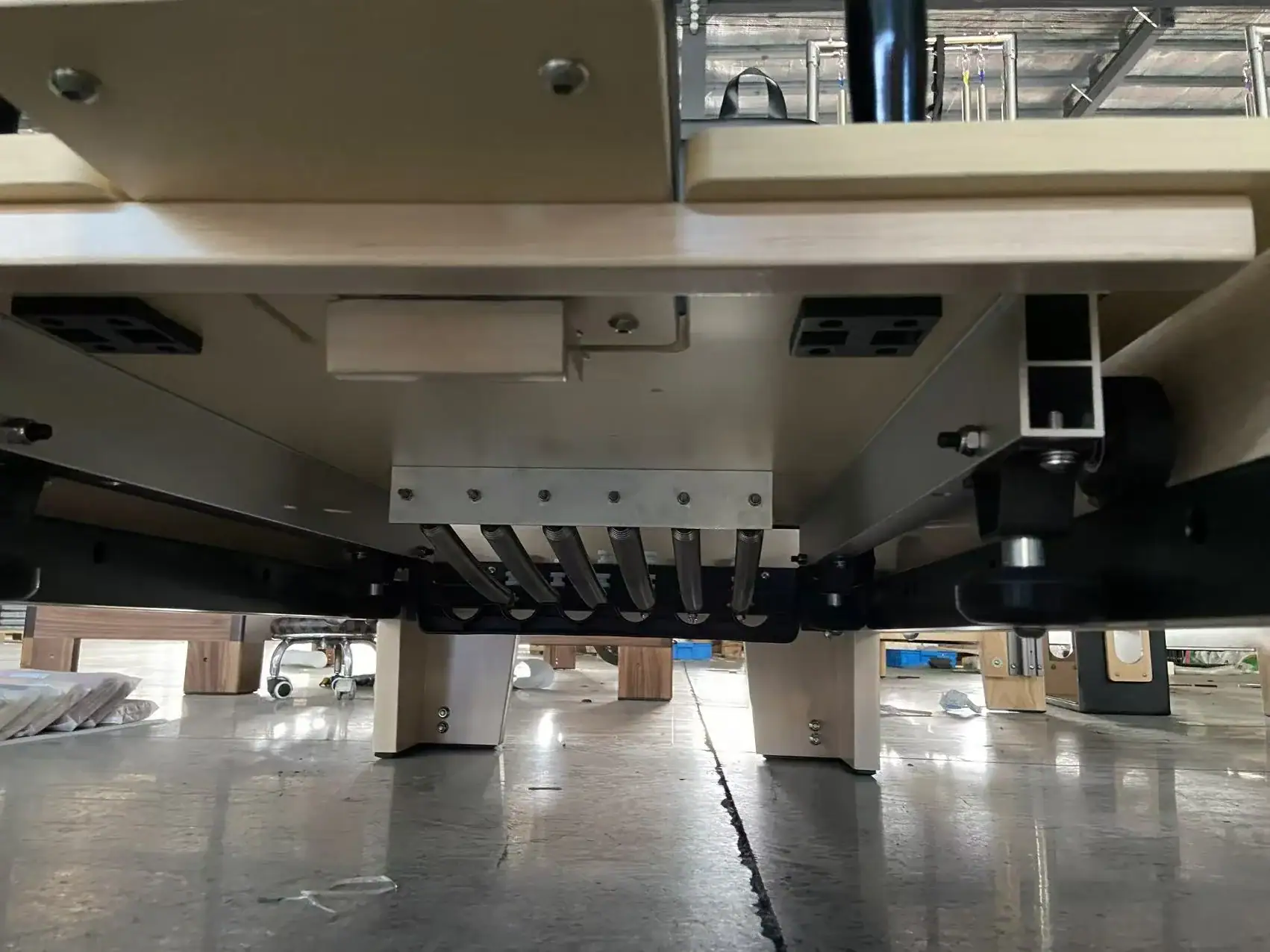
After the external packaging has been documented, inspect the equipment methodically. Check the frame and joints, rails, carriage, carriage wheels, spring bar and anchors, springs, ropes, straps, pulleys, footbar, shoulder rests, headrest, tower and accessory cartons. Look for deformation, cracks, looseness, missing fasteners, torn upholstery and components that no longer align.
If no damage is found and the unit is released for setup, use the model-specific manual and our safe Pilates equipment setup guide. Assembly should never be used to force damaged parts into alignment.
9. Prevention checklist for the next shipment
| Before dispatch | Before delivery | At receiving |
|---|---|---|
| Confirm model, quantity, packing list and shipment labels. | Assign a trained receiving contact and backup. | Have a phone/camera, checklist and delivery documents ready. |
| Request pre-shipment inspection and packing photos for bulk orders. | Confirm unloading equipment, access, doorway and storage space. | Count and inspect before signing whenever safe and permitted. |
| Clarify Incoterm, insurance, claim filer and required documents. | Share the receiving procedure with the studio, warehouse or 3PL. | Quarantine exceptions and report them without delay. |
Bulk buyers can also use our Pilates reformer quality inspection checklist to define evidence before shipment. If you are comparing delivery responsibilities and landed cost, the Pilates reformer wholesale guide provides additional procurement context.
For Pilates equipment brands and private-label buyers
A delivery-damage process is also part of brand protection. When your logo is on the equipment, dealers and end customers judge the response as part of your brand experience—not only as a freight issue. A standard evidence checklist helps your team identify the affected order, separate transport damage from a possible product issue and give every customer the same reporting instructions.
P.E.Pilates supports brand owners, distributors and studio groups with private-label production, pre-shipment quality checks, packing documentation and after-sales parts coordination. For each project, the exact inspection records, packaging specification, shipping responsibilities and service terms should be confirmed in the order documents before production and dispatch.
| Brand-level control | What to define before shipment | Customer-service benefit |
|---|---|---|
| Order traceability | Model, quantity, carton or pallet references and available serial information. | Your team can match evidence to the correct batch and component faster. |
| Receiving SOP | POD instructions, photo angles, unboxing video and internal escalation contact. | Dealers and studios know exactly what to collect at delivery. |
| Resolution workflow | Who assesses the evidence, who communicates with the carrier and who approves parts or repair. | Customers receive one coordinated response instead of conflicting instructions. |
| Spare-parts readiness | Priority components, model compatibility and replenishment process. | Approved repairs can move forward with less avoidable downtime. |
If you are building a branded product line, read our private-label Pilates reformer brand guide. To discuss product selection, customization, order documentation and service planning, visit the P.E.Pilates wholesale cooperation page.
Frequently asked questions
What should I do if a Pilates reformer arrives damaged?
Make the area safe, inspect and photograph the shipment before signing where possible, record specific visible exceptions on the POD, preserve all packaging, stop assembly or use if safety may be affected, and notify the seller promptly. P.E.Pilates asks customers to submit the order number, photos or video, and problem description within 24 hours of receipt.
What photos are needed for a freight claim?
Capture the full pallet or carton, all sides, the shipping label and tracking/PRO number, the damaged outer packaging, internal protective materials, the damaged item, close-ups and a wider image showing where the damage sits on the product. Include serial or model labels when available.
What is concealed freight damage?
Concealed damage is damage discovered after unpacking when the outer packaging did not make the problem obvious at delivery. Photograph the packaging layers and product exactly as found, retain all materials and report it immediately under the applicable carrier and contract terms.
Should damaged packaging be kept?
Yes. Keep the carton, pallet, crate, foam, wrap, labels and damaged contents until the seller, carrier or insurer confirms in writing that inspection is complete and disposal is permitted.
Does signing the POD end every claim?
No single answer applies to every shipment. A clean receipt can make visible-damage evidence harder to establish, while concealed-damage procedures and deadlines vary. Check the current carrier terms, transport document, insurance and sales contract promptly.
Need help with a damaged P.E.Pilates shipment?
Send your order number, clear photos or video, and a concise description of the issue within 24 hours of receipt. Our team will review the evidence and advise the next documentation or service step.
Important: This operational checklist does not replace the sales contract, carrier tariff, insurance policy, Incoterm or applicable law. Claim ownership, deadlines, freight, labor and remedy depend on the governing documents and investigation.