
Private label Pilates equipment should not use the same package and service promise across Shopify, Amazon, Walmart and dealer channels. Use Shopify when you need control over brand education, product options and lead capture. Use Amazon or Walmart only for SKUs whose identifiers, packed dimensions, packaging, fulfillment cost, content and return process meet the platform’s current rules. Use dealers when local demonstration, project selling, delivery coordination or after-sales support materially improves the purchase. Keep one master product record, then build a channel-specific offer around it.
This guide is for ecommerce brands, marketplace sellers, importers and distributors sourcing private label Pilates equipment for a multi-channel range. It explains how channel choice should shape the product, SKU map, packaging, content, fulfillment and support model before inventory is ordered.

Channel comparison at a glance
| Channel | Best role | Product and operating requirement | Main risk to control |
|---|---|---|---|
| Shopify store | Brand-controlled direct sales, lead generation and configurable offers | Clear product data, delivery rules, variant structure, inventory by location and support workflow | Accepting orders before freight, access, assembly, returns and lead time are clear |
| Amazon | Search-driven marketplace demand for channel-ready SKUs | Current category eligibility, product identifiers, accurate packed data, compliant content, packaging and viable fulfillment | Assuming a large reformer can use the same economics and process as a parcel product |
| Walmart Marketplace | Marketplace reach for approved, consistently configured items | Current item setup, GTIN or approved identifier route, accurate trade-item data, packaging and fulfillment selection | Sending inventory before the item, barcode and package setup are accepted |
| Dealer network | Local demonstration, project sales, delivery coordination and service coverage | Trade pricing, territory rules, sales assets, product training, spare parts and ownership of customer support | Price conflict, unclear territory and duplicated responsibility |
No channel is automatically better. The right channel is the one whose acquisition cost, conversion process, fulfillment method and service responsibility fit the exact reformer and target buyer.
1. Build one product truth before creating channel listings
A multi-channel brand needs one controlled record for each sellable configuration. The factory model code, commercial SKU, barcode where required, finish, included accessories, packed dimensions, box count, manuals and compatible spare parts must describe the same physical unit.
Keep one master product file with:
- Factory model and revision.
- Brand-facing product name.
- Unique SKU for every sellable variant.
- GTIN, UPC or EAN where required.
- Frame, upholstery and included accessories.
- Assembled dimensions and net weight.
- Each carton’s dimensions and gross weight.
- Box count and component-to-box map.
- Country of origin and customs data.
- Image, manual and video version.
- Warranty and return terms.
- Replacement-parts map.
The channel listing should pull from this source instead of becoming a second specification. When a spring package, frame detail, accessory or carton changes, update the master record first and then identify every affected channel.
2. Give each product a role by channel
Do not publish every reformer everywhere. A channel assortment should reflect how customers discover, evaluate, receive and return the equipment.
| Product type | Shopify | Amazon or Walmart | Dealer channel |
|---|---|---|---|
| Standardized commercial reformer | Direct order, quote request or project bundle | Consider only after identifier, package, fulfillment and return validation | Core demonstration and studio-project model |
| Foldable or compact model | Useful where storage benefits can be explained fully | Potentially easier to evaluate if the packed configuration suits current platform limits and economics | Useful for local home and small-studio buyers |
| Reformer with tower or complex system | Quote-led product with room and delivery qualification | Use caution; confirm package, box count and support feasibility before listing | Strong fit when the dealer can demonstrate capability and coordinate installation |
| Custom color or private-label configuration | Made-to-order or inquiry workflow | Use a fixed, accurately represented sellable variant rather than open-ended customization | Suitable for approved projects and local specification support |
| Accessories and replacement parts | Model-matched direct sales and support | Suitable only when compatibility, packaging and identifiers are explicit | Local service stock and add-on sales |
The distributor inventory guide explains how to separate locally stocked hero models from samples, preorders and project products. Channel expansion should not turn every available model into permanent stock.

3. Design SKU and barcode structure before inventory moves
An internal SKU and a product barcode are not the same thing. A SKU helps the business identify a specific variant across purchasing, warehouses, channels, orders and service cases. A GTIN such as a UPC or EAN identifies a trade item in external systems.
Shopify recommends a unique SKU for each product variant and supports a separate barcode field. It also supports inventory quantities by location. Amazon states that most categories require an industry-standard product identifier to create a new product page or offer, subject to category rules and available exemptions. Walmart WFS requires scannable identifiers for eligible inventory and a unique barcode for each variant under its current labeling guidance.
| Identifier layer | Purpose | Example structure | Control |
|---|---|---|---|
| Factory model | Connects the unit to production specification and parts | Manufacturer’s controlled model code | Do not replace it with the marketing title |
| Commercial SKU | Tracks the sellable variant across systems | Model + frame + upholstery + package revision | One SKU must describe one repeatable configuration |
| GTIN / UPC / EAN | External trade-item identification where required | Licensed identifier assigned to the sellable trade item | Confirm ownership, marketplace rule and variant mapping |
| Marketplace identifier | Connects an offer to the platform catalog | Platform-created or platform-recognized listing identifier | Do not treat it as the master factory or warehouse SKU |
| Unit or serial identifier | Supports installation, maintenance and claims | Unique unit number | Link it to order, customer, model and parts history |
Current official references: Shopify SKU guidance, Amazon product ID guidance and Walmart WFS label guidance. Requirements vary by country, category, fulfillment program and date; confirm them in the relevant seller account before launch.
4. Validate packaging and fulfillment with the sellable configuration
A reformer can be a multi-carton, high-value and damage-sensitive shipment. Channel feasibility depends on the packed unit, not only the assembled product. Record the dimensions and gross weight of every carton after the final accessories and protective materials are included.
For each channel, confirm:
- Whether the item will be merchant fulfilled, platform fulfilled, warehouse fulfilled or delivered by a dealer.
- Whether the sellable unit is one carton or a controlled multi-box set.
- Which label belongs on the unit, each carton, the pallet and the carrier shipment.
- Whether the product can ship in its own container and survive the channel’s handling sequence.
- How appointments, unloading, room-of-choice delivery and installation are quoted.
- Who inspects damage and retains evidence at each handoff.
- How a return will be collected, repacked, inspected and dispositioned.
Amazon maintains specific large and oversize guidance based on current packed measurements and fulfillment method. Walmart WFS requires accurate trade-item dimensions and packaging information and publishes separate rules for multi-box items. These programs and thresholds can change. Validate the exact packed SKU in the target marketplace instead of assuming that approval in one country or program applies elsewhere.
Current official references: Amazon Large and Oversize guidance, Walmart WFS packing guidance and Walmart WFS multi-box setup.
For international sourcing, use the FOB, CIF and DDP comparison to separate import responsibilities from the customer-facing delivery promise. Door-to-door shipping does not automatically mean unloading, installation or white-glove service.
5. Prepare channel-ready product content
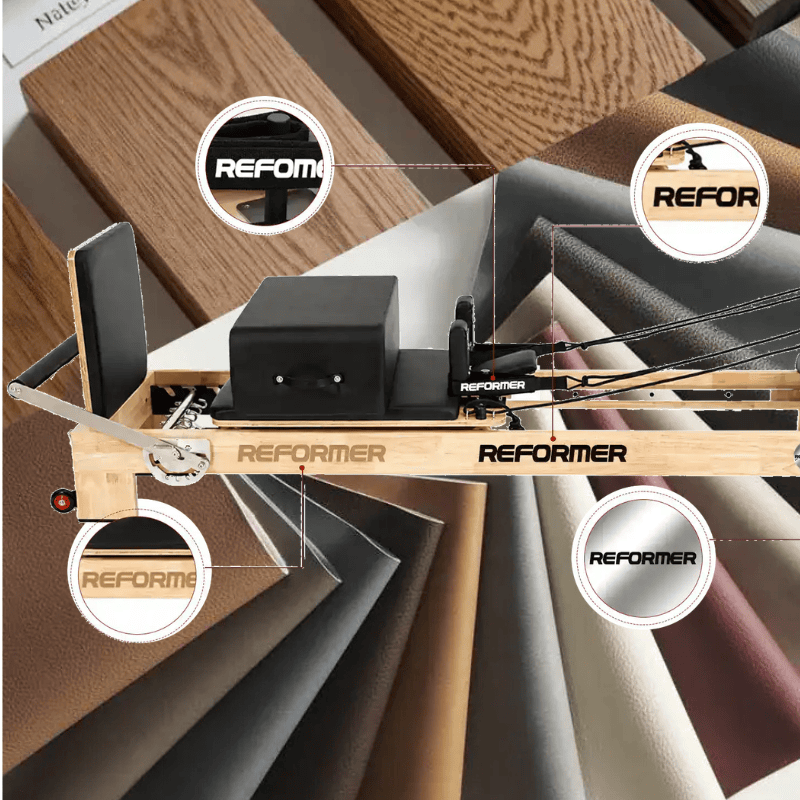
One photo set cannot answer every channel’s questions. Build a controlled asset library from the approved physical sample, then select the appropriate assets for each listing, dealer proposal or quote.
| Asset | Minimum content | Channel use | Quality check |
|---|---|---|---|
| Product data sheet | Model, materials, dimensions, weight, included items and configuration | All channels | Matches the sellable SKU and current sample |
| Image set | Full views, controls, carriage, springs, accessories, branding and packed product | Store, marketplace and dealer | Optional accessories are labeled rather than implied |
| Assembly and use material | Delivery condition, assembly, adjustment, safety and routine care | Direct, marketplace and dealer support | Uses the exact model and target language |
| Carton data | Box count, dimensions, gross weight and carton contents | Fulfillment, freight, returns and dealer receiving | Measured after final packaging approval |
| Service file | Parts diagram, evidence request and diagnosis route | Brand and dealer after-sales teams | Part numbers map to the installed model |
| Commercial policy | Price, delivery, cancellation, returns, warranty and support ownership | Customer-facing offer and dealer agreement | No promise exceeds the actual operating process |
The private-label reformer brand launch guide covers sample approval, product files and market readiness in more detail.
6. Build price architecture before adding channels
A multi-channel price must absorb more than product cost. Model landed cost, payment fees, marketplace fees where applicable, fulfillment, storage, outbound delivery, damage allowance, return handling, customer support, dealer margin, promotions and warranty service.
Use a price architecture that defines:
- Recommended retail position and what is included.
- Dealer buy price, margin expectation and freight treatment.
- Marketplace-specific fees and fulfillment cost by SKU.
- Which promotions require approval and who funds them.
- Whether channels receive identical products or differentiated packages.
- How leads, territories and project opportunities are assigned.
Price conflict often begins as offer conflict. One channel may include delivery or accessories while another shows a lower equipment-only price. Compare the complete customer offer before concluding that two prices are inconsistent.
Practical rule: if a channel cannot support the product after its true fulfillment, return and service costs, change the product role or package. Do not rely on higher sales volume to repair negative unit economics.
7. Assign returns and after-sales ownership
Large equipment returns require more planning than issuing a label. Before launch, define who communicates with the customer, diagnoses the issue, approves a remedy, arranges collection, pays each cost and decides whether the unit returns to saleable inventory.
| Task | Brand or seller | Marketplace or store system | Dealer | Supplier |
|---|---|---|---|---|
| Customer-facing policy | Owns accuracy and commercial commitment | Provides channel rules and transaction workflow | Follows written dealer and local customer terms | Provides confirmed product and warranty scope |
| First response | Defines response route and escalation | May impose response or return workflows | Handles local contact when assigned | Supports diagnosis through the agreed B2B route |
| Evidence collection | Maintains order, model, photos, video and issue description | Records channel case data | Can inspect locally where agreed | Reviews model-specific evidence |
| Parts and remedy | Approves the customer remedy under its policy | Processes eligible channel action | May install or replace parts if trained and contracted | Confirms compatible parts and technical instructions |
| Return disposition | Owns resale, repair, liquidation or disposal decision | Applies current program rules | May receive or inspect locally if agreed | Receives issue data for corrective action |
The spare-parts and after-sales checklist provides a model-specific structure for evidence, compatible parts and distributor reserve planning.
8. Define dealer-channel rules in writing
Dealers can provide local trust, demonstration, project qualification and service. That value disappears when territory, price, lead ownership and support responsibility remain informal.
A dealer agreement or operating schedule should clarify:
- Approved products and configurations.
- Trade price and payment terms.
- Territory and channel scope.
- Lead registration and project ownership.
- Use of brand assets and product claims.
- Inventory, sample and preorder rules.
- Delivery, unloading and installation scope.
- Training and demonstration standards.
- Return and warranty responsibilities.
- Parts stock and service escalation.
- Online price and promotion process.
- Termination and remaining-inventory treatment.
For the broader qualification process, see how to become a Pilates equipment distributor.
9. Use a launch matrix before ordering inventory
The example below is a decision framework, not a claim that any platform has approved a specific reformer.
| Decision | Shopify | Amazon / Walmart | Dealer | Release evidence |
|---|---|---|---|---|
| Product scope | Core range plus qualified preorder options | Only fixed channel-ready SKUs | Core demonstration range plus approved projects | Signed specification and channel role |
| Identifier | Unique SKU; barcode as required by connected channel | Current platform-compliant product identifier and variant mapping | SKU and unit identifier on quote and service record | Master SKU and identifier register |
| Packaging | Validated for chosen carrier and delivery offer | Validated against current fulfillment and multi-box rules | Validated for warehouse, local delivery and installation process | Approved packed sample and carton data |
| Content | Detailed education, options and delivery qualification | Platform-compliant structured attributes and images | Proposal, showroom and project assets | Controlled asset library |
| Returns | Brand-defined workflow | Channel rules plus seller recovery process | Written local responsibility | Costed return and disposition map |
| After-sales | Direct support route | Support route connected to channel order data | Local first line where trained and contracted | Parts map, evidence checklist and escalation owner |
Supplier readiness checklist for multi-channel brands
- Confirm the target country, buyer and channel before selecting the model.
- Approve a real sample and one controlled product specification.
- Create a master SKU, variant and identifier map.
- Measure the final packed configuration, including every carton.
- Confirm packaging, labeling and multi-box requirements in each current platform program.
- Prepare accurate product data, images, manuals and service files.
- Calculate channel economics through delivery, returns and after-sales.
- Assign responsibility among brand, platform, warehouse, dealer and supplier.
- Test the order-to-delivery and issue-to-remedy workflows before launch.
- Recheck marketplace rules immediately before listing and before sending inventory.
P.E.Pilates can support product selection, sample confirmation, private-label details, packaging data and wholesale supply discussions. Platform account approval, listing eligibility and final channel compliance remain subject to the platform’s current rules and the seller’s own account, country, category and fulfillment setup.
Frequently asked questions
Where can a Pilates equipment brand sell reformers?
A brand can sell through its own Shopify store, eligible marketplace listings, direct studio projects and dealer networks. Each channel needs a defined product role, fulfillment method, price structure and after-sales owner.
Should the same reformer be sold on every channel?
No. Use the same controlled product data where the physical configuration is identical, but only place the SKU on channels that can support its package, identifiers, delivery, return cost and customer expectations. Complex or configurable models may fit quote-led and dealer channels better than a standardized marketplace offer.
What product data do marketplaces require?
Requirements vary by platform, country, category and fulfillment program. A seller should prepare accurate identifiers, variant attributes, images, assembled and packed dimensions, weights, box count, country of origin, package labels and other required compliance or logistics fields, then confirm the current platform template before listing.
Can a supplier guarantee Amazon or Walmart approval?
No supplier should guarantee platform approval. The platform evaluates the seller account, product category, identifiers, content, fulfillment setup and current requirements. A supplier can provide accurate product and packaging information for the seller’s review.
How can brands avoid dealer and online channel conflict?
Define product scope, complete offer, territories, lead ownership, pricing process, promotion approval and service responsibilities in writing. Compare the full customer offer—including delivery, installation and accessories—not only the displayed equipment price.
Plan products and packaging for your target sales channels
Share your target countries, customer groups, intended channels, preferred reformer types, fulfillment model and expected launch timing. P.E.Pilates can help you review a channel-specific product and packaging brief before sample approval or a wholesale order.