
A new distributor sourcing wholesale Pilates reformers should usually begin with one locally stocked hero reformer, then use genuinely different models as showroom samples or preorder options until demand is proven. Add a second or third stocked model only when qualified inquiries, confirmed orders, acceptable landed margin, delivery expectations and after-sales results show repeat demand. The right number of stocked models is therefore an output of market evidence, not a universal SKU target.
This wholesale Pilates reformer guide explains how new distributors, regional importers and resellers can build a product mix without turning every frame, feature and upholstery color into inventory. It focuses on product roles, stock decisions and reorder controls—not on predicting sales without local data.
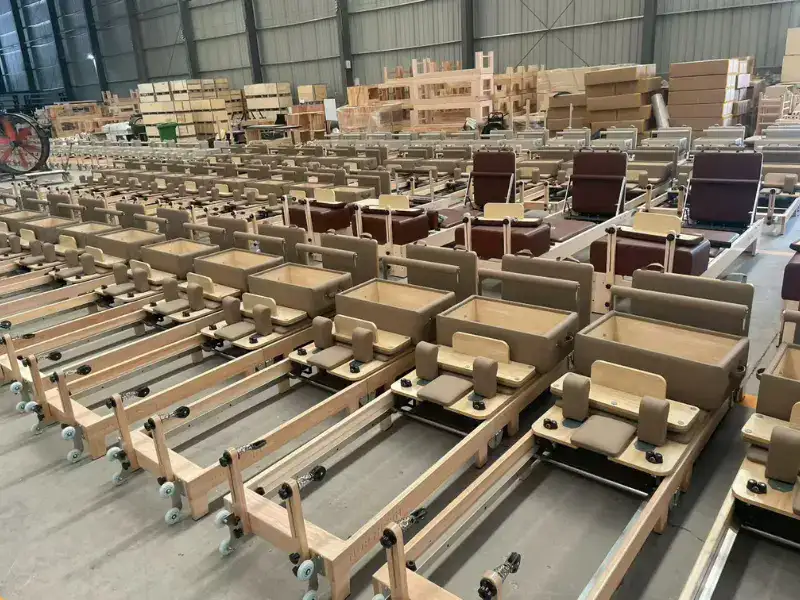
The inventory answer at a glance
| Product role | Recommended launch treatment | Evidence required | Main control |
|---|---|---|---|
| Hero model | Local stock when it serves the largest verified buyer segment | Buyer interviews, qualified quotes, sample approval, landed cost and service readiness | Keep the standard configuration narrow enough to replenish consistently |
| Alternative model | Showroom sample, digital demonstration or preorder | A different use case such as folding, aluminum construction or tower capability | Do not add it merely because it looks different |
| Specialist model | Quote-to-order or project order | Named customer type, instructor requirement, room plan and support capability | Confirm lead time and specification before accepting the order |
| Color or finish option | One standard stocked option; other options made to order | Repeated color demand and material availability | Track the base model separately from the finish variant |
| Accessories and spare parts | Stock according to installed base and service risk | Model-specific parts map, usage and service history | Do not substitute visually similar parts without compatibility confirmation |
The launch goal is not to show the largest catalog. It is to make the first buying decision easy, deliver the promised configuration reliably and learn which alternatives deserve working capital.
Why fewer stocked SKUs can be stronger
Every stocked reformer consumes more than warehouse space. It also creates forecasting, product-data, photography, demonstration, packaging, spare-parts, training and warranty obligations. When several models solve the same buyer problem, the sales team must explain small differences while capital remains divided across slower-moving units.
A focused assortment makes it easier to:
- Train sales and service teams on one controlled configuration.
- Keep product pages, quotations and accessories aligned with the delivered unit.
- Consolidate orders and replenishment around repeatable specifications.
- Hold model-matched parts for a clearer installed base.
- Measure demand by buyer type instead of spreading limited sales across overlapping models.
Fewer stocked models should not mean fewer customer choices. A distributor can present a broader approved range while assigning each option a different fulfillment role: local stock, sample, preorder or project order.
1. Segment target buyers before selecting models
Start with the customers you expect to serve in the launch territory. A boutique group-class studio, a home buyer with limited storage, a rehabilitation practice and a premium private-training facility do not evaluate the same features or delivery process.
| Buyer segment | Buying priority to validate | Possible product implication | Questions before stocking |
|---|---|---|---|
| Group-class studio | Repeatable feel, commercial workflow, consistent units and serviceability | A standardized commercial hero model | Which configuration will instructors use across a full room? |
| Space-limited studio or home user | Storage, movement, access route and reset routine | A foldable or compact alternative | Is folding required often enough to justify a separate local SKU? |
| Private training or premium studio | Finish, adjustability and client-facing presentation | A premium construction or finish option | Will buyers accept preorder timing for more finish choices? |
| Tower or expanded-apparatus buyer | Exercise capability, instructor program, ceiling and floor planning | Reformer with tower or a higher-capability system | Is demand recurrent or tied to occasional projects? |
| Dealer or project buyer | Margin, configuration control, documentation and fulfillment | A repeatable trade configuration plus approved special-order options | Can product identity remain consistent across quotes and reorders? |
Use the foldable versus fixed reformer comparison and the reformer, tower and Cadillac comparison to qualify actual operating requirements. These choices should follow buyer use cases, not a desire to fill catalog categories.
2. Build a three-tier product mix
Tier 1: the locally stocked hero model
The hero model should fit the largest evidence-backed customer group and be simple to quote, demonstrate, deliver and support. Define one standard frame, upholstery, accessory package and product identifier. If the market has not yet produced reliable sales data, use qualified lead interviews, sample evaluations, quotation patterns and early deposits as provisional evidence, then review the decision after the first selling cycle.
Tier 2: meaningful alternatives
An alternative belongs in the range when it changes the buying outcome: for example, folding solves a storage constraint, aluminum changes construction and handling, or a tower adds a different exercise capability. Keep alternatives as samples or preorders until their demand is distinct and repeatable.
Tier 3: specialist and project models
Specialist configurations should normally remain quote-to-order. Confirm the room, intended program, exact accessories, delivery scope and service responsibility before ordering. This gives the buyer access to a wider range without making the distributor finance every possible configuration.
3. Separate model inventory from color and finish inventory
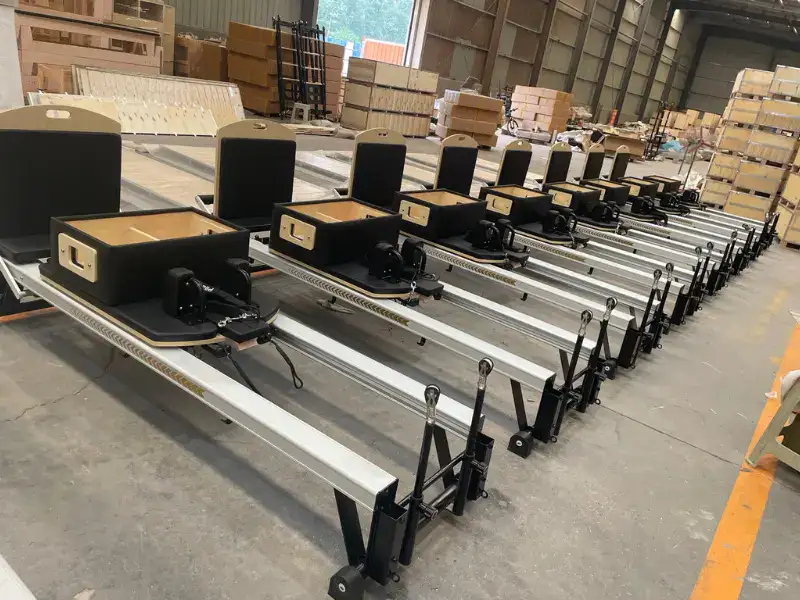
A base model and its upholstery colors should not be planned as if they were unrelated products. If one model is offered in five stocked colors, the distributor has created five inventory positions that compete for the same demand.
For a new launch, define:
- One standard stocked frame and upholstery combination.
- A short approved list of made-to-order colors or finishes.
- A rule for when a repeated requested color becomes a stocked variant.
- A unique SKU or configuration code that connects the quote, order, carton and spare-parts record.
- Clear product-page labels for standard, optional and made-to-order features.
This structure preserves choice without hiding slow-moving color stock inside total model sales.
4. Assign stock, sample and preorder roles
Stock status is a commercial promise. “In stock” should mean the unit is available in the correct configuration and can follow the stated delivery process. A showroom sample is evidence for evaluation, not automatically saleable inventory. A preorder needs a written specification and realistic lead-time explanation.
| Role | Use it when | What must be ready | Review question |
|---|---|---|---|
| Local stock | Demand repeats and buyers value short delivery | Approved configuration, warehouse process, pricing, parts and delivery scope | Is sell-through sufficient after freight, storage and service costs? |
| Showroom sample | Buyers need physical evaluation before ordering | Current specification, demonstration checklist and sample condition record | Does the sample generate qualified quotes for this exact model? |
| Preorder | Demand exists but configuration choice or volume is uncertain | Confirmed specification, deposit terms, production window and freight plan | Are customers accepting the stated wait for the extra choice? |
| Project order | Quantity, installation or site access must be planned together | Site information, final unit list, delivery responsibilities and approval gates | Can the project be quoted without assuming services that are not included? |
| Discontinue or consolidate | A model overlaps another option or creates disproportionate support work | Open-order check, customer notice and parts coverage plan | Can demand be served by a clearer core model? |
For current equipment options, review the Pilates reformer category and the wooden Pilates equipment range. Final model availability, customization and timing should be confirmed in a written quotation.
5. Use evidence instead of a round first-order number
A suggested opening quantity is credible only when it is connected to local data. Before committing to inventory, build a simple model-by-model worksheet with:
- Qualified inquiries by buyer segment.
- Quotes issued and reasons won or lost.
- Deposits or written purchase commitments.
- Expected delivery window by buyer.
- Landed cost by shipment scenario.
- Available warehouse positions.
- Gross margin after freight and local handling.
- Demonstration demand by location.
- Return, damage and support cases.
- Parts availability for the installed base.
When reliable data is limited, reduce the decision rather than disguising uncertainty. Stock the approved hero model conservatively, secure customer commitments where possible, and keep other models as samples or preorders. The wholesale reformer guide explains why product price alone is not enough; packaging, freight, destination handling and service affect the working capital tied to each unit.
6. Set reorder and range-expansion signals before launch
Do not wait until a model is almost sold out to decide whether to reorder. Review a small set of signals on a fixed cadence and by exact model configuration.
| Signal | What it tells you | Action to consider | Do not rely on |
|---|---|---|---|
| Sell-through by period | How quickly available stock converts into completed sales | Reorder the same controlled configuration when the pattern is repeatable | Total revenue without model-level units |
| Qualified quote volume | Demand that may arrive before stock is available | Compare quotes, deposits and lost-sale reasons | Website visits or casual inquiries alone |
| Lead-time objection | Whether local availability changes the sale | Move a preorder model toward stock when delays repeatedly lose suitable buyers | One urgent request outside the target segment |
| Landed margin | Whether the model can support freight, storage, sales and service | Adjust price, shipment plan or product role | Factory price alone |
| Service burden | Whether returns, damage or parts needs are consuming the expected margin | Correct the specification, packaging, training or support plan before expanding | Units sold without case outcomes |
| Repeat segment demand | Whether a second model serves a stable buyer group | Create a separate stock position only after the segment and use case are clear | Requests for cosmetic variety |
Record the reorder trigger in units and time appropriate to your business, based on actual replenishment lead time and desired safety stock. Do not copy another distributor’s threshold without matching its market, sales velocity and logistics route.
7. Example distributor launch matrix
The matrix below illustrates roles, not universal quantities or a sales forecast. A distributor should replace every assumption with evidence from its own territory.
| Assortment line | Target buyer | Initial role | Move to local stock when |
|---|---|---|---|
| Standard commercial reformer | Largest validated studio or trade segment | Hero model and local stock candidate | The sample is approved, delivery is ready and recurring demand supports replenishment |
| Foldable or compact reformer | Space-constrained studio or home segment | Sample or preorder | Storage constraints repeatedly drive qualified purchases |
| Alternative construction | Buyers with a defined handling, appearance or commercial requirement | Sample or preorder | Requests convert into repeat sales at an acceptable landed margin |
| Reformer with tower | Instructor-led programs requiring expanded capability | Demonstration or project order | Program demand, room requirements and service capability are repeatable |
| Special colors and finishes | Brand, studio-design or project buyer | Made to order | One option shows sustained demand without fragmenting the core SKU |
| Spare-parts kit | Installed customer base | Local service stock | Quantity follows model count, usage and documented service history |
Keep the launch matrix beside the actual stock ledger. Product role explains why the SKU exists; the ledger shows whether the decision is working.
8. Protect inventory margin with after-sales planning
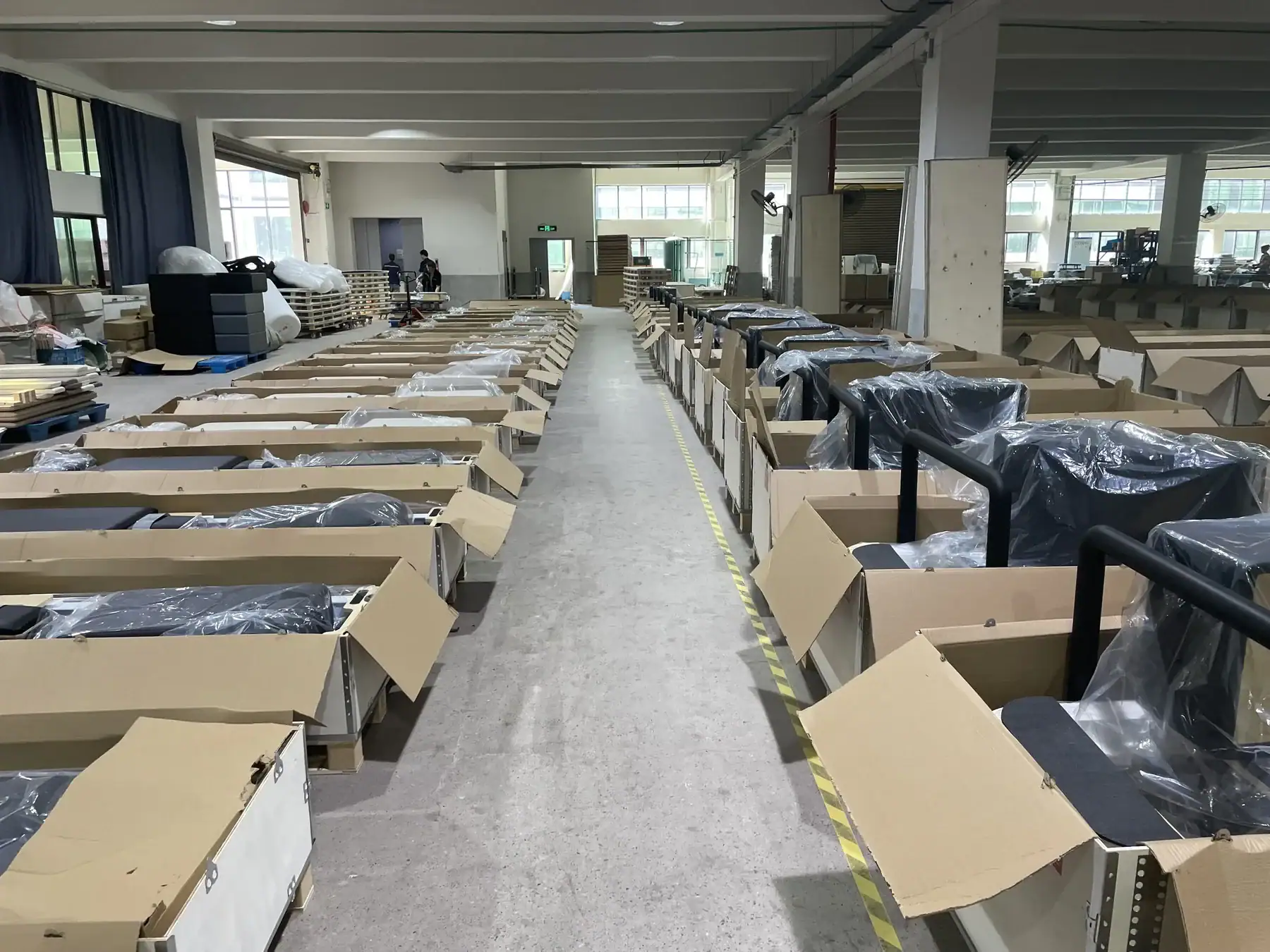
A fast-selling model is not automatically the best inventory choice if it creates avoidable returns, difficult diagnosis or long parts delays. Evaluate service readiness before expanding stock. The distributor should know the exact model identity, supplied accessories, wear parts and evidence required for a claim.
Use the Pilates reformer spare-parts and after-sales checklist to structure model-specific reserve planning. Springs, ropes, straps, pulleys and carriage wheels should be matched to the installed model rather than selected from a generic description.
Service data also improves assortment decisions. If one model generates repeated adjustment questions, packaging damage or compatibility mistakes, correct those causes before increasing local stock.
Common distributor inventory mistakes
- Stocking the catalog: factory availability is treated as proof of local demand.
- Counting colors as customer segments: working capital is divided across cosmetic variants of the same model.
- Using factory price as margin: freight, local handling, storage, sales and service are omitted.
- Mixing samples with available stock: customers receive unclear or inconsistent delivery promises.
- Adding a model after one request: a special case becomes permanent inventory without repeat evidence.
- Ignoring service complexity: products are added without parts, documentation or diagnosis capability.
- Reordering by calendar: the next purchase is placed without model-level sell-through and lead-time data.
Distributor inventory checklist
- Define the launch territory, sales channel and primary buyer segment.
- Choose one hero model and document why it serves that segment.
- Assign every other model to sample, preorder or project-order status.
- Separate base models from colors, finishes and optional accessories.
- Approve the physical sample and one controlled sellable specification.
- Calculate landed margin using the intended shipping and delivery scenario.
- Prepare product data, photos, quotation templates and model-matched parts.
- Define reorder signals and who reviews them.
- Track quotes, sales, lead-time objections, returns and service cases by model.
- Add stocked models only when evidence shows a distinct, repeatable market role.
If the wider distributor operating model is still being planned, read how to become a Pilates equipment distributor before committing to the first assortment.
Frequently asked questions
How many Pilates reformer models should a new distributor carry?
Begin with one locally stocked hero model for the largest validated buyer segment. Offer additional, meaningfully different models as samples, preorders or project orders. Expand local stock only when model-level inquiries, orders, margin, delivery needs and service results show repeat demand.
Which Pilates reformer should a distributor stock first?
The first stocked model should fit the distributor’s main buyer, sales channel, expected use, target landed margin and service capability. It should also have an approved specification and a repeatable supply and parts plan.
Should distributors stock several colors?
Usually, a new distributor is better served by one standard stocked color and a short list of made-to-order options. Add another stocked color only after repeated orders show that it improves conversion enough to justify a separate inventory position.
When should a preorder model become a stocked model?
Consider the change when qualified quotes and completed orders repeat, customers consistently require shorter delivery, landed margin remains acceptable and the distributor can support the model locally. One urgent inquiry is not enough.
How can a distributor reduce inventory risk?
Use distinct product roles, keep the hero configuration controlled, collect deposits where appropriate, consolidate cosmetic variants, track model-level demand and set reorder triggers before launch. Samples and preorders can preserve choice while local demand is still being measured.
Request a market-specific starter assortment
Share your target country, buyer type, sales channel, preferred construction, expected order timing and delivery postcode. P.E.Pilates can help you review suitable reformer roles and prepare a model-specific wholesale quotation. Final stock quantities should be confirmed against your own sales and inventory data.