In recent years, home Pilates practice has become a popular trend among fitness lovers and professionals alike. Whether you’re a studio owner looking to stay consistent outside your classes or a beginner who wants to improve posture and flexibility, creating a space to practice Pilates at home can make a big difference.
Here are some practical tips to help you get started — safely, effectively, and sustainably.
1. Create Your Pilates Corner
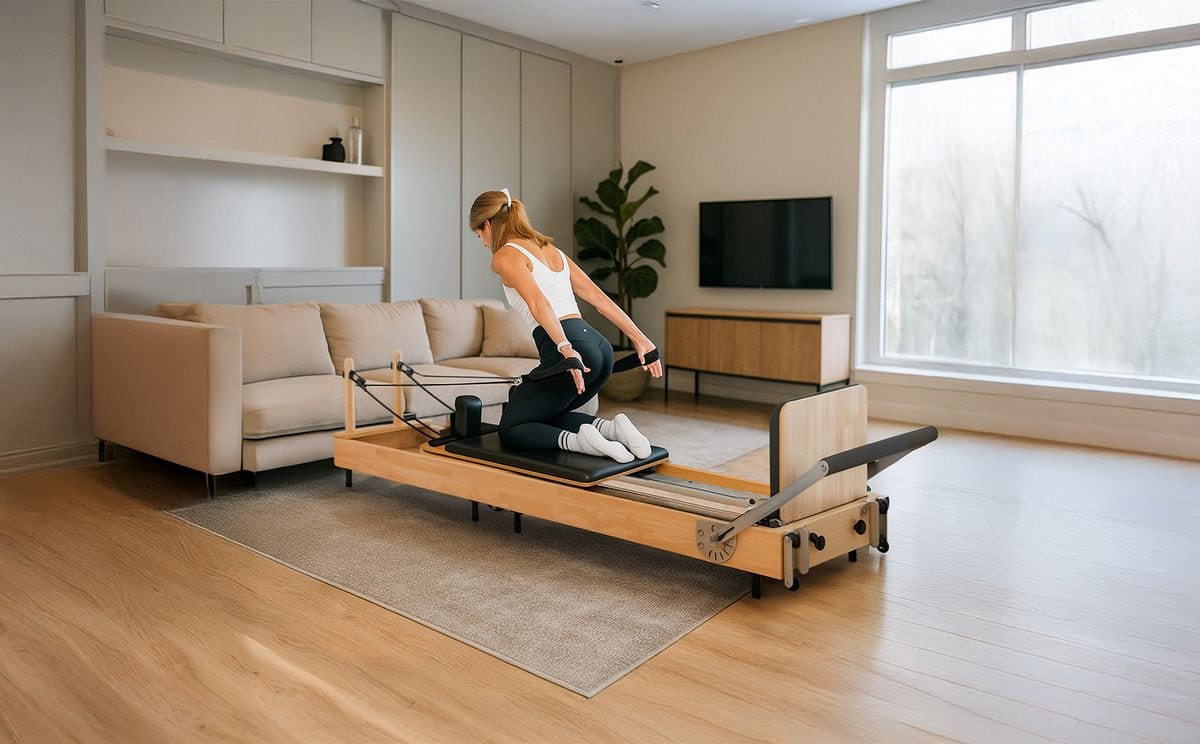
Choose a quiet, clutter-free area with enough room to move freely. Natural light and a calm environment help you stay focused during your workout.
If space is limited, opt for foldable Pilates equipment such as a Foldable Reformer or Wall Tower System. These space-saving solutions allow you to train at home without compromising on performance.
💡 Tip: Keep your mat, straps, and props neatly organized. Having a dedicated setup helps you maintain motivation and consistency.
2. Invest in Quality Equipment
While mat Pilates is great for beginners, Pilates equipment such as the Reformer, Wunda Chair, or Ladder Barrel can deepen your training.
A well-designed reformer provides smooth resistance, alignment precision, and safety — essential for effective home workouts.
When choosing your equipment:
Look for durable frames (maple or aluminum alloy)
Ensure adjustable springs and headrests
Choose brands that offer professional-grade quality with home-friendly design
👉 At P.E. Pilates, our home-use reformers combine studio-level stability with compact folding designs, ideal for small spaces.
3. Follow a Structured Routine
Set a schedule — even 20–30 minutes a day can bring visible results. Alternate between core, flexibility, and balance workouts.
If you’re unsure where to start, try guided online classes or apps led by certified Pilates instructors.
Many professionals offer short, structured reformer routines suitable for home training.
🧘 Pro Tip: Always warm up your spine and core before starting. Controlled breathing and body awareness are the foundation of every Pilates move.
4. Focus on Form Over Repetition
Quality movement matters more than quantity. Pilates emphasizes control, alignment, and precision.
Use mirrors or video recording to check your posture — your shoulders, hips, and spine should stay aligned.
Slow, mindful execution helps engage deep core muscles and prevents injury.
5. Mix It Up to Stay Motivated
Boredom can derail your practice. Keep your sessions fresh by adding props such as:
- Pilates Ring (Magic Circle)
- Resistance Bands
- Small Stability Ball
- Foam Roller
Combine mat and reformer exercises to challenge your body in new ways.
6. Track Your Progress
Consistency is key to visible transformation.
Keep a weekly log of your sessions — note improvements in flexibility, balance, or body awareness.
Over time, you’ll feel stronger, more centered, and more in control of your movement.
7. Safety Always Comes First
If you’re new to Pilates, start under professional guidance. Even short virtual consultations with certified instructors can help correct your form and build confidence.
Avoid over-stretching or pushing beyond your limits. Remember — Pilates is about balance, not intensity.
Final Thoughts
Practicing Pilates at home is a rewarding way to stay active, focused, and balanced — both physically and mentally. With the right equipment, environment, and routine, your home can become your personal studio.
Whether you’re building a small Pilates corner or designing a complete home studio, P.E. Pilates offers a full range of professional-grade reformers, towers, and chairs — designed for home and studio use alike.
💬 Ready to start your home Pilates journey?
Explore our latest collection of foldable reformers and compact studio sets — and bring studio-quality Pilates into your home.
👉 Explore Our Products
📩 Contact Our Team
FAQ
How do I start practicing Pilates at home?
Start with 15–20 minutes per session using a mat or simple props. Follow online videos from certified instructors, focusing on form and breathing before increasing intensity.
How often should I practice Pilates for best results?
Consistency matters more than duration. Aim for 3–4 sessions per week to build strength and flexibility while avoiding burnout.
Do I need equipment to practice Pilates at home?
Not necessarily. You can begin with a mat and resistance bands. For deeper training, consider reformer or tower equipment for a studio-like experience.
Is it safe for beginners to practice Pilates at home?
Yes, as long as you follow proper guidance. Start with beginner-level tutorials and avoid pushing beyond comfort. Seek advice from a certified instructor if unsure.